Democrats Took the House and Senate. Here's Their Real Agenda
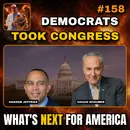


Democrats took the House and the Senate. They flipped seats in state legislatures, and they even took governorships in states a lot of people never thought would have a Democratic governor, including Texas. Online, you'd think the first move is impeaching President Trump and raising taxes. That is not what Hakeem Jeffries and Chuck Schumer are actually putting first.
I went through the stated priorities of Democratic congressional leadership after the midterms and compared them with the version that spreads on social media. The 2026 midterm fallout landed on a Republican Party that had control and spent it fighting with itself. Voters are tired of national talking points. They wanted affordability addressed. Gas is expensive. Food is expensive. Wages are flat.
Jeffries' first 100 days list is reverse Medicaid cuts, restore SNAP funding, extend the ACA tax credits, end the Trump tariffs, and stop the war in Iran. On November 13, he also said he wants to lower the Medicare age and cover hearing, vision, and dental. Chuck Schumer said on November 4 that the first thing they are going to do is reduce people's costs. They ran on Medicare for all, but the leaders are talking about baby steps, not turning that on in the first 100 days.
Impeaching Trump is not on the leaders' list. Jeffries said on November 4 that he hadn't had a single member talk to him about it. There is a confirmed public push to impeach Pete Hegseth, and some members say that comes back in January. Higher taxes and a new federal gun bill are also not on the congressional leaders' first-100-days list. No new federal gun bill was filed from November 3 through 16.
The states are a different story. Gun control is first-order business in several statehouses, and Texas is the biggest one pushing to revise its gun laws. Governor-elect Gina Hinojosa has already pre-filed multiple bills for 2027, including assault-weapon restrictions and red-flag orders. Michigan, Minnesota, Pennsylvania, Wisconsin, Arizona, and Nevada are moving in the same direction.
There is also a split over the border and ICE. Jeffries said he is not going to give a dime to what he called the administration's "violent mass deportation machine," and he wants to redirect $75 billion in ICE funds toward the Dream and Promise Act. He did not say he would abolish ICE. Moderates in the party, including Henry Cuellar of Texas and Ruben Gallego of Arizona, say they are with enforcement on criminals. The DSA wing wants to abolish ICE altogether. In New York, Mayor Mamdani, who is with the DSA, not the Democratic Party, announced on November 16 that he is disbanding the NYPD's Strategic Response Group, the riot-control unit, and reassigning about 600 officers.
Even with both chambers, this is still a divided government. Most Senate bills still need 60 votes, and President Trump can veto a bill. Overriding a veto takes two-thirds in both chambers, 290 in the House and 67 in the Senate. Democrats have 257 House seats and 55 in the Senate. That is short.
And here is the number I want you to remember: there are 664 House-passed bills waiting on the Senate, 502 Republican-sponsored and 162 Democrat-sponsored. If the Senate does not pass them, they die on January 3. Watch the scorecard. The test is whether the bills match the promise, or whether this is another case of a party saying what people wanted to hear and then settling for the status quo.
Web: https://www.worldablazepodcast.com/
YouTube: https://www.youtube.com/@fontesablaze/featured
Instagram: https://www.instagram.com/fontesablaze/
TikTok: https://www.tiktok.com/@fontesablaze
Substack: https://substack.com/@fontesablaze
If you like the show, please leave a rating and review on Apple Podcasts.
0:00 Democrats control the House, the Senate. They even flip seats in state legislature. They even took governor positions in states that we never thought would see a Democratic governor. That namely being Texas. And so here's the question.
0:40 So what? What's next? What is next? What's going to come after the midterm fallout? Because the 2026 midterm fallout was solely and squarely the fault of the Republican Party who absolutely had control. that could have done a lot of good, but chose to fight amongst each other. Mike Johnson had enough sense after the midterm debacle to step down. And yet in the Senate, where bills went to die, where bills that actually benefited the American people and went to die, they reelect John Thune. John Thune as the leader for the Republican Party in the Senate.
1:24 Does that make any sense to anybody? Does that make any sense? So in the time that we have between now and January, when the Democrats take control, they elect the one person in the Senate where bills went to die. Under John Thune's leadership, everything just got tabled. Nothing ever happened. And so I'm sure that by now everybody is very, very tired, Very tired of seeing all the podcasters and mega influencers and whoever with their midterm autopsy episodes and whatnot.
2:05 But I'm going to tell you right now, mine was the best. Mine was absolutely the best. This is going to be the most honest discussion you have ever heard by a panel of fellow independent podcasters. This panel was primarily Republican, and we were honest, and we were open, and we called out the Republicans on their bullshit. We called out the Republicans for the messaging that did not connect, for the lack of accountability, for the failure to connect with communities of the people that they would be representing. Instead of doing all that, they made everything a national talking point, and people are done with that.
2:45 They're sick with it. They wanted to have affordability addressed. They just know that their gas is expensive. Their food's expensive. Wages are flat. But the Republican Party did nothing with the candidates they had to be able to connect to the communities in which they were running. Bottom line. So do yourself a favor. Worldoblazepodcast.com. I make it so damn easy. There's no excuse for you not to watch or listen to this episode. You can clearly see the YouTube link right here. If you want to hear it on audio only, here is the link here to my fountain player, which is my host.
3:28 And then you could also just click any one of these links to your favorite podcast player. It is that damn easy. So do yourself a favor, hear an honest, open conversation about the failures. And with that, let's focus on what's next. So what is next? The Democrats, again, have control of the House. They have control of the Senate. But even with that, it seems like between party leadership in Congress versus Democrat control and leadership in the states themselves seem to differ slightly. And the one thing that we heard that everybody thought, see, there's a misconception of what you hear on social media, the rhetoric and the noise.
4:14 like there was nothing but big talk about we're going after Trump. First order of business is to impeach Trump. Well, that actually ended up not to be true. At least impeaching Trump ended up not to be top of mind. And then we were told that they were going to immediately address affordability. Well, that is partially true. But then again, we're going to try to break down reality versus perception. online versus what's been said, and where the separation is between the leadership in Congress and other Democratic representatives throughout the country.
4:55 Each state has their own agenda, it seems, especially when we're talking about something like two-way rights and gun control laws. Texas, with Gina Hinojosa, the new governor, the Democratic governor of Texas, is adamant on pushing bills to literally revise gun laws, revise for further protections under the guise of protections. So again, let's go over what's real and what isn't. So first order of business, as you can see on the first slide here, we're going to go over the claims.
5:41 what they say, and the perception of what is being said online. So here's the verdict scorecard for the six topics here. Again, on everybody's list, they always thought impeachment, impeachment, impeachment. So number one on the card is impeachment, but there's a split. You see, there's a confirmed public push to impeach Pete Hegseth, Secretary of War. But there isn't any public push or consensus on actually impeaching President Donald Trump, which everybody thought would be first order of business because they ran on impeaching Trump, getting Trump out of office.
6:25 That was what the Democrat Party led with in every debate. And of course, they did address affordability. But first thing, first thing was impeaching Trump, getting rid of Donald J. Trump. But they're going for Pete Hegseth. So that's number one. Two, will they be imposing higher taxes? Well, that's partially true. See, it's not their first order of business. First, tax items will actually lower costs. They want to extend ACA credits, and they want to end tariffs. Third, as I brought up previously, gun control. So there's a split.
7:05 The Congress, it's not going to be their first order of business for the Democrats. But at the state level, there are new bills that are confirmed to address gun control. And then we have healthcare, the third biggest platform that the Democrat Party ran on in the midterms. So will there be health care for all? Will there be health care for all? Well, maybe, maybe, but not immediately if they do. You see, they're going to lower Medicare age to make it more accessible. They're going to add benefits, but they're not going to add Medicare for all. And then there's the border enforcement.
7:48 This was another hot topic. And that is generally not supported. leaders. They basically want to take funding from ICE, and they want to focus on passing the Dream and Promise Act. And we also had, and I put this on a slide, and I'm not sure if we'll get to it, but I did bring up Mamdani, because it seems like Mamdani was waiting for this moment to get more control as far as the Democrat Party was concerned, because he immediately disbanded and announced on November 16th, by the way, which was yesterday of this recording, this recording being November 17th, there's a restructuring going underway.
8:33 And that means disbanding an enforcement arm of the New York Police Department, which actually handles, from what I know, riots and terrorism. So here's what the leaders say. And here's what comes first. Hakeem Jeffries, House Democrat leader. First 100 days. I'm not sure what he's going to do by restoring SNAP funding. Does that mean he's going to loosen restrictions and allow people to just do whatever they want with SNAP? They're going to be able to buy their, I don't know, their sodas and candies again.
9:15 I don't really understand what they mean by expanding or restoring SNAP. But regardless, I thought the SNAP program was handled just fine. Those who actually really need it get it. They just can't buy whatever junk food they want. But I could be wrong. Okay, they want to extend the ACA tax credits. They want to eradicate the Trump tariffs. And they want to stop the war on Iran. Well, they say that, but I haven't really seen a full court press on that particular issue, even though that is included in Hakeem Jeffries' first 100 days. And then as far as impeachment goes, Hakeem Jeffries on November 4th was quoted as saying, I haven't had a single member talk to me about impeachment.
10:02 And he is referring to impeaching Donald J. Trump. He hasn't had a single member, he says, that has approached him about impeaching Donald J. Trump. So with that, what is the Senate? What are they going to do in the Senate? So far, the Senate Democratic leader, Chuck Schumer, on November 4th, in a news conference said, the first thing we are going to do is reduce people's costs, as you should, because that was the major, major point, aside from impeaching Donald Trump, which apparently is not the focus now. But the major point of contention for the American people, the major platform you ran on was lowering costs and of course healthcare for all, which seems like that's not really going to happen either.
10:49 But anyway, so on the investigations, this is what Chuck Schumer said. Should we investigate? Yes. But number one, get those costs down. So again, just going ahead and doubling down on reducing costs, which is what the Democrat Party ran on. So here's the claims versus the stated priorities. And of course, here's the viral claims, the viral claims all over social media. So one, again, impeachment, but it's not on the leader's list. It's just not. Well, impeaching Donald Trump is not on the leader's list. Two, people are assuming that it's just going to be higher taxes now that the Democratic Party is in charge.
11:32 Again, not on the congressional leaders list. They're not looking to impose higher taxes. And when it comes to gun control, number three on the list here, that is also not on the congressional leaders list. So what do they want to do in the first 100 days? Well, as I stated earlier, so there's health care costs. They want to reverse Medicaid cuts, extend the ACA tax credits. And in that, they also want to lower the age of a person who can qualify for Medicare, Medi-Cal. Food and prices. They want to restore SNAP funding and eradicate the Trump tariffs.
12:16 Although, again, with the SNAP funding, I'm not really quite sure what they want to restore. Is it the fraud? Is it the ability to buy whatever you want? I'm not quite sure what they're going to do with that. And as far as the war goes and what's missing, they want to stop the war in Iran. But there's no impeachment, there's no tax hikes, and there's no guns. So it looks like the leaders, when it comes to Congress, they have a different agenda or a different focus than what many leaders in the states are trying to do right now. As of now as far as the leadership is concerned it was surprising to find out that actually going after impeaching Trump was not top of mind wasn first order of business not within the first 100 days Maybe they realized that they gone down that road before It proved to be fruitless a waste of time and money And the results they were looking for just didn't come to fruition because they realized there's really nothing they can impeach Trump on. We don't have to like how Trump's been handling himself as a president, but he hasn't done anything that is really considered to be impeachable.
13:24 and there's a big difference. There's a big difference between wanting someone out because you don't like them and wanting someone out because he's literally abusing his powers and not doing the job. Now, if they can prove that without, I mean, beyond a shadow of a doubt, if they could really bring evidence to prove that is the case against Donald Trump, well, have at it. If you can get it done, great. But they also know that if they do that, J.D. Vance is next in line. And J.D. Vance is more of a moderate. J.D. Vance may be able to work with the Democrat Party. Probably, I would say, a more cohesive, more understanding. He would be a better person to probably work with the Democratic Party.
14:10 But again, they know that he is still a Republican, even if he is more of a moderate, and that they would just be getting someone else in the Trump administration to step into Donald Trump's shoes. When ultimately the goal would to really be to put a Democratic leader as president. And that's not going to happen because if they try to impeach Donald Trump, they're going to have to try to impeach J.D. Vance. And again, that one's even harder because what do you got on Vance? He hasn't even been in the position. So it's just a road that they probably don't want to travel because they know it's a waste of time. And if they're going to come through on their promises, they know it's better to deliver on what they were saying, which is what?
14:51 Bring affordability down. So first order of business should be to focus on affordability. Now, some of the things that they said they want to do to get there, we can argue as to whether or not that's really going to make an impact at the level that they are saying. Of course, maybe, maybe stopping the Iran war would lower gas prices, which has affected everything. Removing tariffs maybe could lower prices. I mean, even if it does, will we be in better shape when it comes to relying on American-based companies and goods versus just outsourcing everything again and importing it? That was the intent of the tariffs, by the way.
15:33 It was to deter people and businesses from partnering with, outsourcing, and buying goods from outside of our country. See, the goal was to try to get manufacturing back, was trying to get American-made products purchased by the public, by the American people. That was the point of the tariffs originally. But if we're going to be honest, it didn't really quite get there. It did lead to certain deals that were in the favor of the United States of America, but it also led to higher costs on items that there's no way we would ever be able to produce here anyway. Not at an affordable level.
16:15 So if the Democrat Party really wants to get rid of tariffs, that could be effective. If they're really going to lower medical costs, great. That is a huge win because medical costs are insane right now. Lowering the age, for qualifying for medical, as in Medicare, Medicaid, would be great. So there's some good ideas here. But let's see if they come through. Now, again, this is what's on the minds of the congressional letters. The congressional leaders, I mean, not letters. The congressional leaders want to do these things. They're not focusing necessarily on the whole gun control, raising taxes, all of that.
17:01 Those are just talking points, and that's just what's being driven on social media. So just be very careful about what you see on social media because it doesn't always tell the story. Actually, 90% of the time, it doesn't tell the story. It's just propaganda to keep you interested, involved, enraged, separated. Always go beyond the headlines, like I say. And here's what social media is good for. It's a nice trigger. It's a good way for you to go, oh, what's really going on? And that's how you should take social media. It should get your attention to the point that you look into the issue and really try to understand what's really happening. But outside of that, be very careful when it comes to social media.
17:45 So here's our second chapter of this video here. And then what we're going to go over is the impeachment because it's not for Donald Trump. In fact, there is a push, however, to impeach Pete Hegseth, the Secretary of War. So while they're not looking to impeach Donald Trump, they are looking to impeach a high-ranking, very prominent, very public figure who is in charge of our military, who was appointed by Donald Trump. And honestly, that's the real story. So there is that focus. Again, we're going to go over some of the taxes that may or may not happen. We're going to talk about the gun control, Congress versus the states, healthcare, border and ICE.
18:30 We're going to address Ma'am Donnie a little bit. And then we're going to have a reality check on what the Democrats can really do in both the Congress, the House, and the Senate. So we're going to get to that as well. Now, here's what's going on with the impeachment. Impeaching Trump? Well, there actually hasn't been any new article since November 3rd. Only pre-election resolutions were made. Okay. And then as far as Jeffries is concerned on PBS on November 10th, he was quoted as saying, we haven't ruled anything in and we haven't ruled anything out.
19:11 So basically, we haven't really addressed it. He's saying that they're not going to rule out impeaching Donald Trump, but they haven't really discussed it either. And Jamie Raskin on November 4th, he said, it cannot be a fetish, but it also can't be a taboo either. Again, basically saying, you know, we're not going to go ahead and really pursue it. But at the same time, if the opportunity arises, we're not going to rule it out either. So here's where we're at with the Hague-Seth push. November 10th, House vote, 2-11 to 2-04. So there was a motion to refer House Resolution 1655 to the judiciary.
19:54 So to refer is basically to send to committees and other oversight organizations, etc. It's basically just going to send it out to a bunch of committees to look over the idea of impeaching Hegseth and make a decision rather than coming to the floor for a vote. Okay, so there was 211. There was 210 Republicans, one party not given. But anyway, 211 voted to refer this issue. 11 Democrats didn't even vote. Now, here's what's interesting.
20:34 So four, four of this, obviously, is the Democrats. 204 wanted an impeachment vote on the floor. They didn't want it handled by these committees. Primarily, the Republican Senate to be referred again. But 210 Republicans, they voted for it to go to committees. One, they didn't really specify their party. So 211 did vote to refer this, but 204 wanted to impeach Pete Hegseth, and they wanted that vote on the floor. So as of now, that's not going to happen just because there were more votes to send these to committees. So what did Hakeem Jeffries say?
21:16 He said it was a hard yes. November 8th on ABC and on X on his own post. And of course, there was Massey, who is a, well, aircoat Republican from Kentucky. And many people know who Thomas Massey is. He filed it, actually. Not the Democratic leaders. It was Thomas Massey who pushed for this. And there are other members on their ex-accounts like Ro Khanna, Jay Paul, Garcia, Al Green. They all want to impeach Pete Hegseth. Okay. And so what comes next? The referral ended it for this Congress. Okay. Carvajal pushed again come January.
21:58 So even though it was voted to send this to referral or basically be deferred to committees where it's going to pretty much go to die. The Democrats are not done. There are some. There are some that are going to continue to press this issue come January when they have complete control. And so come January, they're going to push for the impeachment of Pete Hegseth once again. But we'll see what happens when January comes around. Because a lot of people talk a big game and then things happen, things develop, and it just doesn't always come to fruition. So let's move on to the taxes.
22:40 Let's move on to tax issues here. So what comes first? Well, there's the ACA tax credits. They want to extend them on the first 100 days. Okay, they want to keep the premiums of healthcare lower. There's the Trump tariffs to address. They want to end them on the first 100-day list. They want to lower the import taxes, which in turn would lower the cost of imports, which should make things more affordable for all Americans. And then there's the widened fair share. So it requires the ultra-rich and corporations to pay their fair share.
23:20 We've heard this more than once. But what's funny is it's only partly supported. It's not really an agenda. So there's no new federal wealth tax bills that were filed between November 3rd and 16th. And so the verdict is it's partly true, maybe partly one of the things they want to get done, but it's absolutely not their first order of business. So what about the guns? Congress versus the state. So Congress themselves, verdict, not first business. It's not their first order of business to control guns. The first 100 days, there's no gun bill on the leader's list. No new federal gun bill filed November 3rd through 16th.
24:03 And Jamie Raskin, on election day, judiciary priorities would include private sale background checks, not universal gun registration. Now, what about the states? Since November 3rd, Texas pre-filed from November 9th, Michigan, HB 6477 on November 10th, and Minnesota, there's a package ready to go in January. So Klobuchar in Minnesota on November 4th said the gun safety bill is going to get passed. Now, when it comes to Texas, they've already filed multiple, multiple, multiple legislation, presented many articles to go over that would actually repeal or modify gun laws there at an alarming rate and in a way that really, really restricts guns in a way that is, I would say, anti-Second Amendment, anti-2A.
25:07 Some of that even requires the red flag law that they're trying to push, which would allow them to force people to register their weapons. So that right there is very interesting. So here's the state gun bill since November 3rd. Texas, pre-filled for 2027. SB 80, there's the assault weapons. Okay? HB 218, the red flag orders, which is part of the registration I was talking about. HB 613, private sale checks. And HB 173, no semi-auto rifles under 21. Michigan, they have HB 6477, which was filed November 10th, which is training to buy a gun.
25:50 So that's part of that legislation. They want to make sure that you're trained before you buy one. Pennsylvania they pledge to revive checks red flag ghost guns and switches So they want to regulate and or ban those things Minnesota SF 4067 package the assault weapons and magazines. The pass of Senate 34 to 33 in May, 2026. Back at session start January 12, 2027, there will be a new bill number. And Wisconsin pledges for checks, red flags, ghost gun bans. Arizona, they pledged for extreme risk orders in January. Nevada. This one's interesting. There's a pledge. Governor-elect Ford ends the Lombardo veto.
26:35 It's like Texas is the biggest proponent or biggest state that is pushing for the revision of gun laws. So the filled versus pre-filled. So Texas, Michigan, Minnesota bills on paper, but none of them are law yet and pledged for 2027 Pennsylvania, Wisconsin, Arizona, Nevada. So new trifectas, but no new bill numbers yet. So it's very interesting how at state level, guns have become first order of business. The control of guns, the banning of certain items when it comes to guns, enforcing training to purchase a gun, which I can agree with that. But I don't agree with every gun owner being forced to register their weapons with the state because that gives the state a little bit too much control.
27:25 And it gives the state the ability if it came down to it, because a lot of people think that two-way people are conspiratorial prepper nuts. But the reality is those two-way rights are there to protect the people from an overbearing government. An authoritarian government, a government that can come to take your rights or enforce policies on you that you don't want to be enforced. Meaning, taking your land, your house, making you live in camps, forcing you into slave labor. I mean, these are some extreme examples, but I'm just saying, two-way rights are there to protect yourself from an authoritarian government that no longer represents or works for the people.
28:14 And if they come to your door, be it military or whatever force that they choose to use against the American citizens, not having any ability to defend yourself from this tyrannical government, well, that's a bad thing. That's how you turn into Venezuela, Cuba, Argentina. I mean, we can just go down the list. Even communist Russia, the old USSR. There's so many things that are bad for taking guns away from citizens. But the regulation of certain guns, there's an argument for that. There's an argument for certain things to be regulated.
28:56 But those regulations also set the precedent for them to enforce and come up with new laws. See, it's really just a way of changing gun laws through attrition by chipping away at the armor of the 2A so that they can get to the point where they can completely ban and outlaw weapons altogether. So it's very interesting to see separation at the congressional level and the state level. At the congressional level, I think they're just, I don't know, much more informed and smarter about the Constitution than they are at the state level. I'm not sure why there's that separation and alignment, but regardless, there is that separation and alignment.
29:40 So we're going to go ahead and keep this train rolling here. So let's discuss the health care issue that the Democrat Party ran on. So healthcare steps versus Medicare for all. It was interesting because they ran on a platform of Medicare for all, right? Free healthcare for everybody. But in Congress right now, the leaders are saying, well, we're going to get there. We're going to take baby steps. We're going to come with a pathway to eventually get there. And so Jeffries on November 13th stated he wants to lower the Medicare age, covering hearing, vision, dental, because he said every child can see a doctor.
30:23 Now, that one, that one I agree with. I don't mind that. When we're talking about hearing, vision, and dental, that should be accessible to every child for sure. And then also filed November 10th was S5700, Baldwin, Medicare buy-in at 50. So ages 50 through 64, not a single pair. And then if we're talking about Medicare for all, the verdict overall is partly. J-Paul wants to mark it up in 2027. There's House Resolution 3069 filed April 2025 still at introduced.
31:06 No new M4A bill since November 3rd. And Melat Keros, who is a DSA nut or back candidate, I should say. One of our number one priorities, of course, is Medicare for all. So looks like Democrats want to deliver on the health care issue. It seems that they're aligned on Medicare for all or some kind of free medical, but not lockstep and just automatically turning on the spigot and bleeding money to take over medical at the state or the government level. It's not going to be government controlled for everyone.
31:46 It looks like congressionally, the House of Democrat leaders, they want to get there through baby steps. They want to get there slowly. They want to open up certain aspects of Medicare for people who are younger to be covered for certain things, such as, again, hearing dental and then vision. and then also a buy-in at 50 years old, so lowering that age down to 50. So there's a little bit of a separation there, and I think it's because there's a bigger discussion to be had that they've been avoiding. How are we going to give everyone free medical?
32:29 Who's paying for it? How's that going to be decided and regulated? And what I mean by that is, how is it going to be determined which patient gets seen in the order that they need to be seen. What is considered a priority and status in terms of the type of medical that needs to be administered. For example, cancer or a tumor that needs to be removed by surgery. Someone who needs a heart transplant versus someone who has a flu or a broken arm. So these things still need to get worked out. And of course, the funding needs to get worked out because where's it going to come from? taxes, because that's the only source they got. It's got to come from taxes. So what are you going to do? Administer higher taxes, a new tax? We have no idea how they want to do this. See, all this sounds very good on paper, but it always comes down to the funding.
33:19 How's this going to work? And it's going to come down to who's going to govern this? Who's going to be the oversight body or committee that's going to manage everyone's health? So you're putting your health into the hands of the government. And we've seen many times how this doesn't necessarily work out. I mean, there's many nations that have free healthcare, but we also hear the horror stories of people who had to wait six months to get their broken arm looked at, and the only way to fix it would be to break it and reset it. That's just one example. That's just one example. We've also heard about cancer patients who couldn't get seen in a timely manner. By the time they were there, oh, you got four weeks to live. you got stage four because you skipped over stage one cancer or two when you thought there was something wrong and it could have been caught.
34:08 Two, we're now at stage four and we can't do anything for you because you're terminal. So those are the dangers in state-controlled medical. So again, sounds good on paper. And it seems like the Democrat Party right now, even though they're going to take control come January, they realize this and the Congress state realizes they realize there are still steps to take to get there. They realize it just isn't turning the damn faucet on. It's not just flipping everything around because there has to be funding. There has to be a way to manage the medical procedures that need to be administered. They got to have a way to rank who gets medical versus others that don't.
34:49 And let's just be honest. The government is horrible at these things as it is. We don't need more bureaucracy. We don't need more oversight committees. I mean, we just don't need the government having the hands in our healthcare. But people, you got what you voted for. You got the House and Senate that will be controlled by the Democratic Party. So let's see what they do. Let's see if they come through on their promises. because as of now, it seems like the first 100 days of items that they want to get done, things on their list are not exactly what everybody in the Democrat Party wants to get done.
35:30 Well, let's talk about the border. Let's talk about ICE because, again, these are all concerns. These are all concerns. Let's see what the Democrats are going to do. So as far as the border and ICE, they don't want to continue what's been going on under the Trump administration. Jeffries, November 9th through 10th, he has said not going to give a dime to the administration's violent mass deportation machine. And he's referring to ICE. They want to redirect the $75 billion in ICE funds. and they want to start with the Dream and Promise Act.
36:12 And I'm going to get to that in a second here. As far as the moderates are concerned, such as Queller out of Texas, a Democrat, and he also got Gallego out of Arizona. Queller says, if you want to focus on criminals, we're with you 100%. and then Gallego, or Gallego, I don't know why I keep messing that up, is quoted as saying, we have that right now, okay? So, so far, Jeffries, he says they want to defund and reform, but the moderates in the party, they want to enforce on the criminals, so they're absolutely fine with enforcing the law on the criminals, and the DSA candidates, well, they just want to abolish ICE altogether.
37:05 So, and there is a big distinction there. Jeffries himself did not say he's going to get rid of ICE. He just says he's going to redirect the funds. The moderates in the party didn't say they were going to abolish ICE either. They said, well, we're kind of good with enforcing laws and punishing criminals, but the DSA wing of the Democrat Party right now, which, by the way, they really stand their own. Now that they've got their votes, you're going to see the rift and the separation between the DSA and the Democrats. And we're seeing it right here because the DSA wants to abolish ICE altogether. A central DSA campaign plan, Gonzalez-Torres ran on it. Not the caucus position, though. There's no leadership endorsement of abolishing ICE since November 3rd.
37:50 So the verdict is, it's not a continuation of current enforcement, but there isn't a focus and a push to abolish ICE. except for the crazy DSA side. So here is the American Dream and Promise Act that Jeffries wanted to focus on. The American Dream and Promise Act of 2025, the House Resolution 1589, is proposed federal bill introduced in the House of Representatives by Representative Sylvia Garcia, Democrat out of Texas, and co-led by Representative Maria Elvira Salazar, who's a Republican of Florida.
38:31 So this was a bipartisan bill that was proposed or House resolution. So the key provisions, pathways for dreamers. So grants a 10-year conditional permanent resident status to eligible individuals who arrived in the USA as minors, meet continuous physical presence requirements since January 1st of 2021, pass background checks, and are enrolled in or have completed school or served in the military. Full permanent resident status can be earned through continued education employment or military service And then you have the temporary protected status and deferred enforcement departure And for those individuals, they want to provide a pathway to lawful permanent resident status for eligible individuals who held or were eligible for the temporary protected status or even the deferred enforced departure.
39:28 And then they want to tackle education benefits. So it repeals a federal restriction that bars states from offering in-state tuition or higher education benefits to undocumented students based on residency. Now, that's where I would draw the line. Because I don't believe any benefits should be given to anyone who is not. You can call them undocumented. Let's just stop using undocumented. Let's use the word illegal because that's what they are. And this House Resolution Bill 1589, the American Dream and Promise Act, sounds good on the surface because they always use the kids to play at your emotions.
40:14 They're like, well, if the kids are here, let's give them a 10-year permanent status. As long as they're going to school and everything, it's not a big deal, right? But the reality is the kids, unfortunately, are still illegal immigrants. now there is the caveat as to whether or not they're actually born on u.s soil right and i guess we could just approach that separately or differently but by and large by and large giving benefits to illegal immigrants i don't agree with because they shouldn't be here in the first place that's just my take and beyond not being here and being here illegally They shouldn't be offered any benefit that any citizen in the United States who pays their taxes should also get.
41:04 So the problem with a lot of these benefits that they put to these packages that benefit illegal immigrants is they don't extend to the residents who are already living here as actual citizens. So we'll see where this goes. On the surface, sounds good. Let's take care of the kids. They just want an education. All right? Fine. But I'm not going to sit here and back illegal immigrants getting further benefits from the government, from the state, that are paid by U.S. citizens taxes. And yeah, I know there's the argument, well, illegal immigrants also pay taxes and blah, blah, blah, blah, blah.
41:45 Yeah, you have an argument. That may be true, but it still does not supersede the glaring elephant in the room, which is these individuals are here illegally. That's just it. So aside, aside from offering asylum and benefits to illegal immigrants through this program, which I kind of do understand the ability to allow people a pathway or a better pathway a citizenship, but I'm still going to stick to my guns, as they say, when it comes to being open arms, arms wide open to illegal immigrants and just offering them whatever the hell they want.
42:46 So that's just where I'm at. But now let's focus on something that I found interesting. So once the Democrat Party took control, you saw Democrat leaders who now thought, well, this is my time to do crazy shit. So again, Gina Hinojosa, governor-elect over there in Texas, wants to drastically reform gun laws, which would challenge the constitutional two-way rights of citizens. And then you had Mamdani. Now, look, Mahamdani wasn't a major player when it came to the midterms.
43:27 I mean, he's mayor of New York. What I found interesting is that he announced not long after the midterms, in fact, on November 16th, as you can see here in the slide, Mahamdani, who, by the way, is still a DSA candidate. People don't even realize he's part of the DSA party. He's not a Democrat. Him and Commissioner Jessica Tisch, they said that they're disbanding the SRG. Now, the SRG is the riot control wing of the New York Police Department. And I believe that was also the anti-terrorism wing where they're a part of that. But this is what's going on.
44:09 So let's go over to the corner where the officers go. About 600 officers will be reassigned. crowd work will be through a new patrol support division and counterterrorism and intelligence bureau. I guess we'll take that over. But the crowd work, there's going to be a new patrol support division that will not be armed, will not have any real authority. And so we already saw an incident happen where there was a large crowd protesting and some people got shot already in New York right after this was announced, which the irony of it all, I mean, we don't want anybody to be shot in the United States of America.
44:59 Let's just be honest. We don't want to see people, you know, bystanders get shot. That's not what I'm advocating for. But I thought it was very ironic for him to announce he's going to disband the SRG and then have these non-armed patrol groups to control crowds, and then someone gets shot. You just can't write these stories. I mean, this is reality in New York. Okay, so what's not changing? There's not going to be any cuts in the New York Police Department headcount. Again, they're going to be resigned. So those 600 officers will be reassigned. They're not going to be laid off. There will be no added cost to the city And then there's still going to be restructuring starts in the new year.
45:46 He wants to disband the SRG. So he wants these patrol groups that, again, don't have any real authority. They're not armed. They can't really do anything to subdue or control a crowd based on the statements and reports that I've already read. Now, he could change his tune. It's still in a restructuring right now. And so even though he reassigned those 600 officers, it doesn't mean that he's not going to pull his head out of his ass and realize you can't just control large angry crowds by saying, please, please stop. Don't be so angry. No, no, no, not here. Don't deface it. Stop breaking.
46:27 No, don't beat that man's head. you're not going to be able to do those things without the crowd feeling that there are going to be repercussions for the actions if they don't listen to you. So I'm not really sure how this is going to work out. And it doesn't really say that there won't be weapons. It doesn't say there won't be any non-lethal non-lethal tools used, for example. So we're going to continue to monitor that as this progresses. But the reason I wanted to bring that up, because I found it very interesting that once the House and Senate were under Democratic control according to the elections, or the election results of the midterms, you had states suddenly right away file for gun control and laws that literally don't support the Second Amendment whatsoever.
47:25 and then you had the mayor of New York decide large crowds that riot and do violent things and hurt people and destroy businesses and all of that, we're not going to use a specialized trained police force to go ahead and control that. We're just going to let them riot and do whatever they want. Well, let's just see what happens. You know what's going to happen, ma'am, Donnie? Paris, France, that's what's going to happen in New York. it's still happening by the way just everybody just monitor what's going on in France with all the riots I know it started with school children always starts with a good cause and then it gets out of hand and then the bad actors get involved and then they hijack it and it becomes chaos so I'm done and good luck but that's where you're putting your city that's the position you're going to be putting them into that's the position you're going to be putting your people of New York into, New York City anyway.
48:25 All right. And so here's the reality check. The veto and the 60 votes. So President Trump has been quoted as saying, they'll send over things that are insane and I'll veto them. And he will. He'll veto whatever crazy law, whatever crazy bill that they try to present. When it gets past the House and Senate and it gets to his desk, he's saying no. and the Senate. Most Senate bills still need 60 votes. Okay. Even 53 fell short. So stock trading ban, House Resolution 7008, there was a 53 to 47 vote on September 30th, which failed.
49:05 It was short of the 60 foreclosure. So what does that mean? The gun bills, you need the 60 votes. Plus there would be a likely veto anyway. The wealth tax ideas would face a veto. So any proposed well-taxed President Trump will absolutely veto them. And then what do leaders say? So Chuck Schumer, they want to drive costs down. He's quoted as saying with the president or without him. Okay. And then Jeffrey's on immigration. In a divided government, it needs to be fixed in a bipartisan way. Now, I want to address something. Because a lot of people assume that because the Democrats, they have control of the House and the Senate, that they can just override President Trump when he vetoes something.
49:52 But that's not even entirely true. You see, the star's got a kind of a line. And what I'm going to do is I'm going to go over to a piece of information that everybody needs to know. Okay? So Congress needs a two-thirds majority vote in both the House of Representatives and the Senate to override a presidential veto. So House of Representatives require two-thirds of the members voting with a quorum present, which typically translates to 290 votes if all 435 seats are filled. Okay, in the Senate, it requires two-thirds of the members voting, which typically translates to 67 votes if all 100 votes are filled.
50:43 Okay, so what does that exactly mean? Well, if we're looking at the midterm election results when it comes to the House and Senate, the Democrats have 55 seats, Republicans 44. So very much short of the 67 they would need. And if we're looking at the House, Democrats right now have 257 to the 171. Okay, so if we're going to go back, remember, we need 290 votes in the House and we need 67 in the Senate. And those two things have to be true.
51:24 Two-thirds majority vote in the House and Senate in order to override a presidential veto. As of now, that's not going to happen. You got 55 Democratic seats. You got 257 Democratic House seats gained. And you need 290 votes in the House and 67 in the Senate. So it doesn't look like this is going to happen. So regardless, President Trump is very right. and he's going to be the fly in the ointment, aside from the DSA, by the way. I keep telling everybody that. That DSA, they're not going to fundamentally align with the Democrat Party.
52:04 And that doesn't necessarily mean they go to line with Republicans either. So it's going to be interesting to see where they fall and where their votes land in all of this moving forward. But in the end, the president still has the power to control what happens here in this country. And I'm going to be honest, if it makes sense, Mr. President, Mr. Donald J. Trump, if it makes sense, if it makes sense, actually benefits the people. Who cares about the party? Who cares if the Democrats came up with it or the Republicans? If it makes sense and it's America first in the sense that it actually takes care of Americans, lowers costs, puts money in our pocket, gets us out of ugly long-term wars, etc.
52:48 There's so much that we can say, but if it's something that benefits the actual American people, then let it pass. Put your signature on it. But I'm also going to trust President Donald Trump to look out for the American people and veto every crazy, stupid, cockamamie bill and piece of legislation that these Democrats who now have control of the House and Senate are going to try to pass. So hopefully we're going to see more balance. But the reality is there are some great bills that have been sitting because the Senate couldn't pull their head out of their ass and move them up into the president's desk.
53:34 And those bills are sitting there. And if the Democrats want to be effective, these bills, many of them, actually benefit everybody. And it really doesn't have anything to do with what team you're on. It's not a partisan issue. It's more of a bipartisan issue. It's about things to actually address what's good for the American people. So it'll be interesting to see what happens moving forward here between Donald Trump and the Democrat Party. So let's move on to the third and final section or chapter here. We're going to talk about how the Democrats can deliver promises versus what is on the table. The SAVE Act must pass bills and money stalled in the Senate.
54:19 And of course, the scorecard to watch out for. So here's the promises versus what's on the table. 664 house past bills there are 6 say that again there are 664 house past bills you guys get that there are 664 house past bills for a third time I felt like I had to really let that sink in you see the senate has been the problem under John Thune's leadership. We had control. The Republicans had control of the House and Senate and couldn't do anything because one side of Congress, the Senate, couldn't get their head out of their ass to pass anything that actually benefited the American people. They couldn't get their head out of their ass to go ahead and kick these things up, these bills, up to the president's desk so Donald J. Trump can sign them into law.
55:21 And they couldn't codify any of the executive orders that Donald Trump had instituted. Okay, so for the fourth time, there are 664 House passed bills waiting on the Senate. 502 of those are Republican sponsored, 162 are Democrat sponsored, okay? So here's a promise, clean up corruption, okay? According to the Democrat board, they want to clean up corruption. And this is actually a Republican sponsored bill that failed for some reason in the Senate. Okay. And this is something that the Democrat Party can push now that they have control, which would show the American people out the gate that they actually can play.
56:09 Okay, they can play ball, they can be bipartisan, and they can actually pass something that benefits the American people. So House Resolution 7008, the stock trading ban. If the Democrat Party, after having control, can't get this passed, then that is very telling about where the Democratic Party really sits. So this didn't pass the Senate for whatever reason, even though Republicans had control of the House and the Senate. It failed in the Senate. But with Republicans out of the picture now, as far as control, I don't see why we can't get these same Republicans who backed this to align with the Democrats who are now going to have control to get this stock trading ban passed And here the other promise of lowering health costs So House Resolution 6703, which is lowering the healthcare premiums.
57:05 This was, again, Republican bill. Democrats voted zero of the 210. Zero. Zero votes. Zero. And then there's a Democratic bill waiting. So there's House Resolution 508, the faster labor contracts. It passed 230 to 193. And in the Senate, Democrats 210 to zero. So looks like that bill that is waiting, House Resolution 5408, can be passed once the Democrats take control.
57:46 The lower healthcare costs, not understanding why that wouldn't pass with Democrat control and not really sure why that Democrats didn't seem to have vote on that before, just because it would have probably gave the Republicans a little feather in their cap, I guess, because that's their platform, right? Lowering healthcare costs and medical for all is the Democratic platform, not the Republicans. They can't give them that, right? And of course, the stock trading ban. So they have the opportunity to step into this in January and really do some things that are good on some bills that are literally bipartisan and make sense for everyone.
58:31 So let's see what the Democrats end up doing here. Because, I mean, this is their opportunity to do exactly what they said. They're going to do everything that the Republican Party couldn't do. So here's your opportunity, right? All right, so the SAVE Act. Now, this is a big one. This is a big one. I don't know why, if you're a Democrat, that you would oppose this. There hasn't been a very good argument against it. Okay? Don't tell me that IDs are racist. Don't tell me that it costs money to get an ID, that, oh, the struggle of the name change and being married and all this.
59:14 That's all bullshit. You know California just passed a law that you need ID to buy creatine? You need an ID in California to buy creatine. Creatine, a health supplement that has been beneficial to humans for years that actually improves cognitive function and helps with muscle gain. no negative impacts or effects, unless you, I mean, you got to take a crap load of it to have any negative effects. But in California, they were quick to impose a law to require ID to buy creatine, but they couldn't be bothered to push a law that required valid ID to vote in an election, a federal election.
1:00:01 Like we're talking about something that is so much more important to the American people at large than whether or not some kid is getting jacked up by using creatine, which is not even an illegal substance that doesn't have any real side effects. But you want to regulate that, and you can pass a bill for everyone to have an ID for that. No one's complaining, right? When it came to the SAVE Act, the Democrats lost their mind. But let's see if they flip. Let's see if they change their tune here because they've been known to do that. So here's the deal. Here's where we're at. House Resolution 22, April 2025, it passed the House 220-208.
1:00:44 And when it got to the Senate, they never referred, but it didn't pass in the Senate. So anyway, then it became Senate Bill 1383, February 2026. House adds Save America text. And 218-213, Republicans 217. and then when it came to the Democrat vote they opposed by 213 Senate culture fails 41 to 49 so there's no deal on the House text so the Senate blocks it because it adds the Save America text which also requires further ID in terms of being rolled into that bill but a lot of people didn even read all of this It puts the burden of proof and the type of ID and the accessibility to that type of ID on the states.
1:01:45 So states still have the ability to pick and choose what is considered a valid ID and the pathway to get that valid ID. Okay? In July of 2026, it was tied to state department funding. So this is where it got a little sticky. All right. And then today, it's still not law. It's waiting on the Senate. It dies at noon, January 3rd, 2027, by the way. And the Democrats nearly all voted no. So this is something that started in April 2025. And fast forward to now, still hasn't gone anywhere. And it's just going to die on the table in January.
1:02:25 Because once the Democrats take control, they're going to go ahead and just let this thing die. but it's something that could be passed. It's something that if the Democrats really, really wanted to, they could show the American people that they really care and that they find election integrity to be a real concern. It should be a concern for everybody. So here's the must-pass bills and the money. NDAA. So here's the HR, House Resolution Bill 8800. This is the defense policy for fiscal year 2027, passed the House 216 to 212.
1:03:05 And then in the Senate, received no votes. There's the Farm Bill. House Resolution 7567, Farm and Nutrition Programs, passed in the House, 224 to 200. In the Senate, received no votes. And then there's the funding, House Resolution 9770, the Stop Gap Spending Bill, which passed in the House, ran to December 4th, and at most, it's not law because, again, didn't pass the Senate. And this is what it means. All three Republican bills, most Democrats voted no. Each one dies January 3rd if it's not passed.
1:03:49 And then a new Congress must start over. Now, are all these bills bad? No. why are they not being voted on by Democrats? Because it's a Republican bill. So what they're going to do is let these things die. They're going to revise it. And it wouldn't surprise me if they come up with their own version of the SAVE Act when they suddenly go, well, you know, talking about border security and the security of our nation and I think Republicans had a, they were on to something. I think they're right. You know what we're going to do? We're going to put this thing together. We're going to modify it. We're going to put our own version together.
1:04:31 And then we're going to go ahead and pass it in the House and the Senate because it's our bill. It's something we came up with. And they're going to kick it up to President Donald Trump's desk. And they're going to see if he signs it or if he becomes a bad guy and vetoes it. And that's what's going to happen. Because you got to understand, Democrats aren't necessarily as stupid as many people think. Not all of them hate America. A good amount of them do. But not all of them hate America. And I think cooler heads will hopefully prevail. And I'm hoping, and again, I'm saying I hope, okay? For my conservative Republican hardcore listeners, I'm sure you're thinking, God, you're so wrong.
1:05:16 Democrats are going to just destroy this country. Possibly. Could. But remember, under Clinton, border security was tough. and he deported over 12 million people and most people don't talk about that. There's a video of the Democrat leadership administration back under the Clinton era who were on camera, on film, on news outlets stating how they were concerned that illegal immigrants were stealing people's jobs, stealing money from citizens. So let's see if those old school Democrats come back up to the surface.
1:05:56 Let's see if those old school Democrats come through and steer the ship in the right way. We'll see. In regards of your position on illegal immigrants, I was just using that as an example of where the Democrats sounded exactly like the Republican Party of 2026 and 2025, yet it was in the Clinton era, one of the most recognized and revered leaders of the Democratic Party who had the attitude and the policy to enforce the mass deportation of back then, they called it illegal immigrants. And Chuck Schumer was also on, I wish I had it on me right now.
1:06:38 Chuck Schumer was also on video saying, stop calling them undocumented. They are illegal immigrants. And he even made a case for why it was dangerous to use the word undocumented versus illegal. Of course, he's changed his tune now because the party is, they just represent something different or they just change their face or whatever it is that they're doing to try to gain favor. Because you see, it's a non-issue with everything. Everything's a non-issue when it's a Republican idea. But when the Democrats have control and it's their idea, even if it's something Republicans already thought about, even if it's something the Republicans would even back or agree with.
1:07:19 But because the Democrat Party, because they came up with it, it is the best piece of legislation ever. And so that's what you're going to see. Sure, you're going to see some crazy shit. I guarantee you're going to see some crazy, wacky bills trying to get introduced. And those are going to get swatted down by President Trump like nobody's business. But I have a feeling you're going to see some common sense bills also be passed and kicked up to the president's desk. And Donald Trump may actually sign them because there will be bills that make sense. I think that's what's going to happen. So here's what we're going to have to look out for, guys.
1:08:00 Here's a scorecard to watch. All right. H.R. 2347, House Pressure is in 2347. The Senate advanced it in 73 to 25 vote. Next, a final Senate vote. there's an unpassed house bill that dies noon January 3rd and actually there's 664 bills I'm sorry let me back that up 664 bills that die January 3rd by the way if they don't get passed by the Senate HR 9770 house stopgap is not law ran up to December 4th and there's nothing there there's nothing there so is basically the question is how is the government being funded?
1:08:42 And then Hakeem Jeffries list, Medicaid, SNAP, ACA, tax credits, tariffs, Iran, war. Nothing's been filed on any of those, but we'll see. And that's within the first 100 days, guys. And then here's the test. Do the bills match the promise? Will the Democrats actually come through with what they say? Or is it going to be another case of a political party saying what you want to hear to sway the people to grab your vote Then once they get power, they just turn back into the swampy, slimy creatures to keep the status quo and their pockets lined and just look down upon you and me as the peasants that are not worthy of their attention.
1:09:25 Maybe. All right, everybody. That's it for the show. I hope you enjoyed everything I had to say. And do me a favor. Okay? Go to worldofblazepodcast.com. dot com. That's where you're going to find all the links. Watch me on YouTube. I'm telling you right now, I am not too far away from a monetization threshold on YouTube. So by all means, go to YouTube, find my channel. The link is right there on any episode on worldofblazepodcast.com. Go to my YouTube channel and subscribe to my channel. All right? I'm almost there, guys. Let's keep building this thing. I am not that far. And I also need you guys to start leaving reviews and comments on Apple Podcasts.
1:10:08 I know there's a lot of people that listen to me on Apple because honestly, that's the bulk of all of my plays, streams, downloads is from Apple. Leave me a review. Leave me a comment. Click five stars. Say something nice. Start supporting this show. I know... Okay, let me tell you about it. I'm not saying you're not supporting the show because you obviously are, but I need a little bit more. And what I need is a simple five star or great show or whatever it is. But if you can do that for me on Apple, that continues to push us up the ranks. It continues to keep us discovered. And it continues to get this show pushed up to the top. Okay? So do that for me. For that, have yourselves a great day.
1:11:05 you


