France - Riots, Lies, Truth, and Denial
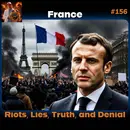


In this solo episode of World Ablaze, George analyzes the recent wave of civil unrest in France, examining the root causes, the government's response, and the complexities regarding the demographics and ideologies of those involved.
Key Topics:
- Origin and triggers of the French riots
- Government data collection policies on nationality and ethnicity
- Economic factors including inflation and fuel costs
- Distinguishing between student protests and opportunistic rioting
- Impact of social media and AI misinformation
- Government policy responses to education and economic grievances
Summary:
The episode provides a detailed examination of the 2026 riots in France, noting how legitimate protests by students regarding education and infrastructure were seemingly co-opted by opportunistic rioters. George highlights that while students successfully campaigned for smaller class sizes and better facilities, the broader unrest involving arson, looting, and attacks on police appeared to involve adult actors whose true origins remain largely obscured by French policy. A central tension in the discussion is the French government's strict refusal to record data on nationality, ethnicity, or religion, a practice rooted in the 1978 Data Protection Act that creates significant hurdles for understanding the motivations and backgrounds of the individuals involved in criminal acts.
Economically, George attributes the volatility to an 'energy shock' caused by geopolitical conflicts, specifically an escalation with Iran in early 2026 that sent diesel and heating oil prices skyrocketing. Alongside high inflation, the podcast notes that France has been struggling with long-term issues like high youth unemployment and a national debt exceeding 119% of GDP. President Emmanuel Macron’s attempts to blame external factors like American policy are analyzed, with the host suggesting that the riots were the result of long-standing, unaddressed domestic economic failures that finally reached a breaking point, serving as a catalyst for the protests.
George meticulously deconstructs the official riot data, noting that of the 2,700 arrests made, only a fraction resulted in jail time, and even fewer had their demographic information recorded. The analysis points out that while the French government claims to be 'color-blind' to maintain a unified national identity, this lack of transparency prevents a clear understanding of the rioters' motivations, particularly concerning whether certain segments of the population are integrating effectively into French society. The episode also touches on the role of far-left and communist groups in providing logistical support to the protests, while simultaneously distancing themselves from the violent aspects of the looting.
Ultimately, the episode serves as a commentary on the state of Western governance. By contrasting the successful outcomes for the student protesters—who secured government commitments for new schools, additional teachers, and fuel subsidies—with the unresolved destruction caused by rioters, George argues that French authorities have failed to address the root causes of civil unrest.
The show concludes with a warning that failing to acknowledge identity and ideology in favor of a 'utopian' policy approach may leave other Western nations vulnerable to similar cycles of societal fragmentation, urging governments to stop ignoring the underlying realities of their own populations.
Web: https://www.worldablazepodcast.com/
YouTube: https://www.youtube.com/@fontesablaze/featured
Instagram: https://www.instagram.com/fontesablaze/
TikTok: https://www.tiktok.com/@fontesablaze
Substack: https://substack.com/@fontesablaze
0:00 Welcome back to another World Ablaze. Today is a solo episode. Today is all about France, The French riots, the information or lack of information behind the riots, as in why did it start? Who was behind it? What is the data that is being reported, confirmed, and denied by the French government and the media? Everything from AI slop on social media itself to verified photos and videos of people who look a bit too old to be students protesting and looting.
0:50 people that look like, well, they might even not be from France. I'll just say it. They may even be just migrants. It seems that there are multiple parties who joined the protests that turned into a massive riot in which there were damages and stolen items and defaced buildings and businesses harassed by protesters. all under the guise of more pencils, smaller class sizes, air conditioning, and more teachers. To add fuel to this fire, the French government themselves can't even admit who's behind it because legally, well, they don't record nationality, ethnicity, religion, anything that would be an identifying marker as to your origin and who you are and what you're about, your ideology, they don't record it. At least that's what they tell the general public.
1:48 That's also what they tell reporters, news outlets, and anybody who has a question directed towards the French government. You see, they get an out. Although there have been leaks that say that their own intelligence agencies actually do record this data. Now that's interesting, although publicly they deny it. And so as far as the French government is concerned, These riots are nothing but, well, French nationals who have a grudge. And according to Macron, French President Emmanuel Macron, it's all Trump's fault. Now, let me preface the rest of the episode moving forward here by saying that I'm going to do my best to not offer too much of my own opinion.
2:34 I'm going to go through the facts and the data as we know it. And the report that I will present is accurate and up to date as of this recording on the 29th of October, 2026. And so this will keep developing. Keep that in mind. But let's talk about French nationals. Now, I'm going to get into this later in this presentation. But it gets a little murky when we're talking about French nationals. because most of the French nationals that were in the photographs and videos seem to be from North Africa. Now, not all North Africans are considered French nationals, and a simple Google search will bring this up. And as we're reading, I'm going to drop down to where it says North Africans in France, meaning a significant portion of North African diaspora living in France, particularly from the Maghreb countries of Algeria, Morocco, and Tunisia, has acquired French nationality through birth in France, naturalization, or family descent, though many retain dual nationality or foreign citizenship.
3:52 And furthermore, here in this next tab, the question is, well, how many of these North African countries are Muslim? Answer, well, all sovereign nations in North Africa are a Muslim majority. In fact, the dominant religion of over 90% to 99% of the population is Islam. Now, that by itself is not a problem. The reason I bring that up is because many people have said that the riots in France are attributed to, well, foreign nationals, illegal immigrants. I'm not sure how France defines it, but regardless, a lot of people say, many people have said actually, that it is a bunch of Muslims.
4:40 Muslims trying to take over France. Well, most of the countries that are in Africa or in North Africa, being Algeria, Egypt, Libya, Morocco, Tunisia, etc., They're all Muslim. Yet the French government doesn't officially record this. See, the French government believes that the world is one big kumbaya campfire. Unicorns, rainbows, you name it. We're all just people. And if you happen to be in France, well, you're French. It doesn't matter your ideology or where you came from.
5:22 It doesn't matter what your motivation is. None of that matters. What matters is you're either a French national or a foreign national. Everything else in between, the minutia, everything that describes you, everything that could lead to the reasoning of why you did what the hell you did and why France is burning, according to the French government, doesn't matter. Fair enough. It's your country, run it how you want, Macron. I get it. But the reality is people have questions. And so for now, I'm going to move past this because let's just discuss what we know. Let's start from the beginning. How did this all come together?
6:06 So here's the triggers. Schools, particularly one of the high schools on September 17th, staff at St. And look, before I move any further, I'm going to tell you, I do not pronounce French. I'm not French. I don't know how to speak it. So if I mispronounce, be forewarned, don't be offended. I just truly don't know how to pronounce it. So let me back up again. Let me just say, staff at a high school, they struck over unfulfilled teaching posts. Students joined the next day and the blockades spread. There's also further fuel to this fire. There was a video on TikTok on September 7th through 8th.
6:47 The account V2.95 says diesel costs 225 euros minimum and names October 17th as the date. Meaning everything that happened with the protests was being telegraphed or warned. That video on TikTok was saying October 17th is when we are going to come together and we are going to protest. And that video alone had 1.5 million views. And then everything converged and happened and or started on October 17th.
7:29 So between October 15th and 16th, we had multiple groups get together and join up. And it really seemed like it was more than one grievance now, all protesting together. So two separate grievances, for example, but now share one day of action. And so by the numbers, two grievances, one date, 338 high schools blocked on September 29th. So 338 high schools couldn't function because students protested and blockaded them. There are 1.5 million views on the TikTok call to action for the protests on the day of October 17th, 2026.
8:17 And so where does this leave us? Here's the results. So the result is the blockades here of 338 schools. And here's a video, and it's blown out because I believe due to European laws and French laws that you can't really show kids and students. Interesting Palestinian flag right there. But here's the video of the students protesting. And at the moment, it is primarily students. And then we have this video here.
9:00 This shows a 148-year building being burned to the ground. 148-year building. Now, this wasn't students that lit the fire. And in fact, by all accounts and reports, these were adults. adults that we still don't understand the origin of who they were where they're from i'm sure the information will come out later but this looks like it goes beyond pencils and paper and classroom sizes and so macron has something to say about this macron can't believe what's happening many hundreds of police officers and gendarmes were injured. When we saw the images, we all thought, what was in their heads? How can French people do this to France? Why would the town hall of Libre be bombed down, the tourist office? Why would the town hall in Marseille be invaded or the prefecture in Bordeaux? How can we have got there? There is nothing that justifies it, nothing that explains it, nothing that excuses it. We are... Pause there.
10:19 See, Emmanuel Macron himself can't believe it, can't understand why this would happen, who would do this, because why would French people destroy their own country? Well, that's been the question, Macron. The question being, were it French people? Or was it just simply French nationals of whom you don't understand their origin, their ideology, who they are, where they're from, anything? hmm i guess that's the bigger question macron why have you allowed unchecked or what seems to be unchecked and unmanaged mass immigration into france now again we got to go with what we know many people assume it is all migrants the french government doesn't want to admit it because they They don't record that information, even when they're arrested.
11:14 And the only time they may record it, and it's not necessarily obligatory, it is when they are actually imprisoned. But even then, I believe it's not a requirement. So after Macron asks, how could French people do this? He goes on to blame everything on Trump. And we should never mix up those people, those men and women who protested peacefully with looters and rioters. Because there are people out there who rightfully feel that the price of fuel is going to higher price, which is increased because of what is happening in the Persian Gulf, a war that France was not part of.
11:58 Hmm. So, Macron blames Trump indirectly. And then later when he was asked by other reporters if he was pointing shade, casting shade, whatever you call it these days, basically if he was literally blaming Trump, he said and others. Literally said and others. Okay. Now, Macron may have a point. He may have a point here. Because the reality is, yeah, a big part of the riots in France allegedly or reported to be not just about students having smaller class size, more pencils and papers and air conditioning.
12:50 More teachers. Even shorter days. No no it wasn just about that It was about the economic situation of France which we going to get into But first let discuss the triggers to the rising energy costs in France that also led to the riots, because we want to be honest about things here. And as much as it's easy to make fun of France and Emmanuel Macron, and even if I'm a conservative and I may approve or even disapprove of whatever Trump does. The reality is, I think we could point the finger at Trump on this one.
13:31 But it's not the entire reason France is in this situation. For example, if the educational conditions were bad for so long, why are they now just being heard? Students finally got fed up. And they protested. and they blocked 300 and some odd schools from operating. That got the government's attention, but even that wasn't enough. And when buildings were being burned and looted and defaced, still wasn't enough. No, no, still wasn't enough. And when people asked if these were foreigners that were committing all of these lootings and defacements and whatnot, it was denied.
14:23 I don't know. They're all French nationals. How dare you assume that? Strange because everyone in those videos, and I'm not going to pull every video up, by the way. You can look at all of these videos online, on news reports. They're there. And get past the flags. And I'm going to be honest with you. There's a lot of videos about this that have been debunked. So there are good known sources. Go to news outlets, etc. Hopefully European or French. And look at what's going on. And you'll see in these videos that it's not all kids. It is a lot of adults. A lot of adults who are suddenly angry about what the kids have to go through in school.
15:06 Which by all accounts they should be. But it's also these adults that are looting and rioting, that are being violent, that are French nationals destroying their own French nation. Right. Well, according to France anyway. Because again, they don't record the information, so we don't know who it is. We have no idea who's causing all the ruckus because it's just about Gas prices, pencils, air conditioning, teachers. Yeah.
15:48 Right. So back to what led to a lot of this. Let's talk about the energy shock that hit skyrocketing prices across the board here. So you can see right here, and for anyone listening, I'm going to do my best to call a lot of this information out. But you can see in January here, you got the cost price index against the EU harmonized price index here. And so in January through May, France sits slightly behind the rest of Europe. But what this graph shows here, this chart, is in 2026 is when the Iran conflict started, specifically in February.
16:31 And since then, you have seen the rise in energy costs, peaking in September. And a lot of this reflects why you see the increase in inflation on energy. September, it peaked at 3.4% inflation. France itself, according to their cost price index, peaked at 3.1%. So the fuel costs, diesel, up 44.1%. Heating and oil ups over 64%.
17:11 Okay. Energy is up 21.3%. Gas itself up 19%. And food, by the way, fresh foods, have seen a rise in 9.5%. So here's the data behind everything I'm talking about. Here's your cost price index here. Here's your EU homogenized pricing here. This is year over year. We're looking at 2026. And you can see from January through September, it exponentially rises and keeps rising until we get to the point of 3.1% inflation.
17:54 And the next tab here, it goes over what exactly it is that, well, had the highest cost. So in September of 2026, as is measured in September, okay, heating and oil rose by 64%. Diesel, 44.1. Petrol, or gas, as we call it in America, 25.7%. All energy costs have risen by 21.3%. And so fresh foods, 9.5%, all other items plus 3%, and then food overall, 1.4%. So energy drove inflation. Diesel was up 44.1%, heating oil, 64.6% against 3.1% for all other items, all other items.
18:43 And so there's other contributing factors here. You see, Macron wants to blame everything just on Trump. And again, rightly so. I think what Trump did in Iran did, absolutely. I mean, no one can argue it didn't affect the economy. It didn't affect gas prices, diesel prices, anything. We can't argue it didn't because it did. But let's also talk about the other economic factors in France that led to the unrest. So if we're looking at then versus now, unemployment in France was at a record of 10.4% in 2015 at its peak. Well, let me take that back. It wasn't the record high ever in France, but it was a record.
19:25 Now in Q2 of 2026, or the second quarter anyway, it's at 8.3%. And it has rose consistently over the last five quarters. Youth unemployment hit a high in 2023 of 17.3%. Fast forward to 2026 after the pandemic is over, and it doesn't seem like it got any better. In fact, it looks like unemployment for youth has skyrocketed, reported at 21.6% in the second quarter of 2026. Inflation in 2022, and again, we're still dealing with pandemic numbers, right?
20:08 5.9% inflation, but it's been over. And here we are in September 2026 at 3.4%, or 3.4%, excuse that, from 0.4% in January. So since January, total inflation has risen from 0.4 to 3.4 in France. Diesel prices nearly doubled and public debt. Now, here's another one. Here's another one that nobody has discussed and Macron hasn't brought up as a contributing factor to the economic conditions. Public debt in France in 2007, by the way, was 65.5% of GDP.
20:51 But as of the second quarter of 2026, you guys can see my cursor here, 119% public debt. Hold on, hold on. French public debt is 119% of France's GDP. I would say that's a very upside down economic position to be in. Combine that with high unemployment for the youth and what can still be considered as high unemployment for those who are not youths. Sounds like you have economic conditions that were ripe to explode at any moment among its people in France.
21:38 And maybe the classrooms were just the trigger. Maybe Trump's decision to go after Iran in February, triggering skyrocketing fuel prices, was another trigger. But we can't ignore that France has been on an economic downturn for quite some time. And it's very evident if we just look at their debt to GDP, which is currently just under 120%. So I would say France has had a problem for a while. a problem that they chose to ignore and never address. So let's move on to who marched, who was really part of the protest, because this is the big question.
22:21 And if we're looking at facts and data, as far as it is reported, according to the French government, who doesn't record, again, origin, ethnicity, ideology, religion, none of that. Well, here's what we know. So the original movement, high school students and the fuel call, basically pointing back to that TikTok video where someone upset about the rising or almost nearly doubling of diesel and then called out a call to action for October 17th of 2026. And so the result is about 550,000 marched, according to the French government, peacefully.
23:08 The Interior Ministry count, the CGT says 800,000 though, 110,000 of them in Paris. Intelligence sources say France unbowed and communist members caused no incidents. So the communists were peaceful. But in other reports, communist organizations did join in on this, not to physically be boots on the ground, but they were funding and they were providing resources for protesters or rioters, whichever the case is. And so here's who actually joined, unions and organizations of the left.
23:53 Also on the margins, alleged but not shown, intelligent sources say the far left led attacks on police. not the looting. So leftist organizations did lead attacks on police, but they didn't contribute to the looting. The looting apparently was attributed mostly or primarily to the non-French nationals. And so moving on, here's what happened on October 17th by the numbers. There were over 2,600 arrests, 2,628 to be exact. These arrests were nationwide in one day on the Interior Ministry's revised count of October 25th.
24:40 Officers that were injured totaled 1,693. So 106,093 officers were attacked and injured in these so-called protests for better education and grievances over high diesel costs. Because that all warrants attacks on police officers, injuries on those who are supposed to protect you. But I guess we can argue that the police in France haven't really been protecting their citizens lately anyway. I know that was my opinion. Inflection, sorry. But you're going to get that from time to time. And so custody, then prison.
25:21 So this is important. because not all people arrested were actually imprisoned. They were just held in custody. So that is a number of 2,700 that were held in police custody by October 22nd. 217 of them jailed. And the Justice Ministry, Interior Cities, 149 of them are disputed. So this leads us to, well, who were the people though? Were they French or were they not French? And this goes back to what I was talking about earlier because they don really record it We don know who the culprits are We have no idea who really behind it And we have no idea how we can separate French nationals or French citizens from those who are not because government ignores it.
26:16 The government of France chooses not to acknowledge it. So nationality, the stages and the baselines, from custody to prison, October 17th through 22nd, People at each stage, according to the Justice Minister Darmanin, October 22nd. So profiled in the Justice Note, there was 186 jailed 217. Now, remember when I said that the French government doesn't record nationality, origin, ethnicity, religion, ideology, whatever. Well, they do record some of those things when you are jailed. But according to this report, and as I said earlier, it's kind of at their discretion because they don't necessarily do it to all.
27:02 For example, 217 were jailed, but only 186 of those that were jailed actually had their ethnicity or nationality actually recorded. And those that were sent for prosecution, which was over 1,000, well, let's just say 1,000, and then still held in custody or held in custody at the time anyway. It was 2,700. Now, the nationality is published only for the last stage. And that number is 29% of the 186 were foreign nationals.
27:43 And what does that mean? well that means they only recorded the nationality origin of the perpetrators the rioters the people that were causing the ruckus the the damage the defacement the injuries the attacks etc out of the 2700 arrests only 217 went to jail but they only chose to record 186 of those individual's nationality. Makes you wonder why. And of the ones that were jailed, of the 186, nearly 30% of all of them were foreign nationals. And so where does that lead us here?
28:28 And why is that the case? Well, the reason that is because France doesn't feel it's important to know these things. They think that they're protecting your privacy by doing so. So in 1978, there was a French Data Protection Act. It bans processing data that reveals racial or ethnic origin, political opinions. It's kind of important, right? Religious or philosophical beliefs, also important, I would think. Or union membership. Exceptions, so here are the french laws that protect french nationals or individuals the pecs are data well according to a french anyway the french government So in 1978, there was a French Data Protection Act.
29:37 Bans processing data that reveals racial or ethnic origin. Political opinions, which in this case seems to be very important, right? Religious or philosophical beliefs, which I also believe would be, well, important. Because that is the baseline for your ideology and how you fit into a country's society and governance and framework. But the French ignore it. They also don't reveal union memberships. And there are exceptions. Explicit consent, meaning that if a member of the public says, yes, you can have my data. Public interest and legal basis, which is very interesting because given everything that's going on in France right now, you think it would be a major public and legal interest.
30:26 But that's not all. There's the Constitutional Council in 2007-557, D.C., November 15th of 2007, struck down a clause of a 2007 immigration law. Diversity studies may use name, geographic origin, or previous nationality, but not ethnic origin or race. So, again, when it comes to diversity studies, mainly used by higher education, etc., they could use this just for the basis of, I guess, reporting, collecting data, which the French government doesn't do, but yet they have this clause.
31:13 It gets very murky. And then we have the NCS TAO surveys, which are voluntary research surveys. They ask about migrant background and religion. They describe residents, but not the 2026 rioters. And again, these are voluntary. There's also GDPR Article 9, the EU rule behind Article 6. The same special categories of data are banned by default. French law sets its exceptions by referencing to Art 9.2.
31:58 And then there's the CNIL's limits. State files holding sensitive data need a decree after a published CNIL opinion. intelligence files can skip publication research may not use an ethno-racial classification so even in research you can't use ethnicity and you can't use racial classifications and even if their intelligence units are collecting this it still can't be publicized and then there's the nationality versus origin so nationality is a legal status get this read from an ID, papers, in court files.
32:43 Origin is not. Dual nationals and French citizens of Maghreb descent, meaning those North African countries that I discussed earlier, count among 70% of the French. 70% of the French. So those from these North African nations that are over 90% Islam are considered 70% of French nationals. I got to read that again because that doesn't sound right, but there it is. There it is. Origin is not, okay, dual nationals and French citizens of Maghreb descent count among the 70% French.
33:31 So, all dual nationals And those from the North African countries are 70% of those dual nationals or people from that region. Interesting. So that makes basically most all nationals, French nationals that seem to appear to be of African descent or from Muslim countries to primarily be from those North African regions. and because of French colonization and French laws, those members of that region are considered French nationals due to birth, to family, etc.
34:20 And they still can hold dual nationality and have allegiance to their nation state within that North African nation that they live in or their families from, carry that ideology of Islam that accounts for over 90% of the population in those regions, basically all of Africa, really. And so the French government doesn't believe, doesn't want to admit that maybe there was another nefarious, I don't know, cause or call to action behind the actions that took place, these protests that turned into riots. Maybe it was just an opportunity for these peoples who don't really necessarily integrate, align, or care about France.
35:10 Could be, possibly. Of the people they actually jailed, nearly 30% of them happen to be foreign nationals, which seem to be primarily from these North African nations. But the French government doesn't want to admit that. They don't want it in the reporting. And I kind of understand it. They don't want to cause an uprightity. They don't want to see French nationals and citizens. And again, as I'm talking and I'm doing this presentation, it's getting fuzzy as to who really is a French national anyway. But it seems that they're just trying to keep people from rioting, targeting people, going after others, defacing buildings from, I don't know, like mosques, for example, which apparently there was a small percentage to near.
36:07 Actually, I think there wasn't any mosques that were damaged in all those riots. but again i look i i know i'm inflecting here i know i know might be giving you a little bit of my opinion without actually coming out right and saying it but these are the questions that people have that the french government refuses to answer because they just don't have the data they don't have the data because well they don't record it anyway so who's really behind it look But there really was, I want to back up and make sure this is clear. There really, really was a protest by students and teachers' units.
36:49 There really was. This did happen. There was actually a protest due to the lack of educational amenities, the overcrowding of classrooms, the dilapidated buildings. All of that is true. So let's not take that away from those people who protested and who ultimately got the government to finally pitch in and fix that situation. They did. They're going to reduce class sizes now, starting as of 2027. And I think by 2028, all high schools are going to be, I think secondary classes are supposed to be at 28 people max.
37:29 And we're going to find out later. I think I have that data here. But as it is, as it stands before the protest, it was over 35 people per class. And they didn't have enough teachers. And they didn't have enough building spaces. So I guess the French government is now going to build more facilities. They're going to build more higher education facilities as well. They're going to hire more teachers. They're going to put money in for loans that will help to expand the educational infrastructure, finally. So this is a great example of how protests, peaceful protests, even if they're peaceful, as they should be, by the way, if you scream loud enough with an actual real cause or reason behind your protest that is very justifiable, you can absolutely affect change.
38:20 And in this case, that worked. But it still doesn't explain the 2,700 arrests. It still doesn't explain why most all videos we've seen of those rioting, looting, and burning down buildings, etc., all seem to be adult males, not students. All seem to be people whose, let me just say, nationality is questionable. None of that is addressed. None of that stress because even Macron, in the beginning I played earlier, couldn't understand it. Why would French people want to destroy their own country, he asked. Because they not fucking French Macron That why That why I know I know I know Yeah you can verify or deny it because there laws against recording the information right And you don't even record all the information after you even arrest and jail somebody.
39:14 So how do you know who you're fighting here? How do you know who you're defending? How do you know what you're supposed to do and where your energy is supposed to be targeted as a government who's supposed to look out for their actual citizens? Like, how do you know any of this information if you, air quotes, allegedly, don't record this information from the outside anyway? None of it makes sense. Where's that rainbows and unicorn world for you now, Macron? Where is it? Where's that Kumbaya campfire moment? Oh, that's right. The fire was burning that 148-year-old building in La Malle.
39:55 Hmm. that's that's where it was all right so let's talk about those who are jailed let's talk about the uh who these people were actually according to what the french government did record okay so why the 186 jailed are in prison now here's the reasons that these people are in prison We'll start there. 46% of them were because they were looting. 26% because they were actually rioting against the police.
40:38 Basically not rioting. Let's just say fighting the police because that's what it really was. 18% for other offenses. And then there were 10% for both, which I'm unsure what that means. I guess they were both rioting and fighting against the police and committing other offenses. And then we have this, the foreign nationals versus French citizens, men versus women. So the nationality of the 186 jailed, 70% are French nationals, 29% foreign nationals. But again, when it comes to French nationals, you either are or you're not.
41:18 See, what's important here is your, I guess, your ethnicity. Your origin, where you're from, where's your family from? What's your ideology? None of that stuff's been recorded. It's just, again, unicorns and rainbows, kumbaya. It's either, if you're here, you're French. And if you're not approved to be here, you're not French. That's it. But that doesn't work in this case. It doesn't work because you cannot prove who is behind anything. As I said, you cannot determine what ideology these people believe in and as to whether or not it's compatible with France or Europe or any place for that matter.
42:05 And if you should be, I hate to say targeting, but it's basically what it is, targeting that certain demographic as people who oppose France and who support the rioting and the looting and the attacks on the police. other important piece of data is of the jail arrested and jailed anyway the 186 95% were all men all of them all of them and of course this data it only covers 186 people jailed by October 21st October not all 2700 in custody or the roughly 550,000 marchers of course we understand that this is just covering who was actually jailed.
42:57 So again, it's fuzzy because they arrested 2,700 people for these heinous acts, yet they didn't record anything about them until they jailed them. And then of the 200 some odd people they arrested to be put in jail, they only recorded information on 186 of those people who were in prison. Right? Okay. And then there's footage of people waving Palestinian flags. There was footage of a giant Palestinian flag being draped around the Eiffel Tower. There was Joan of Arc defaced. There was so much out there.
43:39 And we got to be honest, some of it was AI slop, but there's a lot of it that was not. There's a lot of it that was verified. A lot of it that the French government themselves denies. And it's pretty hard-pressed to see one picture without some kind of reference to Palestine or whatever other allegiance they have. And keep in mind earlier when I was going through all this that there were far-left and communist parties that did become part of this protesting and rioting, which allegedly didn't physically get involved but did support. And what does that mean? I don't know. Maybe money and funds. Maybe it could have been the pallets of empty bottles that we've seen in videos across the internet being dropped off at these riot stations.
44:31 And with everything going on, I really feel bad for the students who had a legitimate protest, a legitimate gripe against their government for not being able to be given the resources and materials that they need to actually learn and become functional adults. because this entire protest got hijacked by a bunch of opportunists who we can't even verify if they were actually French anyway. A bunch of opportunists from North African regions who are, I guess, French but not French also. A bunch of opportunists who, of the ones jailed, made up 30%. a bunch of opportunists who were the ones who looted and attacked police and burned down a 148-year-old historic building, among other buildings.
45:28 There was even the question as to, well, were there religious sites? And again, we know why this question was asked, because people were wondering. because according to all the videos, reports, people on the ground actually in it, it's assumed that these were just a bunch of Muslims trying to take over France. I hate to tell you though, that data doesn't seem to support it. But again, that data is not necessarily recorded by the French government either. So as much as someone like you or I, who, I mean, have eyes to see, ears to hear, we still can't confirm it because the French government will not confirm it and continues to deny that that might be the case.
46:20 They don't even want to acknowledge that it is highly likely or a real possibility. But let's discuss the religious sites. So the 2026 incident in Marseille, churches were forced. And this is all that was said. The diocese of Marseille, or Marseille, sorry, I'm horrible at pronouncing this, by the way. I already told you that in the beginning. They confirmed churches were forced open on October 17th, but gives no names or damages. So they won't confirm which churches were forced open, and they will not say if they were damaged.
47:04 It seems like the church itself, the Christian church, or the Catholic church rather, has taken a stance of neutrality and not trying to get involved or to volunteer any information. And maybe that's intentional because they don't want to see more riots and targeting of certain individuals. And in 2026, there's another incident in Paris. There was a synagogue break in. So a Jewish synagogue in the 19th district on October 17th or 18th, there was a Jewish community's security says it was likely a burglary unrelated to the protest.
47:46 So even in this incident of a synagogue, they're trying to say, well, we don't think it's necessarily related. It was just a break in. Okay, fair enough. That's just being honest. That's fine. We need to separate the fact from the fiction. We really do. And it's great that if the Jewish community is admitted, no, this wasn't targeting. They weren't targeting us. This just happened, and we believe it was a burglary. Great. And then there was a church that was set on fire. The cause is unknown. And again, there was also a claim of five churches that were burned down, targeted, like all five.
48:27 But I guess that claim was debunked. So when it comes to whether or not these religious facilities were targeted or attacked, it's very fuzzy because the Catholic Church won't necessarily give the information as to which churches were, quoting again, forced open, being vague about the damage. They just want to wash their hands of it for whatever reason because I don't think they want to be targeted either. If you provide that information, I think they're afraid of being targeted themselves. And so here's some background, though, because before 2026, if we look at 2025, here are the list of anti-religious acts in France.
49:11 That's right. So for a government that doesn't record any of this particular type of data, somehow they did cough up this data. So it gets very confusing as to what's considered, I don't know, data you can share and tell the public to actually collect versus that which you don't. It's, again, very fuzzy. It is very fuzzy. But anyway, reading on. So there were over 1,320 anti-Semitic acts committed in France. There were 843 anti-Christian acts in France, which I didn't even know that was even a thing or still a thing.
49:56 I mean, I hear about it in Africa, especially when we're talking about Nigeria, where there are Christians being targeted and killed by Muslims and terrorists every day, literally being killed and persecuted. You see that happening in the Middle East and many countries as well. But we wouldn't expect that in France. And so 843. and as far as anti-Muslim, which are considered anti-Muslim acts, there were 326, but again, we don't know what those acts really are. We don't know if they're physical, if they were violent, if they were targeting religious facilities, or if it was just someone just questioning Islam, which seems to be an offense everywhere in Europe.
50:40 Can't question Islam in the UK, you can't question Islam in France, or you have the social media police coming after you to throw you in jail. Sure. So here's some more data. So here's France's anti-religious acts recorded in 2025. As I said, 1,320 anti-Semitic, so 16% versus 2024. So 16, I guess it went down a little bit, but anti-Christian went up. it went up 9%. So 843, which was 87% against the property. So 87% of this anti-Christian acts were against actual property, meaning churches, etc.
51:26 And then anti-Muslim, I guess that's something in 2025 that just started. And so it looks like there were 326. And here's the data behind the chart so you can see it clearly right here. Basically, the numbers I gave you. And there you go. So where does that leave us here with France and the riots? With a lot more questions, a lot more questions than answers. Because the intent and the question and the intent of me doing this and people like me doing this and, news reporters and legacy media even, is what is behind it?
52:11 Is it Trump as Macron wants to say? Was it just disgruntled high schoolers? Was it foreign nationals? Or was it nationals of a certain descent and origin? We have no idea. And the government doesn't seem to want to know. Although they are flabbergasted, Macron anyway, as to how a French national would want to destroy their French country. Maybe it's time the French government start paying attention. Maybe they want to, I don't know, believe their own citizens, the people whom they govern and answer to.
52:53 Maybe look into all the reports. Maybe look into the cries for help. Maybe look into that. Maybe record it. So you have a record. So you can match that data against current data, and you understand exactly what's happening. You can see the exponential rise or fall of certain acts and incidents as it relates to certain individuals from said origins or ideological beliefs. That might be helpful, Macron. Could be, possibly. Very helpful, especially in this case.
53:34 And the other thing that we didn't discuss or hasn't been discussed, well, I kind of brought it up a little bit, is that to a degree, protests do work when done correctly, with a proper grievance, with one that is understandable, that the government himself can look at and go, yeah, you got a point there. You got a point there. We need to do something about this. And due to the protests of the students, because I don't want to take anything away from the French students, the French government actually did some things. So here's what happened. Some of these good, some of these bad, however you look at it. But the government response to all this has been curfews and March bans.
54:16 So now there's curfews in several cities. In Paris, they have curfews. They have, I mean, it looks like pretty much most major cities, they have curfews and bans on non-union marches. The justice, here's another result of the protest, 2 arrests in hell but only 217 jailed The ministry of the interior sites that 149 are in dispute 917 sent before prosecutors of the 2700 that were actually arrested And more than 1000 by October 22nd.
55:00 There was a fast track trials. Prosecutors asked to seek social media bans. so that's interesting right there because they realize that the people on the street now there's a two-fold thing here the people on the street can get the information out which the government obviously wants to control because the French government doesn't even record basic data on peoples with their origins ethnicities their ideologies etc intense if they don't even do that that means that social media is a good way to circumvent what the government is trying to hide so The other side of that is the government wants to put a social media ban in place because now it quells the fire that is fueled by AI slop and misinformation, which in this case, there has been quite a bit of that.
55:49 Everything from fake flags to fake incidents to certain events taking place that really never happen. A lot of that was AI. A lot of it has been disputed. But here's the positives. So schools, the October 26, sorry, October 26 package, excuse that. The para course replaced in 2028. So 10th grade classes capped at 28 people, 15,000 higher education places will be built. Post cuts canceled. So basically, cutting jobs has been canceled.
56:32 Plus, they're going to add 500 teaching positions. There's been 4 billion euros of building loans and student groups. Crumbs, I'm not sure what that means, but basically it leads to a bunch of positive stuff towards education and fixing the situation that the grievances were originally about. And then when it comes to fuel, there's a 450 million euro package, 100 for long distance commuter aid or 5.5 million workers. That's good. So 100 euro long distance commuter aid for 5.5 million workers. There's going to be 1,000. Excuse me. Getting to the end.
57:12 I'm getting tongue-tied. There's going to be a 1,000 euro cap on the employer fuel bonus. And there a strategic stock diesel up to 18 cents a liter cheaper for November 1st No new fuel measures on October 26 So the long story the short story everything in between, the protests and the grievances of the students have been answered and the government of France paid attention and came through and they're going to alleviate that situation. But France is still in a position where they're choosing to put their head in the sand and ignore the root causes of all of this. Much of it really, while we can blame Trump for the attack in Iran, which led to the high fuel costs around the world, I can accept that. I think everyone can admit that that is a thing, that that's a reality.
58:13 But the other reality is France has been facing high unemployment for quite some time. people that are considered youth, their unemployment rate has risen, not gone down. And there are other economic factors in France that have not been answered. And even if we're talking about the grievances in the educational system, those have been largely ignored for years as well. And as to whether or not they have an illegal immigration problem, whether or not they have nefarious peoples who are there with bad intentions to act out against the French government and take advantage of their social welfare programs.
59:00 France may want to start recording the data on that so they know exactly how to handle the situation. Maybe open borders isn't such a great idea. Maybe. Maybe. Because you don't know what you're dealing with. You don't know who's doing what. Because it's obvious it wasn't the students that were looting and rioting. In fact, it was adults. It was adults of a certain region. It was adults with a certain ideology and standard of living or what they feel is an acceptable way to act in society that felt entitled and took advantage of the actual protest and turned it into a riot where over 1,600, nearly 1,700 police officers and government people were injured.
59:46 were injured because they were directly attacked. And maybe the French government wants to look into these far-left and communist organizations who were behind all of it. Not directly involved, not physically, but supporting monetarily with pallets of, I don't know, bricks and bottles and whatnot Maybe you might want to look more into those organizations I mean that some data that you actually recorded because you found out they were behind it that they were a big part of what was happening But in the end, it's time for Macron to pull his head out of his ass. It's time for France to realize you have an issue.
1:00:27 And unfortunately, again, the world isn't rainbows and unicorns, and it's not a big kumbaya moment on the hill. It just isn't. as much as it can be from day to day. And again, it's not all fire and brimstone for everybody. Even in France, it hasn't been. But this situation could have been avoided if the French government actually listened to their people. And this is a warning to all Western nations. We're seeing the same thing happen, starting to develop and maybe happen actually to the degree it happened in France in the UK. And we're seeing glimmers of it starting to quell and develop here in the United States of America.
1:01:11 Western nations seem to be under attack. And a lot of it is due to not just economic pressures, but to the governments themselves ignoring the people's requests. Ignoring the fact that they need to find solutions that the government themselves, if we're being honest, created. situations that got out of control because the government themselves created through policies, lack of enforcement of policy laws, and turning a blind eye to corruption. So to the protesters, the student protesters, I tip my hat. I say, good job. You got the government's attention. They took care of the situation, and they offered a solution that seemed to be acceptable for you to continue to learn and become a functional adult.
1:01:58 But to all those who were attacked, injured, and buildings that were defaced and destroyed and businesses that were looted, France doesn't have an answer for it. Because France ignores the root cause to those problems. And with that, I'm going to leave you with a have a good day. and don't forget please continue to share World of Blaze with others so we can grow the show together and have a great day you


