Phil Mauriello - Prop 50, California Corruption, and 15 Minute Cities
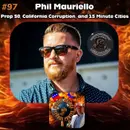


Phil Mauriello, host of the "California Underground" podcast. We discuss all things California starting with Prop 50, revealing the truth, intentions, and consequences. We then dive into the accountability issues and government malfeasance of California as we challenge California's homeless program, High Speed Rail project, and even the questionably exorbitant salaries California leaders.
Support our Sponsors!!!
Click Here For Discounts!!!
Web: https://www.worldablazepodcast.com/
YouTube: https://www.youtube.com/@fontesablaze/featured
X: https://x.com/fontesablaze
Instagram: https://www.instagram.com/fontesablaze/
Threads:https://www.threads.com/@fontesablaze
Please like, follow, and share the show!!!
Support our Sponsors!!!
Web: https://www.worldablazepodcast.com/
YouTube: https://www.youtube.com/@fontesablaze/featured
Instagram: https://www.instagram.com/fontesablaze/
Substack: https://substack.com/@fontesablaze
Hosted on Acast. See acast.com/privacy for more information.
0:00 okay well the blazers i want to welcome phil more yellow he is the host of the california underground podcast um and it's very appropriate that he is here because with everything going on in california i wanted phil's expertise because we're gonna touch on prop 50 and a few other things going on especially what's happening the palisades i i am not as averse as i should admittedly because you know everything going on geopolitically around the world i've been covering a lot of that. So you here is awesome. And in our conversation, we also just want to get to know you and get people to listen to your podcast because I find it to be one of the better ones in terms of what's going on in California because you're well-researched, which is great. And you don't really... It's not like you're standing up there with a hammer, beating people in the head with like, no, you need to believe this because of whatever and yelling from the rooftops. It's like, here's the facts. This is why you need to look into this. And this is why you should probably vote this way or consider this opinion. So very, very cool, man. And kudos to you for that.
1:03 I really do appreciate that. Thank you. Before we get into the Prop 50 thing, I do want to get a little background. How long have you been doing this? Because I found you on Instagram and your videos. I'm like, wow, this guy's really good. How long have you been doing it? Well, I started this back in 2018. I was always into politics ever since basically 9-11. I was a sophomore in high school. And I got really invested in politics. George W. Bush, all that stuff, the war in Iraq. And I just always been into politics ever since then. I've done different political things. And then living in California, I realized there's no one really talking just about California. And California has a ton of issues and a ton of news that's always happening. And so much of what California does ends up on the national stage.
1:53 that it's important people know what's going on out here. And also, more importantly, I love California. I'm originally from New Jersey. But at this point, I think I've lived in California longer than I've lived in New Jersey. And I just want the best for the state. So I decided I bought a $30 microphone off Amazon, started streaming or just started recording Audacity. I was just putting a podcast. Slowly grew from there, started doing Instagram, Instagram lives. COVID was a big thing that really helped kind of push the profile because people were starting to go, wait a second, who's my like, who's this county supervisor who's telling me what to do? Why can't they tell me to do this stuff? So people started to get really interested in local California politics. So that was a big boost.
2:36 But yeah, since 2018, it's grown. My co-husband now, Camille, has joined. She's an amazing researcher. She does a lot of deep dive. So when you say they're well-researched, a lot of credit goes to Camille as well. She's sort of the person behind the scenes. We both do a lot of research, but she does a ton of research, deep dives. So yeah, it's been 2018. We've been growing. YouTube's been growing. And here we are still talking about it. Yeah. And I found that COVID was a catalyst for many podcasts to be pushed over the edge, to break the wall. I think a lot of people were courting with the hobby of podcasting and then have these interests and they want to express their opinion. So almost like for me, it was like, why not? And I'm hearing everybody else talk all this BS, like, why can't I have an opinion? Why just, you know, go out there and do it. And during COVID, when you're locked in, you have more time to think, more time to research, you have more time to question. And then all of a sudden, everybody was like, hold on. And then some people really took off. Some people did really well.
3:36 It seems like you're doing very well for yourself as well. So really, really cool, man. And hats off to Camille for the research. Because yeah, she does a good job. So let's talk about the research stuff. I'm not sure how far you've gone yet, but I did want to touch on Prop 50, as we discussed earlier before I recorded, just because I was literally going to do a show on it. But since this lined up, I figured why not have this conversation with you? So let's start with, first off, I don't even know your politics, but to me, that doesn't matter. Let's just call this for what it looks like and what it actually is. I want to get your assessment, what you think about Prop 50.
4:18 And in my mind, this is just my opinion, it just looks like a tit for tat type of thing. Like Texas is doing it, so I'm going to do it. The Republicans are doing this, so now we're going to do that, which is just my team versus your team, BS. What's your thoughts on the sudden redistricting to win the midterms? Yeah, it's a whole bunch of things. And, you know, we're in such a tribalistic society that each side has kind of dug their heels in on what their narrative is. But there is a lot of facts that go into why we're here. And just to ask what my politics are, this is basically my politics right now, if you can read it. So, Democrat, Republican, tear it all down and start all over. And I agree with that, by the way.
5:00 Yeah. I got to a point where I was like, they're both tribalistic. sometimes breaking through both sound barriers is tough. And we try to do our best on the show and we ruffle feathers and people get upset at us. But whatever, that's our prerogative. But Prop 50, we learned a lot. We had Mike Garcia on who was a former congressman. And he did a really good job explaining to us why Prop 50 is happening. And it all started way back in 2021 with a lawsuit from the Biden DOJ. It was Merrick Garland, who was the attorney general at the time. And they sued Texas over their redistricting after the 2020 census for violating the Voting Rights Act.
5:42 And so this went back and forth for a long time litigation over these districts. And finally, it just got to a point where, okay, so now they had to redraw their districts. So this was a court battle. This wasn't like, I know Democrats are trying to paint this as Donald Trump woke up one day and said, hey, let's squeeze more Republicans out of Texas and all these different states. Like we should get more Republicans because of this. it was more of an offhand remark because of the redistricting. It was kind of, you know, he always says stuff right off the cuff and says, oh, I think we should get five more out of this because of the redistricting. But that was a result of a long litigation battle with the Biden DOJ. So this kind of narrative that Trump is trying to rig elections is inherently false.
6:26 And it's not the full story because Texas is only doing this because they were court ordered to do so. It's not this fascist dictator reason for him to try and redistrict Texas to get more Republicans. And that was the result. And of course, whenever Donald Trump says something, you have Gavin Newsom, who has been running for president since he was elected governor of California. Oh, no. He's never admitted it, though. No. He keeps saying, you know, I have more important things to worry about. And I'm focused on the state. And it's like, yeah, you're focused on your presidential ambitions. Let's cut the crap. Ever since you were elected in 2018, you've been running for president of the United States.
7:09 So whenever Trump says something, Gavin Newsom, his whole thing is, I'm fighting against Trump, even though he's not going to run against Trump in 2028, but I guess that's his whole thing. He wants to be the anti-Trump. He jumped on this and saw an opportunity and said, well, if they're going to redistrict and get more Republicans, then we're going to fire back and we're going to do redistricting. And that's when a lot of people went, wait a second, why are we going to redistrict? Exactly. We already have this independent redistricting committee led by citizens. And that was something that was put into the California constitution back in 2008 under Republican governor Arnold Schwarzenegger. And that's where Schwarzenegger is hitting the campaign trail, telling people this is, you know, this is unconstitutional.
7:53 This is taking away power. And we can talk more about that. So basically, California is doing this as a political move, and they're painting it as we're trying to balance out what's happening in Texas because Trump is doing this power grab. When that's not the full truth, that Trump is not doing this power grab, it's all because of this litigation started by the Biden DOJ. Yep. That's pretty much what I was, when I looked into it, that's exactly what was going on with Texas. And right now, even with what they're trying to do with redistricting, there's a few, I think there's a few districts that are kind of hung up in the court still that haven't been approved. And this is nothing more than, this is just political warfare.
8:34 I mean, really a battle back and forth to win. Gavin Newsom, to me, is doing nothing but trying to ensure that they do nothing but secure a Democratic nominee moving all the way into 2030. and the problem with this whole redistricting that we're doing right now, what they're trying to do is they're saying it's temporary. Yeah, temporary, but in effect till 2030. Well, that kind of conveniently almost aligns when you're supposed to redistrict anyway. It's roughly around every 10 years or so unless there's like a special redistricting, right? So this is all it is and it's also a fight. So there's two things I look at, Bill, from my perspective. One is they're just doing it because they're opposing the Republicans, period, or the conservatives, whatever they want to call themselves these days.
9:17 I'm not really sure anymore. So that's what's going on. The second thing is it's securing Democratic rule in the state of California. And I think a lot of people aren't seeing past just their opposition to Trump's administration when, like you said, he has nothing to do with this. They're not looking at the broader view of what's going to happen to California as a state once it's passed. So once it's passed, conservatives are already underrepresented in California. And there's a lot of them, but the way it's already, the way that they're sprinkled out and they're already being counted into certain districts, they're not fully represented. And so what's going to happen is when they do this, some people are advocating for like, well, it's great because now districts three and five, for example, could almost be combined.
10:03 And now it's going to be a strong Republican district. Well, yeah, but you're also pigeonholing them and grouping them into one district against all the other Democratic leaning districts. So their vote isn't as strong. And then the other thing that they're trying to do, and I'm sure you know this, I'm just talking. But the other thing they're trying to do is they'll start pulling in, well, let's take some Republicans from this district, put some Democrats into the other one. And by doing so, watering down how strong the vote is in those districts, whether it leans Democrat or Republican. In this case, I think they're just trying to water down the Republican representation or the conservative representation. And you can correct me if I'm wrong, but that's just kind of how I saw it and what's happening. How do you feel about that statement?
10:46 Well, I've made multiple statements, but how do you feel about conservatives not necessarily being represented in California? Do you feel that way yourself, or do you think there is enough representation in that this redistricting may actually be benign? Maybe it is needed? Yeah. All right. Straight to the point. Let's kind of look at the overall argument they're trying to make. Right. And I just did a video on YouTube kind of fact checking several of the yes prop on 50 or yes on prop 50s. And there's always a consistent theme that runs through all of them. And they're the buzzwords. They're the buzzwords that get Democrats out to vote. It's democracy. They slipped an abortion somehow. They blamed it on Trump. And then the other one is power to the people. Like you're seeing all of them say, oh, we're returning power to the people. Even Barack Obama now with a yes on prop 50.
11:41 He said, it's about returning power to the people and independent. And none of it could be more opposite. It's literally they're telling you the opposite of what's happening is they're not giving power to the people. They're taking power away from the people because we have this independent redistricting committee that is led by citizens, not by the legislature, a super majority Democrat legislature, mind you. So they're taking that voice away from the people. They're not actually giving power to the people. It's the complete opposite. it. And I don't understand and I can't get anybody who supports yes on Prop 50 to answer this simple question. How is it fair that if you think, all right, let's start with the premise that this wasn't mandated or this wasn't a court order, this had nothing to do with litigation.
12:27 If your premise is to start with, well, they're disenfranchising and taking away the voice of people in Texas. Ergo, our response to save democracy is to disenfranchise voters and take away their voice here in California. And to me, I still am scratching my head going, how does that make any sense? How can you be a bastion or warrior for democracy if your way of combating this is to punish people here in California If you think this is such a big issue and you want to put it to the people 2026 is coming up And the districts are already drawn And representatives can go into those districts and the voters can vote in those districts.
13:10 Maybe flip a couple seats. Say, hey, we need to get a couple more seats because of what they did in Texas. We want to, you know, look at what Trump's doing. Let the people decide. The districts have already been drawn. They've been drawn by the Citizens Commission. And I keep calling them all different things, but it's the same thing. The Independent Commission. name. It is. Yeah. Yeah. I just called the independent. I know there's an official name. I never can remember it. Um, citizens commission on something, whatever. I don't know if they always have to, regardless it's, it's taken out of the hands of the governing body of state of California, which is how it should be. It's correct. That's how it should be for the moment until 2020, 30. Uh, so, um, it, it, there was an opportunity to put it back to the people, which is let the people decide in next year.
13:54 Let them go to the ballot box. If they're upset that Trump is doing this in Texas or you're upset at what Trump is doing, let it be decided next year. There are plenty of swing districts here in California that are close. There's definitely districts that Republicans hold now that are not safe Republican seats. Young Kim is one that comes to mind in Orange County. Her district is always very, very close. That's an interesting one. that county. There's a couple districts. Orange County has become a swing district, which was a predominantly very red county. Now it's kind of gone back and forth. But that, to me, makes more sense if you truly believe in power to the people and democracy, not let's completely rig the election.
14:39 And some of these gerrymandered districts look so bad that it's just blatantly obvious. You're literally doing this just so you can get more Democrats and stick it to Trump. And there's one county up in the state of Jefferson, I call it that because it's easier to recognize, that reaches down and grabs a bunch of Democrats from Marin County. Oh, up north? Yeah, way up north. And if you looked at this county, you thought you were in the middle of Oklahoma or something. It's all ranchers, farmers, agriculture, you know, salt-y-earth kind of people. and then you're blending them with the champagne, cul-de-sac commies out in Marin County.
15:22 And now it's like a swing, lean blue district. And to me, that's like, you've taken that whole swath of people, removed their representative and their voice just to stick it to Donald Trump. And to me, I just think that it's such a blatant power grab. And it's sad that the sides have become so tribalistic. they don't see it as that. They just see it as, well, I hate Trump and I'm going to do this because I hate Trump. That's okay. So you nailed it. That's a problem. And I don't recall what exact district is, county, but I know what you're talking about because anything that's close to the Bay Area, it seems gets affected by the Bay Area. Like they just kind of override everybody else's, you know, needs or what they want to have happen for their community, which is sad.
16:07 And then where I'm in the Central Valley, I'm seeing it become more purple. just by virtue of people trying to move over for housing that is more affordable. And so it's really like, it's just a big commuter district is all it is. Everyone drives to the Bay to make their money. And because of that, it's becoming purple now. The problem is exactly what you said. People don't know why they want to vote for Prop 50. I literally had this conversation last night. I'm out with my wife. We're hanging out. and basically I had to ask, okay, but why are you voting for Prop 50?
16:48 And I never got a straight answer because most people don't know why. The problem with California, not just Californians, but most people are just living on the surface of headlines. They're not going beneath the propaganda or the messaging, right? Or the advertisements. I was on threads, which I don't know if you do that. I recommend probably not unless you want to get into some heated arguments. But I was on threads just scrolling prop 50 and a lot of people were like basing what they know off advertisements literally posting like this advertisement told me this like what's the what what is this about like i'm voting this way because i saw this ad and it said that i need to vote yes due to xyz and it and i never thought that people are still in that state where they they literally just believe the ads like they don't want to go out of their way past the advertising or the headlines to find out more.
17:36 Like, how is this going to affect me? So beyond misrepresentation in California, which is really what's going to happen, it's setting the precedent for the future because the government has proven to never where the citizens give up a little and then they give it back. They're saying, oh, this is temporary. It's just going to go back. Well, that's bullshit. You know it's not. You know that it's never going to go back. Not until we maybe possibly could flip Republican down the road. And then at that point, they're going to be complaining about the Republican Party doing whatever they do. So, you know, it's just a vicious cycle of they did this, so we're going to do that. And it's all about wins instead of what's right for the people, which is very sad. That's my take on it. Yeah, and that's something I've been grappling with as well is it's not only just here in California.
18:21 I fear of the long unintended consequences of this style of tit-for-tat, this kind of political warfare of, well, you did this, so now we're going to rig our elections to do this. And then Illinois jumps in. They go, well, now we're going to rig our elections to do this. And it gets to a point where it's just, the people in power are fighting for more power and they don't care about the people. The funniest was Massachusetts who said, well, now we're going to do it too. And everyone pointed out, well, you've already gerrymandered your whole state that there's not one Republican out of Massachusetts. So I don't know what else you're going to do. but this whole like it's just these powerful people like Pritzker and Newsom they're all just battling for power against Donald Trump they don't really care about the people no and they have enough of a base in their respective states where people will support it and people are fine with it but if it was the other way around I don't think people would be so on board with it and another thing that I think maybe this is related to is the 2024 elections. After 2024, that map of the difference between 2020 and 2024 of what California looked like was an enormous shot across the bow to the Democratic establishment here in California. The fact that it went so red and so many counties and so many areas went red for Donald Trump, I think that scared the crap out of a lot of Democrats
19:54 in California. Even Gavin Newsom. I mean, Gavin Newsom, days after, was out in the Central Valley in the Inland Empire promising jobs, talking to people, hey, why did you vote for Donald Trump? We've still yet to see that program for jobs that he talked about or promised, but that's Gavin Newsom. He loves his press conference. We still haven't seen the bullet train. We still haven't seen the program for the homeless with all the billions of dollars that somehow disappeared and can't audit come into effect. One day, I'd love to do an episode just going through some of like Gavin Newsom's big promises and then following up and being like, well, here's his promise from 2018. Let's see where it is now. Yeah. I bet most of them aren't even completed.
20:35 So I would love to connect with you on that one. That would be interesting. I think that scared them. And I think this is a way for them to grab a little bit of that back because they see that the tide is turning in California. I know people don't want to believe that, but I think the tide is turning in California slowly but surely. And they see that and they figure this is a way to grab power right now until 2030. Right. And maybe stem a little bit of that momentum. Maybe keep some Republicans home. Maybe they don't vote as much. Maybe they don't show up. I think you're right. I honestly think you're spot on with your assessment, man. I really do. You know, I think I think they're scared and I think they saw an opportunity to shore up their power once more.
21:18 Now, this doesn't really this doesn't change the state legislature. So just for your viewers to know that this doesn't change the local state legislatures, which that itself is its own battle. But if you're in a district, a congressional district that is now, it went from red, deep red, to leans blue, you may get a little more disillusioned as to how you show up. Do you show up? Does it disenfranchise? Does it keep 10,000 or 20,000 people away? And a lot of these local elections in California are decided by less than a thousand votes. You know, county supervisors, state legislators, state senator, these are very close elections.
21:58 And if you can disenfranchise and discourage Republican voters from showing up, you've won the battle and at least stemmed the momentum for a while. I think it's still going that way. They're just trying to kind of put the brakes on it. So I think it's all, all of this is wrapped up in why Prop 50 is so damn important to Gavin Newsom and to the Democrats here. It's all a power grab. It all comes down to, it's just a political tribalistic power grab. All right, everyone, it's time for me to tell you about Bear Knuckles gloves. That's bear like a grizzly bear. So spelled B-E-A-R, knuckles. And here's what I like about Bear Knuckles gloves.
22:39 Baranocos gloves are durable. They're comfortable. They're made to protect your hands as they should while also reducing hand fatigue. They have a patented double wedge design, which has a pre-curve. So what that means is it actually fits your hands naturally. They're the glove to go to for anybody who works with their hands for a living. I myself am blue collar. I know that everybody out there listening to this right now who works in construction, works in farming, gloves don't last. Most gloves aren't comfortable. They get the job done, but let's be honest. Every big box retailer that you go to or big box hardware store, the gloves off the shelf, they just, eh, they're done within a week or two at the most.
23:26 Bare Knuckles offers durability, offers comfort. They're among the best work gloves out there. And for listening to this show, and because I support Blue Collar all day because I am Blue Collar, They're going to offer you 15% off. All you have to do is use my code, World of Blaze. That's it. You can go to buybearnuckles.com. And again, that's B-E-A-R-Nuckles, K-N-U-C-K-L-E-S.com. So go to buybearnuckles.com. Enter my code at checkout, World of Blaze, to get your 15% off.
24:08 or you can also go to my website, worldablazepodcast.com. Go to the sponsors tab. Right there in the sponsors tab, you will find the link for Bare Knuckles. Click on that. It takes you right to the site. And again, put in my code, worldablaze, to get your 15% off. I'm going to address a few things. Okay. Go ahead. So, and they're not negative. It's just reinforcing what you're saying. As far as Illinois goes, you're talking about Pritzker. Have you seen their district mapping? I've seen a little bit. Yeah, they have some wild districts. If you want to talk about gerrymandering, I mean, I think that is the poster child of gerrymandering. You know, it's like all of a sudden, it's like here's a line, then it takes a right, goes around and then curves.
24:50 And then, you know, here's your sliver of red. It's really strange. Now in California back, which you're talking about in the 2024. And if you remember when district representatives were being voted for, and they had to like, even though the voting was done, And they were still trying to cure votes for like almost a month or two on some of these areas, which is crazy, which just reaffirms what you said about them being shocked. It's like, there's no way this is happening. And it does call into question like, well, does your vote matter, especially in California? Because I'll go back to the recall of Newsom. All of a sudden at the 11th hour, there was how many votes that came in to save his ass? when everything was going in the direction of literally a landslide vote to get him out.
25:35 And then all of a sudden, all these votes come out of nowhere at midnight. Hey, we got another 240,000 or whatever. So whether you believe in that or not, it does call into question whether or not your vote counts sometimes in California. I think a lot of people feel that way. The problem being is exactly what you said. People feeling disillusioned don't want to show up. Well that just continuing to put the power in the opposition hands I don mean opposition as if we fighting them literally but the other side The people that believe other than let say you or I or whoever. It's like, if you're not going to show up, then you're just literally giving up. So you got to keep showing up for sure. I believe in that. Since we were talking about Newsom a little bit, let's move on from 50 because I think you've said enough. I think we've all said enough to where people get a good general idea of what they're trying to do.
26:26 I just wanted to address that one point real quick. Oh, you could. Before we move on, this is something I say on the podcast and I get a lot of crap for it. There's a lot of people who push back on it. I'm not saying any election in California or across the country is a thousand percent perfect. They all have errors and stuff like that. Yes. But I try to emphasize to people that your vote absolutely does matter. and to just kind of say, you know, it doesn't matter. It's all in this. Try and put this. Like there's always these theories, these conspiracies, like the one with the hole in the pallet.
27:09 Okay, we'll flip it around. I don't know. It's not like, I know there's all these theories of like they're cheating. It's never perfect. But a lot of these races, like I always reference Greg Wallace out in Palm Springs, Palm Desert area. He won his race by, I think, about 35 votes his first election. And imagine if more people were just like, my vote doesn't matter. I'm not going to show up. But 35 votes is so, so, so, so small. Yeah, that's very slim. That you have to show up. And a lot of people try and throw their hands up and go, well, it doesn't matter. My vote doesn't count anyway. It's all rigged, whatever.
27:49 To them, I always say very politely, I say, okay, if you believe the elections are rigged and it doesn't matter, then I would save yourself the heartache and the stress and just don't listen to political news anymore because it's going to drive you nuts. But I always tell people, you got to show up until it gets to a point where it's so bad that we're Venezuela and it's just so completely obvious that they're cheating. The numbers game is a big thing as well. People don't want to kind of recognize that Democrats have a two to one advantage on Republicans and a two to one advantage. In this state. Yeah. Yeah. In this state and on independents. So it is a numbers game of Democrats only have to get barely 50% of their people to show up and they win compared to Republicans who have to try and get a hundred percent, close to a hundred percent for their people to show up and do anything plus get some independence.
28:41 So it is a numbers game. And that's why it's kind of, I mean, the silver lining is I think Republicans outpace Democrats this past year in voter registration by like an enormous margin by like 400,000 new voters. So that's a big thing. Independence as well grew. Democrats are actually lagging. So things are changing. Your vote does matter. And I know I get a lot of crap when people think that I'm like, you know, towing for the state or whatever like that. I'm like, well, I don't know. I have to believe your vote matters until it absolutely doesn't. And then at that point, if it doesn't matter, we're in a much different country if your vote doesn't matter anymore. It's a much different conversation. Right. So I'm not disagreeing with that. And the point I'm making is people feel their vote doesn't matter because, I mean, you do have to ask questions like, seriously, do we need to cure the votes for that long just for you to find the votes and try to talk to people to make sure they voted correctly?
29:31 And like, oh, did you get this in? And how does that not make people question like that happened in Merced County? It's like, the votes were in, it was decided. And all of a sudden, two months later, you found more votes. You had to make sure that they understood what they were doing. It was ridiculous. And so those things in California is what makes people feel like it doesn't matter. You know, the recall for Gavin Newsom, again, like I said, you know, everyone followed that. The votes were like, astronomical, like, oh, he's out. And then all of a sudden, the night before, like literally it was about two days or the night before, you know, literally. Oh, another 240, 270, whatever thousand votes coming out of nowhere. And that, you know, that could just be me or other people reading into it.
30:13 But it does make you feel like, why was it a sudden big dump at that particular time versus it trickling in over time? Like, if it was so important to keep Gavin Newsom, then wouldn't people already be going out and saying, no, no, no, we want him? And you would see the gradual increase in votes being counted rather than trying to look like you're sandbagging it and go, look, here's 300,000 votes. Like, it does make people question. So it's like, yes, your vote matters. But those things, those things do make people question what the hell is going on out here. And unfortunately, California, what they do, most people in the country follow suit. Not saying, you know, cheating. That's not what I'm trying to say.
30:53 But what you said earlier is like, especially with the gerrymandering. If it goes through, they move this as a president, then it's like other states will go, well, California did it. They're a really big state with a lot of delegates. You know, let's all follow suit and make this happen. Same thing with laws that are passed here, unfortunately. Yeah, and I'm also, I'm with you. I think our voting system is so screwed up. It's just questionable is all. It is very questionable, and it does breed suspicion, and rightfully so. I'm fully in favor of voter ID. You vote on one day. That's it. All these mail-in ballots that are postmarked after the date. Nope, sorry. You didn't get it on time. If you can't be bothered to show up to vote, California makes it so immensely easy to show up to vote on time.
31:40 Yeah. Then like your vote doesn't count. And ballot harvesting, all of this is just like, it's just so ridiculous. My wife grew up in Mexico and she always loves to tell me that Mexico does it one way. And if you told people how to do it this way, they would think you're racist. But they have one day for voting. Voter ID, you vote, that's it. I think you get the little ink on your finger that doesn't come off for 24 hours to show you already voted. Imagine saying that's the way to do it. People will call you a bigot, a racist, Nazi, fascist, all that stuff. But if you told them, well, that's what they do in Mexico, let's see if their tune changes a little bit. But anyway, that was my thoughts on the whole voting thing.
32:22 Sorry, we can move on to your next question. No, but we're going to move on. But it's funny you say that because for as advanced as we are in technology and everything we do here in the United States, there's no reason we could not have a one-day vote for everybody. I mean, especially as you say in California, they make it easy. I mean, you could drop it off almost on every corner if you want to. I mean, it's not hard to vote. And the whole idea that having an ID is racist. Remember on just the last election, they made it illegal for you to ask for voter ID. You couldn't even ask people for it, which was questionable. I mean, you've heard this argument, but if you need ID to pick up your prescription, why do you not need ID to vote?
33:03 Like how important is voting? You're literally voting for who's going to be calling the shots or pushing through policies moving forward for the next few years. And that's going to affect your livelihood and everything else. I think, Phil, I think people, I think politics has become so big in and in everybody's face lately since 2016 when Trump first ran and became president. So since then, the game has changed. And unfortunately, people, whether they like it or not, like people who would always used to say, I don't do politics or now they can't stop talking about because it's just consumed everyone's lives. But they also have to realize that you've got to go beyond the headline.
33:43 It's not just what your favorite podcaster saying, your favorite news anchor, you know, or whatever the headline is in the news. Well, no one probably reads real print news, but, you know, like online, you can get your feed. They don't go past it. You know, they really don't. And I think that that's the issue we have is people are just easily swayed because they don't want to make time. They're like, yeah, I don't do politics. I just know they got to wake up, get my Starbucks, drop off my kids. I got to go do this, go to work. They don't want their normal routine to be bothered with it until after it's said and done, they start complaining. Why is my gas so much more expensive? What do you mean I have to take seven more vaccines so my kids can get into school?
34:24 It's like all these things. We don't have to get the vaccine. I'm just using it as an example. So it's like if you're not paying attention because you don't want to be bothered by it, we're going to be bothered by it later just because you're not taking action. Right? Anyway. Yeah. I always say one of the silver linings of COVID, and there are a few silver linings of COVID, people really did get more engaged in local politics. And I started my podcast around 2018. And I remember prior to 2018, I was looking at my podcast downloads and the people who follow me on Instagram. It was a very small amount of people. But then all of a sudden, 2020 came around.
35:05 And all of a sudden, you saw a bunch of influencers and a bunch of people hopping on Instagram and doing lives and starting shows and stuff like that and getting interested in local politics. And because I was two years ahead of the game, people started to tune in. But people started to care. People started to care down here in San Diego. All of a sudden they go, who the hell is this Nathan Fletcher guy telling me I can't go out to a restaurant? You know, who are they? And it became, all of a sudden, I'm happy that there are so many people who are more concerned with what's happening in their state legislatures and their counties and their cities. Because before then, political influencer and political content was national.
35:48 Everybody was battling to be a national political influencer. Right now we see a lot more people who are sectioning off. I found a guy on YouTube who does just Massachusetts politics. He does a very good job and he's got like 140,000 subscribers on YouTube. And you go like, there's people who just do their state politics, which is amazing. Our system of government was built so that it's supposed to be from the ground up from the local up to the federal. We've kind of flipped it in this weird way where we think it's always top down, where if we get our guy in as president, that's it. We're done. We won. I can go back to not caring about it. That's all. But there's so much down the line that does affect you. And even in California, I'm going to keep using COVID as an example. There were red counties, red county supervisors, red city councils that were pushing back against Sacramento. And I try to really emphasize to people, even here in a crazy place like California, there is so much importance in who you elect to these local governing bodies. They push back against Sacramento. They insulate you from a lot of Sacramento and they will create the tension that may create change here in California.
37:06 Sonia Shaw and Chino Valley is a great example of what they did with the school board. No one cared about who was on school board. School board was whoever is the stay-at-home mom or stay-at-home dad who has time on their hands, they go to school board. Now school board is like a fought-after big thing. It is. Sonia Shaw, we had her on the show. She was part of that whole mandatory parental notification regarding trans children, stuff like that. And it got everybody from Gavin Newsom to Tony Thurman to I think Adam Schiff showed up. Every prominent person showed up in Chino Valley to push back on this little school board. And it just shows you the power of local politics that people really need to pay attention to because it makes a big difference.
37:50 And I keep using this as an example because it launched this whole cultural question in California against a whole bunch of school boards did the same thing. It created this question of, should parents know? Do they have the right to know? Should teachers keep this from their kids? and that's a question that changes voters' minds and that's the tension we need between local and state, like the state-sized government, that creates change and changes minds and perceptions. So long-winded, you know, kind of a right-of-the-bar way to say it is you got to focus on these local politics because, to your point, if you don't care about it and you're not bothered by it, that school board may turn around and start bothering your kids and then you show up at school board and go, what the hell's going on here?
38:35 Why is my kid being forced to change into this bathroom with someone who I don't want them changing the bathroom with? But that's how this all starts. Our government was created so that we have this local tension to push back against the more powerful statewide and federal governments. So your example of COVID is extremely valid because that is when people realized that decisions made by politicians policies that are put in place they finally were able to see how it really did affect them Because you couldn work Most people couldn't work. You're staying at home. You had nothing to do. No time. Your time was just like, you do whatever. Except go outside, go to a restaurant, go shopping.
39:19 If you have your kid going to school, they got to wear a mask. You got to wear a mask. You can't get too close, six feet, 12 feet, whatever. Now you're taking seven vaccines, 13 boosters. and you have to prove that you're taking vaccines just to earn a paycheck and some people's businesses were closed. I mean, I fought hard to keep mine open. And so in my industry, I'm in the entertainment industry. So it's like much of that today, like what are we, five years later, still hasn't bounced back. You know, it really hasn't. You can't take that big of a hit, you know? And we have like family businesses that, you know, let's say three, four generations that just disappeared because they couldn't afford to keep anything going. so your your example of reaching back to code as an example is perfect because that's when people realized oh shit i gotta pay attention like you said who's this guy telling me i can't do this that's ridiculous perfect example uh as far as education goes i mean that that may have to be another conference i can that is a road i am willing to go down but i don't think we have time for it but i point in case is this uh people do need to pay attention they really do need to know who's on the board. They need to go see a meeting. If not in person, at least every school I know live streams them or streams them. So you can always go back and watch what's going on.
40:35 And as far as local politics, look, I've made this argument with many people that I've had on my show as well. And one of my first early interviews was a local politician here where I live. And the guy, the guy was running in my district. And when I, when I asked him about, about the growth of the area and whatnot, he said some things that are questionable. I should have pushed back more, but I didn't. It was one of my early, early ones. But what, what's, what struck me is what you said. I made the argument. I said, Hey, you know, if you want to make change nationally, you got to start, you got to start here at the bottom, right? Like it funnels up, like you got to create your base.
41:17 and then from this base, the pressure actually shoots upwards. It doesn't come down. After a while, if you can create a base based on what the community really wants, what they believe in, the pressure does funnel up to the top. And he made an argument that, no, that's not how it works. I'm like, well, how can you not think that? You got a base made of 330 million or so people in the United States and you have a handful of representatives comparatively. And you're saying that they will not feel the pressure from these 330 million individuals. And if you're not taking care of politics locally, then you're just giving away your rights.
41:58 Yeah. In my opinion. Yeah. It's, I mean, the founders were pretty brilliant in how they started this country. I mean, keeping in mind that they went from a country that was very top down. It was very top down in the sense it was the king still had power, not like today where they're just figureheads who wave at the crowd. It was very much, well, all the power is in the crown. And if you ever go to UK and London, it is kind of interesting to see how the remnants of the crown that's, you know, the royal post office and stuff like that. It still has that kind of crown significance. They flipped it on its head because they said, no, no, no, we're not governed by kings anymore.
42:39 It's about the people. and they fractured and decentralized our government on purpose. And they did it so that people had representation. People could get direct access to their representation. I mean, just like you could go down education, I could start nerding out on decentralization and repealing the 17th Amendment and all that stuff. But the reason being is because people in their localities have a much better idea of what their locality needs than 3,000 miles away in Washington, D.C. That's the truth of it. Someone in Modesto, you know, people in Modesto. That's it. You're correct. That's exactly it. Yeah, people in Modesto know what Modesto in the Central Valley needs more than someone 3,000 miles away in Washington, D.C.
43:24 in the Department of Agriculture. And the reason these localities are set up is so that you can try these things. You can experiment. Does it work for your district or your locality? Amazing. That's great. Like maybe we try it in other localities. Then it starts to spread a little bit. Maybe it works in the county level. Maybe it works on the state level. And then we start to kind of experiment. And I think they wanted people to have that freedom to be for ingenuity, for entrepreneurship, to kind of create solutions to problems. And then if they worked and they were great, it's kind of like a free market style of governance. If it works and it does really well and it spreads across the state and then the state does really well, then the nation kind of goes, this policy kind of works really well. Let's try implementing it in other places. And if it doesn't, it doesn't. But that's the point is that the people in your area know what's best for your area because you live there, you eat there, you raise your kids there, they go to school there, you worship there, you shop there, you do everything there. You know what's better for your area than somebody sitting in Washington, D.C. in the Capitol building posturing about what they think you need 3,000 miles away. And that's sort of the beauty of it. I'm glad COVID woke a lot of people up to kind of look at this stuff and go, I'm going to focus on this stuff. I'm going to care about what comes out of my state legislature. I'm going to care who's representing me up there in Sacramento. I'm going to care who's on my county
44:55 board of supervisors. I've never seen people give a crap about county supervisors. They sound like such a boring topic. But now... They always used to fly under the radar. Yeah, now county supervisors are hard-fought, millions of dollars in ads. Here in San Diego, it is a back-and-forth, red, blue, blah, blah, blah. It's very hard-fought. You know, the other thing that happened is people started scrutinizing their salaries. Right. People got... started diving deep into like, okay, like Karen Bass. Let's look at Karen Bass. All right. Why is she worth 300-whatever-thousand a year, for example? Mm-hmm. Which politician is worth that? much here like who was the who was the lady that was uh she was getting paid nearly 600 grand a year um i think she had something to do with overseeing um a fire fire department the fire district oh uh yeah the the ceo of ladwp makes that's it thousand dollars a year yeah isn't that crazy yeah yeah and it's it is it is insane when you look this up um there's a great site called Transparent California, Todd Madison, who's been on the show.
45:58 Yeah. They're a little behind sometimes, though. They don't always update. Yeah. And he explained it because it takes so long to get all the data. They're like a year behind. That makes sense. So it's just a batching issue. Gotcha. But if you want a general idea of a lot of people who've been in politics, you can go to Transparent California. You look at these salaries. And they go, well, that's not really their base paying. Their base paying is much less. And it's like their benefits are $300,000 a year. Right. It's like, wow, those are some amazing benefits. I don't get those. types of benefits, but we're funding them and we're paying for them. So I think that gets people riled up about what we're doing from people. That's going to be a nice transition into what's the ludicrous stuff that goes on in California. So Prop 50, thanks for your assessment. And there's a lot more to talk on that. And I look forward to your show. I'm sure you're going to be covering this yourself. So I'll encourage people to go to your show and listen to that once that's out.
46:47 allow me to introduce you to more labs more labs makes premium super effective recovery drink they work so good you're never going to reach for your favorite sports drink again i want to paint the picture here look you went to a party wedding anniversary birthday but but here's here's the deal this is what usually happens this is where i've been i know a lot of us have been there you had a bad day at work it's a tuesday you go out you throw a few back but he had way too many. You got to go to work the next morning. You just can't call in sick. You got a super important meeting. You can't miss it. You can't reschedule it. Well, this is where MoreLabs Morning Recovery comes in.
47:29 Now, Morning Recovery is a fast-acting recovery drink designed to help wake you up feeling clear-headed and refreshed. It works by supporting liver function, breaking down toxins faster, and replenishing lost nutrients. So you can bounce back quickly and feel your best. Now, MoreLabs doesn't just offer morning recovery. Let's just say you need mental focus. They have a drink for that. What if you need good sleep? They have a great drink for that as well. Give MoreLabs a chance. You're not going to ever turn back. Listen, go to morelabs.com. M-O-R-E labs.com. Use my code, World of Blaze. You will get 25% off.
48:12 And if you can't find the website for whatever reason, go to worldofblazepodcast.com. Go to my sponsors tab. In the sponsors tab, you will find the link to MoreLabs. Click that link. Use my code, World of Blaze. And again, they're going to give you 25% off just for being a listener and supporting the show. And just for supporting MoreLabs, you're also going to be supporting me. So go to morelabs.com, order some MoreLabs, get yourself some morning recovery, get 25% off using my code, world ablaze. Let's talk about a few things. First, let's do Palisades. Okay? Palisades and fire. It ties together. But Palisades, what...
48:56 I was going to say, what the fuck? Like, seriously. You know, you wiped... It got wiped out. The response time was ridiculous in terms of managing the situation when the fires were happening. The claims that there wasn't any water available. I did a whole show on this, Phil, if you're interested. That goes all the way back to 2012. I talked about the Delta Smell, the whole thing. Gavin Newsom wasn't around then, but at the same time, he can't say he didn't know what the hell was going on. And all the environmental red tape that held back was going in and diverting water in Sacramento to get up there. I mean, we can't say the administration wasn't responsible. They were. They did not take action, period.
49:36 So anyway, getting back to Palisade. So Burnsdown, people have no homes. I'm sure the insurance companies didn't even kick in like they should. And that's another topic. But now they're doing multifamily housing, high rises, basically turning them into like, what, 15-minute cities, it almost seems like. Yeah. So you had this upper end area. And to me, it's not a class four thing. It's just what it was. It was an upper end area, more affluent anyway. And now you're going to tear that down. And that's okay. That's okay. We have upper end areas in our society. It's okay. But they're destroying that to put in, I'm not trying to be derogatory, but you know basically let's just say it's not an upper end area anymore and i'm sure people are giving crap for that but still what's your take on this what do you think through because um i know i heard your last podcast night you guys touched on it but is there anything you could add outside of that or anything more that you have to say on that situation oh my gosh um well camille and i joked that at the beginning of 2025 uh we had joked on the show we're like Thank you, LA, for giving us so much content to go every single week and do a weekly show.
50:47 Between Palisades, the LAHSA homeless scandal, the protests and the riots. I mean, LA was just a plethora. It was a bounty for political influencers to talk about. So much stuff to talk about. But going back to Palisades, there's no other blame that could be kind of placed than the state in LA. And they're going to, I know Gavin Newsom's pivoting now to say, oh, it's Trump's fault for not giving us federal money and blah, blah, blah. Joe Biden was president when the wildfires happened. And he came out to California. I don't know if you remembered he came out to California.
51:28 He said they'll get all the federal aid that they need. So they already promised all the federal aid. President Trump said they were going to send as much federal aid as they could with FEMA and stuff like that. But that doesn't change the fact that you can't go back in time and change the conditions that led up to why there was a wildfire. There was a story we did about this specific type of weed that the Coastal Commission came in and stopped the burying of electrical lines and basically fortifying these electrical lines to wildfire proof them because of a specific... specific weed because some, I don't know, local botanist professor was on a hike and found it and saw what they were doing with the wires and then went and ran and complained to the Coastal Commission, who, I don't know if you know this, the Coastal Commission is more powerful than the governor in the state of California. We're actually just ruled by the California Coastal Commission.
52:23 They do whatever the hell they want and tell us to just take it. That's like a little half joke, half sarcasm. But not really a joke. But not really, because it seems like whenever a Coastal commission does they seem to override the power of the governor all the time uh real quick phil before you move on uh were they kind of involved with what happened in marin with the farms out there and how they're being um i don't know if it was a coastal commission but they're taking the farmland away from the farmers have been up there in marin for all these years and they're becoming um state ran um community farms or something like that did you hear about that or know about that one? We had done a bunch of stuff on Point Reyes. Yeah. Yeah. Point Reyes was the result of litigation from a number of different organizations. The Conservancy Foundation was one of them.
53:12 Natural Resources Defense was another one. They basically sued and just through lawfare kind of forced these ranchers out. So it was all these environmental green non-profits that are notorious for engaging in lawfare to just bury people and get them to capitulate to what they want. So that's what forced them out in Point Reyes. But the Coastal Commission's involved up and down the coast. They've stopped projects down here in San Diego related to the surf liner train, stuff like that to kind of improve that. They were also talking about stopping the surf liner for a while. The surf liner is that train that goes directly from San Diego to LA, which is a nice, beautiful ride along the surf.
53:56 But getting back to the Palisades, there's continuous stories of this could have been done, but it wasn't because of this governmental agency. This could have been done, but because of the incompetence of the LADWP CEO, they didn't refill that certain reservoir and it was completely empty. Because of the incompetence of the mayor, they were not able to provide firefighters with the right living conditions. So we're losing firefighters and we're not recruiting. If nothing else, the one thing we kind of came to agreement or a conclusion on in our episodes about the Palisades is this encapsulates the absolute failure of rampant state-ism of California in this one event.
54:45 I mean, you can look at it. It has all the hallmarks of what's wrong with California. It has overpower or overburdening state agencies like the Coastal Commission that care nothing about anything else except for climate change and climate policy at the expense of common sense solutions. It also encapsulates city budgetary practices and how the fact that they're not paying for the things that really make sense. How we're overpaying incompetent people to run organizations that are very, very integral to running a city. We just have gotten to a point where we're so much red tape, so much regulatory burden that it is such an encapsulation of everything wrong with California in this one event.
55:28 You can point to it and go, this is why it's wrong. This is why it's wrong. This is why it's wrong. This is what's happened. And we could probably do a three-hour show on what happened in the Palisades and whose fault it is. Easily. So it is the fault of LA. It's the fault of LA County. It's the fault of LADWP. It's the fault of the administration. It's the fault of the Coastal Commission. There's so much fault to be pushed around. And they all tried to deflect as if it wasn't their fault or this happens. But they know wildfires happen in January. They know wildfires happen every year all the same time. Yet they never take any precautions to stop it. And what's the other?
56:09 Paradise is the other place that is still rebuilding to this day. Yeah. Donald Trump was present last time when that wildfire happened. Right. He was still rebuilding. In his first term, he came out with Paradise. And it was Jerry Brown was governor at that time. It was just the transition between Jerry Brown and Gavin Newsom. So to show you how long this is going to take, like, I feel bad for people in the Palisades. And I don't blame them if they're picking up and leaving. Permits. The last time I saw, I think they submitted something like 4,000 permits and only 400, around 400 have been approved by the city. So they are moving at a snail's pace to get this stuff up and going. And it is just an absolute calamity of all levels.
56:54 So it is these politicians in California, they continue to add on higher taxes, higher regulatory burdens, more state agencies and all this. And it's almost predicated on the fact that hopefully no black swan event ever happens that exposes the fact that all of this is bullshit. and unfortunately for LA a black swan event did happen and it exposed all of it as complete bullshit what so you know talking about fires though like I've I've sat in for a few cities you know managing their live stream stuff for them and every meeting every meeting when it comes to budgets and whatnot especially when it comes to departments the fire departments are always the one on the chopping blocker or up for debate as to whether or not they're worth the money like Like, should we pay them this much or should we just get rid of them and sub it out?
57:44 And it was always ridiculous to me because you're getting rid of trying to demean or take away the value and what they add and actually being a first responder and saving lives. Just because you don't see them work every day doesn't mean that when you need them, having that department was not valid. So like they're reducing their salaries, making it harder for them to do it as a career, taking away benefits from them. You know, I believe one, I'm not going to tell you which city, but one of the cities I was sitting on, they were talking about literally just taking away medical contracting amount instead. And it was like, I can't believe that they're having this conversation.
58:24 But yet they found money to pay their city manager more money, for example. You know, let's give this guy another, you know, $5,000 a year or $6,000 a year or whatever. You know, that's small in comparison to like a staff of fire departments, but people. But still, it's ridiculous to me how they were always on the choppy block. They're always, always under scrutiny. Like, how much are you guys really worth? Should we really pay you? Should we give you the resources? Oh, you need a new fire truck, but do you really? Do you really? Should we fix it? I don't know. And it was just mind boggling to me. Other thing with the fires is let's talk about California. We have not done any responsible forest management consistently for years, though. And they keep reducing our forestry personnel, like the size of them, and how many we have on hand to actually go out and do the job.
59:15 Why do you think that they don't take that seriously? Because if they're not preparing and they're not being preemptive about this, it's exactly what you said. every year is going to keep happening. I'm not saying we won't have fires, but it should never get out of control as it does. My knee-jerk reaction is to put on my tinfoil hat and go, status like the ones in Sacramento want problems to happen so that they can then impose more government solutions. That's my tinfoil hat. And it's a very black-pilled way of looking at how our elected leaders conduct themselves because they're...
59:57 I mean, a lot of the stuff that we look in politics, we're like, well, why don't we just fix it? We have the money. Let's just fix it. Somehow, most of these cities are running at huge budgetary deficits anyway. It is... I mean, I can't get in the hearts and minds of why they specifically cut forestry. It's probably because it's one of those things where, well, hopefully we cut it and nothing bad happens until something does happen and then we just ask the federal government to bail us out. It is kind of a callous way for our elected officials to govern because they seem to find money for every other program that is not, to your point, the basics.
1:00:40 And we've gotten so far away in California from just the basics, just providing good roads, clean and safe cities, first responders, stuff like that. Make sure our water turns on, all that. To stuff that is so extraneous, it's frustrating. And I think that's why a lot of people in California get so riled up about politics. It's because it seems like we pay a ton of money in taxes, but we're not getting the basics. I have this weird theory, and I'm kind of going off your question, and I'll get back to it. I call it the dirty parking meter theory.
1:01:23 And this kind of governs my politics. I was parking one day in San Diego and there was a parking meter that was absolutely filthy as if it had not been washed in, I don't know, two or three years, like covered in like layers of dirt and mud and crap. And I'm thinking to myself, I'm like, if the city can't be bothered to clean a parking meter or do the basics, you shouldn't be spending $30 million on a pet project related to LGBTQ plus I or something like that it's like you gotta get the basics you just gotta get the basics right before you start doing these pet projects and until you get these basics right I mean my politics is I don't think you should be involved in these social issues anyway but you just can't you can't ignore the basics but back to your point why are they not doing it I think it's because it's easy to cut that part without people getting so riled up about it until it absolutely happens.
1:02:26 And in a state with a Democratic supermajority, who's going to hold them accountable? You know, if an entire neighborhood burns down because you weren't doing what you're supposed to be doing, meh, you know, who's going to hold you accountable? The Attorney General? Rob Bonds is not holding you accountable. It's funny. I don't want to be stuck on the topic of forest management, but to kind of wrap this up, what's funny to me is the Democrat Party, the supermajority in California, the party of conservation, natural resources, etc., can't be bothered to manage the natural resources that they have so that they would be able to sustain themselves and not become a burden on us, but also for the resources themselves, like the force itself.
1:03:17 And look, we could make the argument like, hey, if you want it to be natural, let it be great. But now you're putting yourself at risk too. There has to be that balance. And for some reason, I don't understand why they can't see that. They can't be bothered with it. And when it comes to these other programs you're talking about, we can talk about LGBTQIA+, X, Y, whatever. I don't care how you live your life, but I agree that that shouldn't come out of my taxes. I should not be able to contribute to your lifestyle choices with my own money. Screw that. But I also say that while you made the point that they will find money for these social programs, these other programs that don't even take care of the basics, even if they took that away, they still can't also explain how they suddenly need to add another admin position for another $175,000 a year, for example.
1:04:05 Because they're so overwhelmed in their city, they need more assistance, but they still can't take care of the daily problems or issues that they're getting paid to take care of, which is ridiculous. So that's just my little rant on that. But let's circle back to Palisades because we're going over an hour here. But I got a few more things, then we'll wrap up. But let's go back to Palisades. So people, you said, yeah, you don't blame them for leaving, but they have nothing to go back to. And then they just basically rezoned it to where now you could put these high rises in, put these multifamily housing units under the guise of saying, well, we need more affordable housing. Well, great. But why does it have to be specific to the Palisades?
1:04:47 Why can't the people come back to the community that they already had and had built? And a lot of this is going to be based around, I believe they're putting them around transit hubs. Is that correct? Yeah. Yeah. So with everything going on in the Palisades this is a blatant example of them trying to let say they trying to force us to conform to a new California or way of living moving forward To me, it's blatant. That's what they're doing. It really is. How do you destroy a community? And we can argue whether they intentionally did it. But I don't mean like they started the fire, but not go in and help them rebuild.
1:05:29 here we are it just keeps going and going and going they have nothing to come back to but suddenly they found the money and resources to build these multi-family housings and change the entire uh the entire area into something it wasn't yeah what kind of answer is that so how is someone supposed to feel about that um well real quick there's a point you made about the iron the the irony of california being a conservation state. And that story I brought up about the milk thistle weed, this professor found, it was incredibly endangered. And then the wildfires went through and I'm probably pretty certain that wildfire that they let happen probably killed off a lot of those milk thistles.
1:06:13 So in the end, they didn't conserve the milk thistle. So good job, professor, for killing the thing he was trying to save. Yeah, this is a really interesting story, especially interesting compared to like Lahaina, what happened over in Hawaii. These politicians get giddy and you see Gavin Newsom do his little like dance about like, oh, we're going to reimagine the Palisades into a better version of what the Palisades means. There is this theory of like, you had all these people who own these homes for generations. They're passing them down. Thanks to Prop 19, they could pass them down and people can hold on to their property, which you should be able to hold on to your property. This is United States of America. But now you have this catastrophic event that pushes a lot of these people out.
1:06:57 And now all of a sudden the state sees an opportunity. Oh, we finally have the opportunity to kind of remake it in our vision. And the bill you're talking about is SB 79. We just discussed this last week, which again, coming back to this locality versus state power, the state has now given itself the power to override all the localities and say, look, we need you to build high-density housing close to transit, whether you like it or not. So in nice areas like the Palisades, they want to build more affordable housing. Affordable. I say affordable. It's probably more apartments that are going to be $25,000 to $5,000.
1:07:38 Yeah, easily. If not more. Easily. I mean, you're looking at the ocean. It's going to be a lot more. And it does reimagine the city to look a little bit different. It's not the mansions anymore. It's going to be more luxury apartments. It's more transit. It's this 15-minute city idea. And Camille and I discussed this on the show last week. And we put on our tinfoil hats again. And it does seem like people who lean this way politically are fans of 15-minute cities. The World Economic Forum pushed this idea for 15-minute cities. Everybody lives in 15-minute cities. You don't have a car. It's all public transit and stuff like that. You're controlled by city services.
1:08:18 You're beholden to the city and the government for getting where you want to go. There's no private ownership. You have no freedom of movement and stuff like that. In the words of Klaus Schwab, you'll own nothing and like it. Exactly. So I don't know. I agree with you. I don't think they intentionally started this. But, you know, politicians, scheming politicians like Karen Bass and Gavin Newsom see this opportunity to rebuild the Palisades in their vision rather than just go, this was an absolute calamity. These people own these properties, these lots. Let's let them rebuild. Let's let them get back in there, rebuild the Palisades and all that stuff to what it was, if not better.
1:08:59 No, instead, the state's going to come in and we want affordable housing. We want transit. We want to remake it to look like all the rest of L.A. And that's not the point. The point is, like I said before, there's nothing wrong with having an upper end neighborhood. Like that's just the market. There's an upper end market area. There's a middle end area of the city. People who live in that area can afford to work or live there. They've worked hard to live in the upper end area of LA. but to try and make the Palisades which was this upper end very upper end upper crust kind of area of LA to look like the rest of LA is really a tragedy because it takes away the charm of that area and the politicians who are pushing this you should just be your goal should be get everyone back get everyone back get everyone back to that's what it should be yeah it should be a very simple answer here, we're going to work as hard as possible.
1:10:02 We're going to get as many people out there as possible. Whatever aid funds we need, if we need to hire temporary people to help get permits approved, let's do it. Let's get you people back in your homes and rebuilding. But to have this idea, like in Lahaina, that property was handed down generation after generation. And then you have the governor of Hawaii talking about re-imagining the area of Lahaina. We can re-imagine it. It's like, why are you re-imagining anything? It's not your property. It's stop reimagining other people's property. All right. So, Phil, let's talk about the reimagining. Is it reimagining or is it really the reengineering of the community and the societal structure in those areas?
1:10:44 Really just letting you know subversively that now this is going to be your way of life and this is how our culture is going to be now. You're going to live in these apartments. You're going to rent. you're going to literally like 15-minute cities. We got to go back to it because that's what it really seems like. It seems very intentional. It's not a reimagining to me. It's not, hey, we need more affordable housing, so this is why we have to do this. Not necessarily. There's plenty of other places they could rebuild these affordable houses. And the housing market itself can be manipulated. They could literally go in and readjust everything if the government really wanted to, but they don't. They're going to blame the Fed. Say, well, it's their fault because they don't want to lower rates. Well, you're not helping the situation either.
1:11:24 that we never should have gave control of our economy over to the Fed anyway years ago. That could be a whole other episode. Absolutely, absolutely. But I think this is more of a re-engineering of what we accept in society. It's getting us to rethink how we live and moving forward, this is now going to be the bar that is set and this is how you're going to look for what you believe is achievable. You're going to live in this apartment. Regardless of what they say, it's not going to be affordable, as you know, because if anything by the ocean, like San Francisco is a big example of that. We've known many people who've owned businesses and startups. Like these guys are multimillionaires. We're going to, we're hanging out with these people and they're overlooking the ocean, you know, or the piers right there.
1:12:07 And they're up in this high rise. And I'm like walking into their home going, I don't get it. Like, it's not me. Let's just put it that way. And it's not a knock on it. It's just not me. That's all. I like my house with a little bit of land. Like I'm that guy. We just see things different. So, but to them, this is amazing. Great. But I can't take the view away from them. But is that view worth $5 million? Is it? It's up to every person. Is that apartment worth $7,500 a month or $10,000 a month? No. So what's going to happen is they're going to do this under the guise of affordable housing, but you absolutely hit it right on the head. They're going to readjust it once everything's in place and start going, okay, now this apartment here is your $7,500 apartment and you're still going to have your low income neighborhoods after they've built all of these high rises and all these multifamily units.
1:12:52 and that's just what it's going to be. So I think it's just a re-engineering of our society in general and how we see things as a community and how we live moving forward. They're contentionally trying to readjust our way of thinking and way of living. And that's what's happening. I don't know if you tuned into our episode last week because I feel like we just talked about a lot of this. Did you? Yeah, it's funny. You're nailing on the head what we literally just talked about with SB79. I struggle with the fact that But Democratic politicians here in California have now changed the narrative of affordable housing. And I have a different perspective of what I think affordable housing is.
1:13:32 I think of affordable housing like the American dream. I think of it as a nice little house. You can raise your family in a little plot of land, stuff like that. To me, that's affordable housing. Democrat politicians have now, slowly but surely, after badgering us for years and years and years, to think that affordable housing is an apartment. It's an apartment in a highly dense city close to public transit. That's affordable housing. Right. And I think that you're right. It's the shift of the mindset. It's the shift of the bar, the culture and perspective of, well, this is what affordable housing in California is. It's an apartment. That's it. You don't get land. You don't get to buy anything. You get to rent. And I think in a weird way, it's creating a new feudal society here in California where it's the haves and have nots.
1:14:19 you don't own any land, you rent, you don't own any property, which to me is like the absolute nucleus of the American spirit is owning property and doing that. And they keep saying affordable housing, and I don't think they're not hitting the mark of what I think of affordable housing. My wife and I would love to go buy a house in California, especially in San Diego. It is just so far out of reach for us, even both with really good jobs, jobs, but it's so unaffordable. And so then they have changed the narrative that as long as you're happy in your one bedroom or junior one bedroom or studio apartment in San Diego or LA, we've done our job. That's affordable housing. And it's not affordable anyway, because most of it is $3,000 or more anyway. And if you told someone you're paying $3,000 for a one bedroom apartment, anywhere else in the country, they'd laugh at you and think you're an idiot.
1:15:17 Except for New York, maybe, right? Yeah, maybe Manhattan. Manhattan, they'd be like, oh, that's a bargain. Only $3,000. I'm paying $5,000. The absurdity of it all, man. Yeah, to live with five other guys. By the way, that was a brilliant wordplay and choice of word when you said feudal system. The word feudal. I can't think of any other way. I can't think of any other way to describe how California has culturally and economically changed. It is, we've become a feudal society. It's the has and have nots. It's the aristocrats of the Gavin Newsom's, the millionaires and billionaires. You know, the people in power, the politicians, they're in power. They don't, this stuff, they don't care about it. They don't care about a big high rise because they live in gated communities.
1:15:59 I think people need to investigate Gavin Newsom and his businesses and his plump jack thing. And people always ignore the connection to Nancy Pelosi, his aunt, I think, right? Something like that. A distant, some sort of like- Sure, distant. Yeah, yeah. But just saying, you know, the reason he's even where he is is because of his family and his connections. But he wants to claim that, oh, I started from the bottom and I, you know, pulled myself up. And it's all bullshit. The guy had every door open to him from the outset. And that's just what it is. And I've heard him talk. And sure, you know, raised by a single mother. I'm sure he had a tough time. But he also did state in one of his interviews. But my dad, who I was kind of like in touch with or disillusioned with, with his connections, it kind of like helped me.
1:16:43 Okay, so yes, you had a leg up. Yeah. His dad, who was a superior court judge and best friends with the Getty family. Exactly. The trustee of the Getty family. Exactly. That is it. So let's do this, Phil, because I don't want to keep you all day because we want to have our Saturdays. And everybody knows we're doing this on a Saturday today. So let's talk two more topics, if you're cool, if you have the time. But I do want to discuss high-speed rail. and I want to also discuss the homeless program that seems to not really be functioning or there. And you can start with whichever one you like. It doesn't matter to me.
1:17:24 So I'll just open it to you. Oh, man. Just go. Just go. Why don't you just go? You're like, I'm going to go take a break. I'll be back. Not even. It's like, okay, between the two, if we run out of time between the two, which one bothers you more? Like, which one do you have more to say on? Well, real quick about that. You know, I can bang out the high-speed rail real quick. I think the high-speed rail is one of the biggest money laundering schemes of public monies and taxes in the history of probably the United States of America. Agreed. The amount of money we have spent on this rail to get barely anything done But consultants and people who are involved who draw the plans and stuff like that they made a lot of money We haven seen any progress They keep changing the goalposts of where it's going to go.
1:18:18 If you ever end up on the cesspool of Reddit and listen to people talk about the high-speed rail, some people are like, I don't care how much it costs. We're not a proper country until we have high-speed rail. I'm like, that's a weird way to look at the world. Very weird. Yeah. And I always like to say, well, we already have high-speed rail. It's called an airplane. You can get on a Southwest flight for $100, less than $100, from San Diego to San Francisco in 45 minutes. And it's the safest way of traveling in the world. I don't like flying. Well, I don't know what to tell you. So if you don't like flying, well, you can drive as well. High-speed rail, what you said is correct. My friend, which I can't name, he's pretty high up in Caltrans.
1:19:01 He's a chief. And through all of the meetings and everything that he's gone through, I will just tell you that I know for a fact it's corrupt as hell. Oh, I don't doubt that for one bit. I mean, it's blatant from how corrupt it is when you, I mean, follow the money. Where it goes, where it doesn't go, it's not obviously going into actually building the high-speed rail. The number has inflated so many times over the years. and they just keep asking for more and more money. And kudos to the Trump administration for going, yeah, we're done. We're not giving you any more federal money. We see no progress. That should have been done a long time ago, like years ago. So much money has been dumped into it.
1:19:43 Long time ago. And it was the Department of Transportation under Sean Duffy who did their report and said, look, we don't believe you're going to get anything done by 2030. Sorry. Like you're just, your projections are not realistic. Your timelines are not realistic. So therefore, you don't qualify for this federal money. So kudos to the Trump administration for that. And you know much of the holdup, by the way, sorry to cut you off, but much of the holdup has been environmental. Oh, ironically, isn't it? It's funny. California, they opened this Pandora's box of environmentalism to the tilt. And then now all of a sudden, it's coming back to bite them.
1:20:23 It's like CEQA. CEQA is the worst thing. They just need to scrap CEQA and start all over again. They keep kind of like tweaking CEQA. And it's like, no, no, just throw it out and start all over again. CEQA is an abomination. You're just not doing anybody any favors. But yeah, that's my thoughts on the high-speed rails. It's just an absolute boondoggle of money. And it is definitely another encapsulation of the corruption and mismanagement of California politics and our money wrapped up into one project. With all the scrutiny it's gotten, though, and people realizing how much money has been wasted on it, It's like they can't scrap it. It's almost like they're forced to have to follow through at this point.
1:21:04 Yeah, I mean, it's the literal impersonation or personification of the sunken cost fallacy. Oh, we've spent so much money. We got to keep going. You know, you don't. You don't have to keep going. They don't, no. But they don't want this to be the biggest stain on their administration or at least a stain on how the government of California handles these things. And so I think probably as much as they should stop this damn thing, they're not inclined to do so. I think they're going to have to try. Well, I don't think they should, but I'm just saying I think they feel that they do. And so, you know, I'm inflecting a bit, but there's absolutely no reason why they haven't pulled the plug a long time ago.
1:21:46 And one thing I could think is they know that at this point, if they do, it's just egg on their face. Like they can't explain it away at this point. it would violate the golden rule i have for politicians is that politicians will never ever ever ever and i have to add these many evers they will never ever ever admit that they were wrong and that is a golden politics politicians will never admit that they're wrong and scrapping the high-speed rail would admit for a lot of politicians that they were dead wrong and they will never do it so politicians will never admit they're wrong both sides republican democrat whatever it doesn't matter. They will never admit that they were wrong. So if it means they have to keep going so that they don't have to finally admit that they were wrong, so be it.
1:22:29 Or at least until the responsibility is no longer on their shoulders. Correct. Right? Absolutely. They can't get called on it. Until they can move on and then it's somebody else's problem. All right. Let's go homeless program. Let's talk about that debacle, all the money that was funneled and allotted for it. And then suddenly they have nothing to show. And then And Newsom himself at one time was like, well, it's not auditable. We can't really do that. Yeah. I mean, there's so much to talk about another thing that kind of symbolizes the corruption and mismanagement in California is definitely homelessness. Where do I start here? I mean, we've spent, I say, 30 to $40 billion. We just approved Prop 1 last year, which was another $6 billion.
1:23:11 But by the time we're done repaying, it'll be $10 billion. That's a bond we took out. So that's more money. They were just about to record a video all about this. The new investigation by U.S. Attorney Bill Saley, which is the breaking news of they're looking into where $2 billion went in Los Angeles. And if you've been following what's going on in Los Angeles, Los Angeles itself is quite the tale because you have the Los Angeles Homeless Services Agency, LAHSA, was found to not be tracking any spending. A federal judge found that they were not properly auditing or tracking any of their spending.
1:23:52 I didn't know that. That's crazy. They weren't tracking any of it? When they were asked to produce receipts of where things were going and invoices, they couldn't. They just couldn't. I didn't even know that was happening. This is a wild story, and I know we've done a couple videos on it. the CEO, former CEO, Valicia Adams Kellum, who just resigned, was caught signing checks to her husband's nonprofit in the amount of $2 million. And she blamed it on a mistake. It's a mistake. I just, it was an oversight. I didn't happen to recognize it. $2 million is an oversight. I'd love to have that problem. $2 million over three checks too. It wasn't like, oh, she didn't check this one check that she signed.
1:24:34 It was three different checks that she signed. Sounds like a pattern. Yeah, it sounds like a pattern. So that came out. She resigned. The federal judge down there, I can't remember his name, but he basically threw the book at Karen Bass, LAHSA, the county and all them and said like, this is out of control. You've spent all this money. We have no idea where it's going. You have a budget, I think of three or $400 million a year to spend on homelessness. They say it's gone down 10% in LA, but a lot of people are questioning because did it account for deaths? How many poor homeless people died? True. Yeah. Did we get them off the street?
1:25:16 So there is a lot going on down there. And this is just starting with Bill of Sale. They just indicted two people, two individuals for funneling homeless funds to their own companies, to themselves, to private credit card accounts. It is wild. The amount of money we're throwing at homelessness and it's, it's not getting better. I think it's an absolute humanitarian crisis. At this point, it sounds kind of contradictory. It's almost more compassionate to just stop spending on homelessness because it's not getting to the homeless anyway. Like at this point, it's just not getting there. It's not doing what it's supposed to be doing. Homeless nonprofits are making millions of dollars.
1:25:58 You have homeless nonprofit CEOs who are making upwards of $500,000. It's a money-making scam. is the homeless industrial complex, as we call it. And why would you ever want to solve homelessness? If you are a homeless nonprofit CEO and you're making $500,000 a year, why would you ever want to solve homelessness? Like I said, it's a scam. I'm just going to call it what it is. It's a scam, period. It's like these NGOs are literally just surviving off of other people's misery. They're not offering real solutions. So even if we get the homeless off the street, great. Now they're off the street. What's the next step? They don't go past that. It's like, look, we got these old houses. They're living in them. Cool. Can you reintegrate them into society? Well, we haven't thought that far.
1:26:39 Can you get them a job? Well, maybe. And then the other problem with the homeless, because I know many people that were in the homeless program. Can you get them sober is another question. Well, there's that. And I know people that were in ministries and many other programs actually cared about helping the homeless. And then even they found, unfortunately, and this is true, that many of these people can't function in society because there are people who need to be cared for. You know, they have extreme autism or other things that their funding was cut off. Their caretaker was no longer there. They had nowhere to go. They were in these housing units. And then all of a sudden, oh, your funding's gone. We can't keep you. And then a lot of those people end up on the street who should be taken care of.
1:27:19 And they need their medications and their medical appointments. And unfortunately, a lot of those people end up on the streets. And then you have the other people who literally just gave up on society. but that's not all the homeless, by the way. There are people who literally, through circumstances, lost their jobs, laid off, never ever recovered from it, then may have gotten into drugs, but they're never thinking past, Bill, the housing. It's always like, it's like even where I live, they just created this area of tiny homes for homeless. And that's great. I'm not saying we shouldn't do it, but what's next? That's not the solution.
1:27:59 is get some ass off the street so you don't have to look at them, I guess, because it's inconvenient to see. But at the same time, what else are you doing for them to help them integrate? And again, you can lead a horse to water, but you can't make them drink, right? That's saying. So while they're doing this, it doesn't mean they want to change their lives, but many, many of them do. They just don't know what to do. It's like, they're like, how do I get out of this? Yeah. A couple of things. You took the words out of my mouth. It's crazy that out of all these homeless solutions that I hear mayor like Karen Bass, Todd Gloria, and then hear Gavin Newsom talk about, they never address the actual cause.
1:28:41 They address the symptoms. Yeah. They always address, well, we got to get people off the streets. We got to get them in these tents or these tiny homes. And job done. We've gotten them off the street. People don't have to look at them anymore. Right. But you have to go back to like, okay, well, how did this person end up here? And one thing I always bring up that I think is really the root cause is California is just not affordable. And for a lot of people, a lot of our population, you're living paycheck to paycheck. These are... Yeah, true. Apartments are unaffordable. Gas is unaffordable. Car registration is unaffordable. All this stuff adds up. And if you're living paycheck to paycheck and you lose your job, all of a sudden, you have no safety net.
1:29:26 And where do people go? I mean, I live here in San Diego. I see people, you can tell who are sort of the new homeless. It looks like they just took all their stuff in their apartment, piled it into a shopping cart, and they're kind of pushing it around San Diego looking for somewhere to go. And your heart goes out to them because you know they just got evicted. They have nowhere to go. They have no one who can help them. And that's the root cause that they never seem to really address is California is just not really affordable. and that's probably one of the biggest causes. And maybe they're trying to say, oh, well, going back to that affordable housing, oh, well, that's why we're building affordable housing. It's like, well, it's not really that affordable. So that's one aspect of it that they never really want to get down to the affordability issue that people are probably living paycheck to paycheck and they miss a paycheck and they're homeless.
1:30:15 If we're a more prosperous society, a more abundant society where gas was $2, $3 a gallon, we could do that here in California. We have plenty of oil. We built nuclear reactors and your electricity wasn't $100, $200, $500 a month, and it was $50 a month. We could do that. We just choose not to. If we got rid of a lot of the building regulations that make it unaffordable for people to build housing, and then those developers have to recoup all their regulatory costs up front by charging $5,000 apartment, that could be more of what we could do that. We just choose not to. But there's another thing that we've been following and going back to Gavin Newsom making big promises that never end up going anywhere.
1:31:01 There this thing called Care Court that he signed into law a year or so ago And this is part of like I practice in this area as an attorney about conservatorships And care court is this new thing where it's basically you can petition to get someone to go and voluntarily show up to court. And if you accept the treatment plan, then you go to treatment. And then it's either that or I guess you go to jail. But it's been an absolute failure. Like it hasn't worked. There has been They were expecting like thousands of petitions to start rolling in, in places like San Diego. I think they got around like 300 their first year, which is not a lot.
1:31:42 There is a gap in our society, to your point, that there are conservatorships that you can get for people, your children, older relatives who need help because they've lost some of that cognitive ability or they were born with mental disability. You can get those. people who will not accept help, who are substance abuse, have a schizophrenia, aggression, bipolar, they're living on the streets. Those are the people that, I guess, when people get scared of homeless, they think of those people who are screaming at demons that they see. And those are the people I was referring to earlier that their care got taken away.
1:32:22 It's not their fault, but they no longer have the funding or the people to take care of them. And then they literally do have nowhere to go. And that's unfortunate. Yeah, and there's this other type of conservatorship called the Lanterman-Petrus Act. And I'm sorry I'm nerding out, but I think it's worth kind of explaining this gap of... You're here to give us your expertise, man. So say whatever you want. Yeah, well, there's the Lanterman-Petrus Act. You can go look it up. It was started back in the 70s, around the time Reagan kind of got rid of mental institutions. They made it so extremely restrictive to kind of get people... to force them to go into mental rehab or these facilities that can get them help, that it's almost nearly impossible.
1:33:07 That you have people going to, they're getting arrested, they're being held in psych facilities for 24 hours. The only person or entity that can petition for this LPS conservatorship to send them to these mental health facilities is the hospital itself. And they are so absolutely overwhelmed that a majority of them, they just let go. They just say, well, we don't think it meets. It's not that extreme. We're not going to petition. It costs us money. And we have to go petition and do all this stuff. We've made it almost too restrictive to get people the help that they need. And I'm sure there'll be people who are like, oh, you're against infringing on people's civil rights and taking them away and forcing them into mental facilities. But the humanitarian in me goes, but these people need this help.
1:33:52 They don't have the cognition to know that they need this help. That's the difference. That's the difference. is like, if it was me, if someone was like, oh, I want to petition to put you in a mental institution, I'm like, well, I'm competent. I think I've been doing this podcast for an hour and a half or so. I think I'm pretty competent. And I don't think anyone would put me in a mental institution. Well, these days, you don't know. Maybe. California might end up that way for wrong think. But we have this gap of like, they just don't want to bite the bullet and do the unpopular thing, which is these people need help. And we need to figure out how to get them to help or kind of put them in help. And that's a big societal issue.
1:34:33 They try to kind of tweak it a little bit, but it's still so damn restrictive. It's like, these people need help and there's nowhere to go. To your point, there's nowhere for them to go to get help. It questions whether or not, you know, we hear so many people preach about community and society, but do we really care? Because in this case, you think that like I get nobody wants to pay for what is not their personal burden. But when we're talking about people who absolutely have a mental health issue that they, they have no control of, they were born this way. And the solution is to put them on the street rather than have some of our tax dollars go to helping to take care of these individuals.
1:35:19 That doesn't make any sense to me whatsoever. And how big would that burden really be? If I had to pick and choose between, do you want your tax dollars to go to build tents in San Diego where they can, I guess they can stay for a little bit. Right. Or go get the help that they need. I would nine times, 10 times out of 10 pick, go get the help you need. I would rather that because at least if we can get you the help you need, you can live a productive life. You can live a fulfilling life. it's more humanitarian in my eyes to get them the help that they need rather than just let's keep them on the street in a tent or a tiny home and not address the root cause. But aside from humanitarian for the people who are cold hearted lizards if you just want to look at it logically and you want to talk about triage in the situation you have an able-bodied, able-minded person that could go back to work and integrate and you have someone who can't. What's your choice?
1:36:16 Yeah. Yeah. I agree 100%. So I think it's a whole bunch of things and they just seem to be throwing money at the solutions that are not working. They seem to think as long as we get people off the streets and we don't have to look at them anymore, that's a win. But it doesn't get to the root cause of why are these people on the streets and how do we help them? It really doesn't. So let's get back to the money aspect of this. How did you feel when Gavin stepped in to say, you can't audit where this is going? You can't audit where the money went and how it was exchanging hands and where it was actually being administered or applied to in terms of the programs and the various organizations that were involved in this homeless program push for the state of California.
1:37:03 Did you, I mean, was that not an example of like literal, it was almost like Gavin Newsom being like, I'm dictator of California and whatever we do doesn't matter. You have no say. it's like billions of dollars of tax money that just we don't have a right to know where it went or or how you spent it you haven't shown anything for it yeah i you nailed it it feels like you're not a representative of the people you're a dictator and how dare you question where this money's going you don't need to know where this money is going we're handling it and you peasants don't need to know where the money is going. And it's sort of like what happened at LAHSA is they go, you don't need to audit us.
1:37:45 You don't need to figure out where the money is going. And the federal judge is like, yeah, we absolutely need to know where the money is going. Taxpayers have a right to know where the money is going. We should know where every single dollar is going. In today's society with our technology, we should be able to track every single dollar of where everything is going. And there should be a portal where taxpayers can log in and see in real time how much money is going to one thing or another every single second of every single day. There's no reason why we can. Well, every bank could do it. Banks can do it. Every business account, personal account, every little penny that you spend or move is tracked in real time. Yeah, so why can't we do that for tax dollars?
1:38:26 It's infuriating. And that's the mentality politicians like Gavin Newsom have is I'm in power. You're not. Don't question me. And that is a real pervasive problem with American politics in general is politicians don't think they need to be questioned. We're seeing it in Mexico. We're seeing it in Europe. They believe you don't need to question us. You don't need to have free thought. Thankfully, here in America, we still have the First Amendment. so we're safe for now. But they always try and tamp down hate speech or what they deem as subjective hate speech.
1:39:10 So it's infuriating. And imagine if he gets the reins of the White House, what kind of power he's going to wield. I would not doubt for a second that he's someone who would try and bring back that ministry of truth to try and tamp down on what he calls hate speech. I think Newsom is the devil, period. you know um i don't i don't really care how anyone feels about that statement guy's a jackass so uh and when we're talking about um the the the homeless issue and we're just talking about the money i don't know if you recall this i'm sure you do because it's what you do but in san francisco when they found that hey they bought x amount of tiny homes for about 175 000 200 000 a piece and they're just sitting there and they weren't doing anything with them they're just sitting there for months and months and months and never deployed them and created the community that they're intended for.
1:40:00 Talk about just wasteful spending. And you know how funding works, I'm sure. It's one of those things that you have to spend it or the next year, your funding, available funding gets reduced. So take the $2 million because if you don't spend it, then they're going to reassess your available funding. And now it's like, well, based on your last year's finances, we're only going to give you $300,000. And so that's the case with a lot of these, especially in the school systems. That's how it works. So they spend the money and they're just wasting this. They're just wasting it away and not doing anything with it. So anyway, my opinion is, yeah, screw Newsome. I don't really care about the guy.
1:40:41 But at the same time, I'm with you, man. You know, the politicians lately, they all think they're rock stars. It all happened around COVID. Everybody became a rock star. They're untouchable. They're infallible. They're a different class of people. and we're just beneath them and we're just going to have to accept anything that they do as right. And the problem with these politicians is reality check and people got to understand this There's no difference between them, between you, me, or let's say President Trump or whoever, whatever, you know, just insert politician. What's happening in the UK will eventually hopefully, I hope it does not come here, but it looks like they took George Orwell's 1984 as a playbook and they're implementing it now, like quite literally.
1:41:23 and there's conspiracies that maybe he was the guy, George was an sidetrack guy, part of the system, and this was a warning that he wrote. There's the conspiracy. But it's funny how you can correlate what was written there to what's happening now in the EU and how it's slowly trickling into the United States, and they're trying to restrict free speech here now. And look, that's going to be a whole other conversation. I want to get you out of here because I've had you for a while. But look, I want to thank you for your time, and if you have anything else you want to add or close us out with, please do and tell people how they could find you. Tell them about your podcast. As you said, it was like what, every Tuesdays?
1:42:04 You do a live stream? Yeah, every Tuesday night, 8 p.m. Pacific time, obviously, we're live on YouTube. Come join us. It's a great conversation. The chat is always fiery with a lot of people in their comments. We look at the chat in the comments. So, you know, we do acknowledge that people are there, answer questions, comments and stuff like that. We make you part of the show. But yeah, it's a lot of fun. We do news hits as well where, you know, if there's a new story, I'll put out stuff on YouTube to kind of break down a new story. I guess my final thought to kind of sum everything up. I had posted the other day, I don't know if you saw the video of Mitch McConnell falling and Mitch McConnell is about, 84 years old at this point.
1:42:46 He's completely senile and just, I mean, he's, he's an old, old man. our system of government was modeled a little bit after the English style of government, but the House of Commons, which is the House of Representatives, and the House of Lords, which is the Senate. And the House of Lords consisted of mostly people who were born into privilege, born into power. These positions were handed down. They were not elected on. It was basically the powerful of the powerful, the aristocracy. And you look at people like Mitch McConnell, Dianne Feinstein, who died in office, Richard Byrd, who died in office. You have all these senators who are quite literally dying in office because they never relinquish their power.
1:43:30 We are heading personally towards becoming a House of Lords and an aristocracy. And California is a perfect example of we kind of are moving back towards that society that America revolted against. And I guess my parting final message to people is we still have the ability now to make sure that doesn't happen. And podcasts like yours, like mine, where we can call out people and people get informed and show up to vote, that's how we stop this and make sure this doesn't turn into a monarchy or a top-down sort of style experience. government where the people don't matter anymore. And we're just, you know, uh, you know, meat sacks that produce capital for them and for whoever they, their political buddies are. Um, so I, thank you for having me on. This is a great conversation. I'm sure we could have chatted for like four or five hours. It would have been like a Joe Rogan style podcast. And if you ever want to have me back on, I'm sure we can talk about a lot more with California. We touched on a lot today. So thank you for having me on. And yeah, we're on YouTube. Instagram is the other place I'm really active. I post a lot of stuff and stories and reels and stuff like that. So come check us out. Yeah. You and I are going to talk again because like there was a lot, there was a lot that we didn't dive too deep into, but you know, we only have so much time.
1:44:54 And, and, and unfortunately I think we're already at the house of Lords situation because if you look at Congress in general, a lot of that changed in the late sixties, early seventies, when the salary suddenly shot up double tripled et cetera because then it started to become a career and not a service Right And that the problem So term limits would help us but they never going to vote for that Why would they change our situation? Right. Well, that's why we got to show up. At least. Absolutely correct. As for now, we still have the ballot box. So keep, keep showing up. All right. Thank you, sir. Appreciate it. And yeah, I'm going to stay in touch. And I'm happy to be on your show and I would love to have you again. If you would like to be here again.
1:45:35 Right. Thanks, Jordan. All right. The devil's hide behind redemption. Honesty is a one-way gate to hell. you
Podcaster / Political Commentator
Host Phil Mauriello started the California Underground Podcast because he believed there were more opinions in California than the typical statist, far left, "progressive" opinion. He blends well researched information, with balanced straight forward analysis to give you a full picture of what is happening in California.


