Peter H. Calfee and J. Kevin Dolan - Hijacked - Saving The Republic
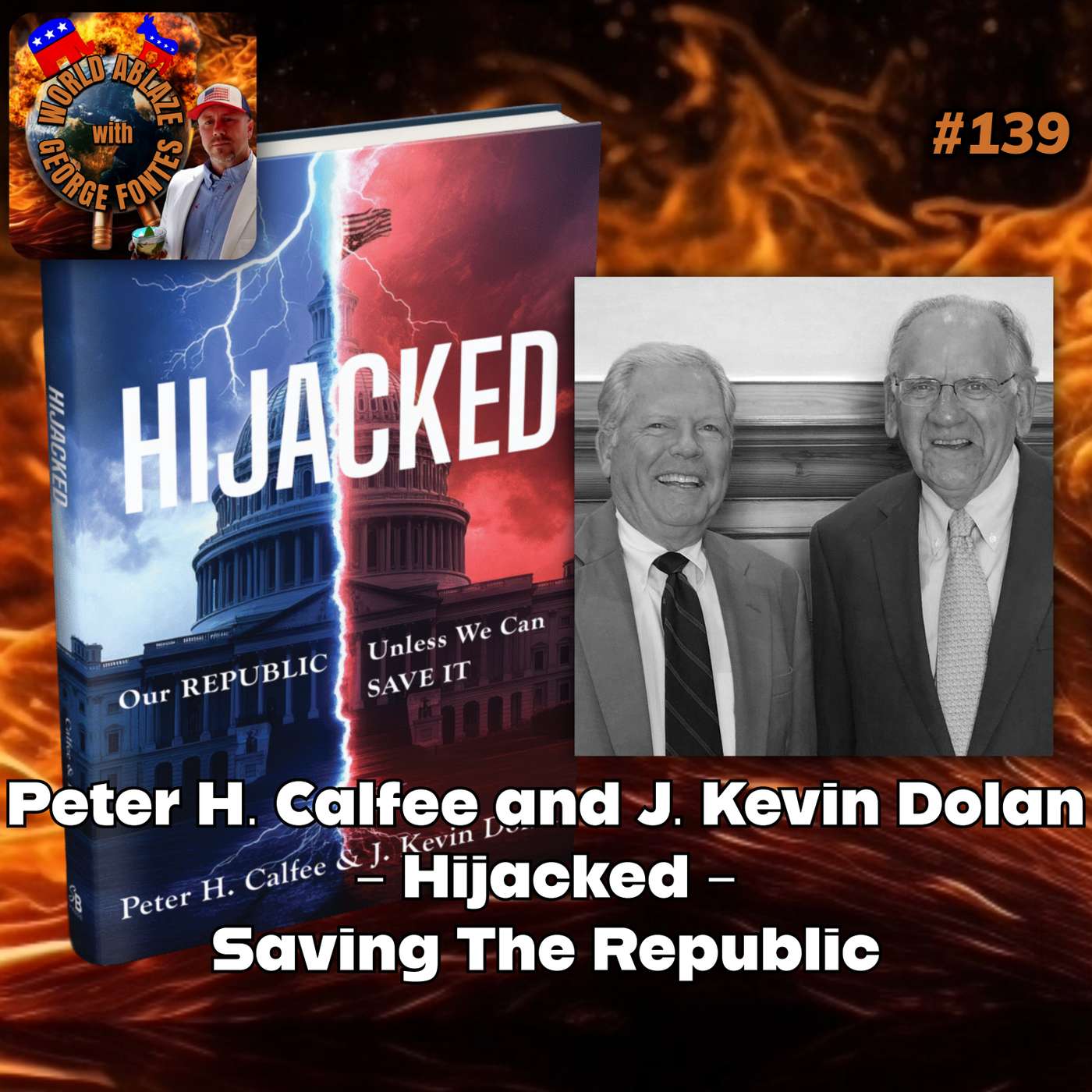


Authors Peter H. Calfee and J. Kevin Dolan sit down with me to discuss their book, Hijacked.
Their book challenges America to get back to critical thinking, education reform, and patriotism to save the country from the path of destruction it's currently on.
We really have a bold and open discussion about the current state of the USA and the newfound love affair by the youth for Socialism, citing a lack of understanding and proper education that has led to the acceptance of socialist principals and even communism.
Peter and Kevin set out to save The Republic before it's too late.
Support our Sponsors!!!
Web: https://www.worldablazepodcast.com/
YouTube: https://www.youtube.com/@fontesablaze/featured
Instagram: https://www.instagram.com/fontesablaze/
TikTok: https://www.tiktok.com/@fontesablaze
Substack: https://substack.com/@fontesablaze
0:00 welcome back world of blazers i have two very actually looking forward to talking to you two two prominent guests in my opinion um they wrote a book two authors hijacked talking about how our country's being hijacked um from what i can gather from your previous interview and i'm welcoming both kevin and peter to the show as you can see hijacked due to sounds like the lack of critical thinking proper education, lack of patriotism, understanding of history and events and how it unfolds and where we are now. And you're welcome to correct me on all that because that's just what I gathered from the last interview you had. And in that interview, when you're on the Shades and Jay podcast, I was very interested in what you had to say. And I wanted to have you on my show so I could pick your brain, get whatever it is that was on your mind out to my audience as well. And I think regardless, we're talking offline. So I'm just gonna say this, regardless of age and how you feel about that and how much time you may have, it doesn't matter to me.
1:00 I think whatever needs to be said, needs to be said regardless of how old you are, how much time you have. You just need to get the word out. And you guys are very intelligent. So I think that this conversation could be good. I hope everyone else enjoys the conversation. But first, let's hear about you. Let's hear a little bit of background from both of you here. If you can go ahead and tell the audience your background, your education, and where you come from. Go ahead, Peter. Well, Kevin actually went to Denison in Ohio, quite an accomplished institution, and then proceeded to go to Wharton. Certainly was Air Force Reserve activity where he entered the flying arena and flew for American Airlines for 30 some years.
1:44 I had his own business and investments and financial affairs and is quite accomplished. And we met four years ago and started chatting about these very issues of lack of discussion, lack of ability to communicate. And out came the book. So that what's what? So the out of the lack of discussion. So basically the lack of proper discourse is what led to this book, you think? Basically, yeah, we saw a dissonance in society. And before we get into that, Peter has very kindly introduced me in terms of my positive. He had an incredible education.
2:25 He went to a wonderful prep school and then Stanford for undergraduate and then Booth School at the University of Chicago, which is another top MBA program. So we both come from a similar thing. We both had CFPs, certified financial planners. And so we understand fairly well the personal financial issues that people are confronted with. And in today's process of affordability, we kind of get that issue. and we could talk about that if you so desire.
3:07 But our focus has been about understanding where our society was, where it originated, how it got to where it is today, what's wrong with today. And we think that the founding fathers gave us an incredible gift. If you understand that we are here for a nanosecond of time in the history of humankind, people get very impatient. They want something changed right now. I want this now. Well, wait a second. We've got quotes going back over two millennia, 2,000 years of talking about the human condition. And they're referred to then what the current condition of human nature is today is very similar. It hasn't changed that much.
3:57 Technology has changed. There's a lot of things about our life that has changed, but human nature has not changed. So we took the perspective of looking at what our founding fathers did from being educated in civic responsibility, which is not occurring today. And it becomes part of one of the chapters. But we thought, what's the fundamental? Well, the fundamental is everybody's got to be able to analyze problems. Well, what does that entail? critical thinking. So our first chapter, critical thinking and developing that idea. The other pillars quickly are education, religion, faith values for a value system that society functions around. And that has to do with fabric of society. Then history. Well, we don't want to make the mistakes that are repeating. What has already been made is mistakes in historical perspective.
4:56 So if we don't learn from history, we're being stupid. We should be avoiding those mistakes. And then with that knowledge between education, religion, faith values, and history, we then are ready to talk about political systems. And there's many that are tried, but there aren't too many that are actually successful. And then from understanding a little bit about political systems, you then go into, well, what are we living? We're living an economic life, and therefore we need to talk about economic systems. But understand this. The economic system serves at the convenience of the political system, meaning that the political system controls.
5:38 And it can ruin economic systems. It can facilitate the benefit of the best qualities of the economic system. What form of government achieves that? So from that introduction, I'll let Peter kind of go off of what he wants to say as his critical issues. Well, and I would suggest to you that after a lot of analysis, we've quotes in the book from thousands of years, some things became a continuum of fact and, well, fact. education and the ability to educate, to have a fabric of society develop or decline, became quite clear to us. And Ray Dalio and his various books that he's written actually defined how you can focus on education and everything starts with education.
6:35 So education, how did it get hijacked? We lost the ability to bring people along with critical thought, to have people understand how to challenge things. Then we moved into religion, faith and values, which you kind of mentioned, George, how over thousands of years, people knew what was right and wrong. Common sense, Thomas Paine, we talked about that. Then we got into history and mischievous modifying of history, not codifying of history. And then, as Kevin just said, politics and economics, all of those became pillars of what was wrong with our society, what was wrong with our understanding of how to communicate and what was wrong with our ability to listen.
7:21 And all of that led to, frankly, 109 pages of our country's been hijacked in these various categories. And we need to get it and set it right. Okay, so with all that being said, what is the actual major issue? I mean, aside, you've talked about historical precedent. You've talked about education or the lack of education and understanding, the lack of proper discourse. Basically, the people willing to have a real conversation about issues without yelling at each other. but in America today what compels you to write this book? What was the tipping point that you guys sat down and said, you know what? We have to educate people on what's really happening and open their eyes.
8:04 What did it for you? Well, I'll just interject and say all you need to do is look at the current headlines and you begin to understand that if we don't salvage what the founding fathers, as Kevin referred to, gave us with our Declaration of Independence, with our Constitution, with the amendments that were attached to the Constitution, the Articles of Confederation even before the Constitution, if we don't live up to that and salvage that and protect that and get involved with that, we've lost. And we've lost because what seeps in is a lack of understanding of what came before, a lack of understanding why you get up every day, what is right and wrong in your life, What are the good and right and bold things you need to do that have been done for thousands of years?
8:54 And if you lose that, you might as well be with Nietzsche in the corner in a nihilist environment and establish your own identity. And who cares? And that's what led us to really care deeply about our country. We both served in the military. We both care deeply about where it's going, where our country is going. And that led to our writing the book. Kevin? the the issue that i think is critical is that our children instead of being educated to think critically they're being indoctrinated with a process with a professor being fairly arrogant or teachers in their arrogance saying spit back what i what i tell you and you'll get a good grade well that's fine kids want to advance they're going to do everything else So they're concerned about good grades.
9:46 They learn to play the game. But if you go back and look at the history of man, they talk about critical thinking. And they have some great quotes in the book that talks about the importance of critical thinking. So if the children are our seed corn, the most fundamental process to get us back on track is to say, what do we do to the educational system so that children develop the skill of critical thinking? And what is critical thinking? Critical thinking is questioning everything. What did Fauci do? He said, you're questioning me, you're questioning science, like he was perfect science. Well, now with his diaries, we find out that this guy was a quack. It was unbelievable what he did.
10:35 And he took an entire society. And societies may not be able to recover from different activities. And this is one of them that was very dangerous. Yeah, that was an interesting one. Yeah, the importance of health and medicine can't be underplayed. It is huge. But when you do this, you're crying wolf when you find out the real facts. Well, what happens the next time when it is true, when it is true? Well, we should have been able to ask questions and they should have answered the questions very carefully with respect for the questions being presented.
11:19 But that wasn't Fauci. And so that's an example of the worst of mankind. And I'll give you a couple thousand year history on Aristotle. Be a free thinker. Don't accept everything you hear as truth. This is a quote. Be critical and evaluate what you believe in, Aristotle. And Einstein brought it up to the 20th century. Learn from yesterday. Live for today. Hope for tomorrow. The important thing is not to stop questioning. So the lack of critical thinking, I will definitely agree with you on. Okay, so let's talk about today's society, though. It's a fast-paced society. It's basically people live on the surface of headlines.
12:02 They're just consuming short form content. They don't go deeper. And the problem is I don't think people even know how to do the research and understand what it is they're actually looking for to find the truth. They're reactionary. I don't think they understand how to be objective and truly look at the situation as, well, is this the cause or the symptom? What are we actually dealing with? And you hit a couple of very key points. One is you say you talked about symptoms. So one of our key points is identify a problem and make sure it's not the symptoms. One of the symptoms. Because you can solve a symptom and you're going to play whack-a-mole forever. But if you identify the true problem, now you can get into creating good solutions.
12:50 And what are good solutions? They things that certain definitional terms prove that they are high quality solutions One is it consistent And is it sustainable Are two of the biggest litmus tests you can ever ask. But in that process, you step back and you say, well, if all this is important, okay, give me a picture of logic in terms of society. So we're going to be thinking critically. But what is important about society functioning together? Well, in order to function together, you need to understand, in my opinion, Rousseau and the social contract. Rousseau's social contract, in my interpretation, says that, first off, you accept protections of society's rules, laws, and regulations so that you can pursue your happiness.
13:43 Okay, that's in the Declaration of Independence, right? Pursue your happiness, et cetera. Okay, so I want to do that. Well, I want a society that allows me to do it effectively. So I need rules and laws so I can't be abused. Okay, great. So I do this thing. Well, if I'm going to work hard to do this, what's my responsibility in this contract? The contract, Rousseau's contract, a social contract. Okay, you're protected. Now what's mine? My responsibility is to live within those rules, laws, and regulations, and to the extent that I identify some weaknesses.
14:24 There are mechanisms within most constitutions, not limiting ourselves to the United States, but that's the best example in my opinion. And within those provisions, you can attempt to alter and improve the documentation, the Constitution with amendments. laws, rules, regulations. So we have to think critically. We have to ask questions. We have to say, I don't think this is consistent. What would be a more consistent solution? Okay, now how do I put that in place? And then is it sustainable? There's a cost to put something in place. So can we do something forever? Well, we've got a $40 trillion, approaching $40 trillion debt. So we've got some big problems on the process. So does one party have all the perfect answers and the other one's not? I don't believe so. On the other hand, certain things are done that are basics. Questioning biology that just popped up in the last 10 years. How do we get to this indoctrinated state where people tell you what to think and we are okay with it.
15:37 And therefore, you're not doing indoctrination. I mean, you're not doing critical thinking. And in the process, how are we advancing? You have to be doing critical thinking. So what's important? The fabric of society is what people vote on, basically. Am I being treated fairly within my society? Do I think I'm being treated consistently and therefore fairly? Is it sustainable what we're doing? So for asking good questions, how do we say fabric of society? It's a value system. The value system is fundamental. If you look at religion in the process, George Washington said religion and morality are essential pillars of civil society.
16:22 Okay, that's back in the 1700s. It hasn't changed. That's a human nature issue once again. And so if we take what I believe is a group of great quotes through the book and apply them to these things, they reinforce the fact that we're not reinventing the wheel here, folks. If you want to reinvent the wheel, you're doing something wrong. There's a lot of things that have been learned already, historically proven in many cases. And therefore, what are we doing to advance society? Well, it's not by firing and demolishing federal properties. That's illegal. So if you do something illegal, you pay penalties. So if you pay penalties, you go to jail maybe on a process.
17:08 But this process of saying, I want something now, so I'm going to protest and I'm going to do illegal things in the protesting. I'm going to firebomb this. I'm going to do other stuff. No, I'm sorry. That's illegal activity. We respect people's opinions. I usually start most statements when I want to debate somebody. I'll start any discussion, really. I try and say, look, there's a lot I don't know. So when I've got fairly good knowledge of information, I start out with, I could be wrong, but, and then I state the facts of how I draw my conclusion. There's a logic to it. Well, what does that do? That doesn't force me to be right.
17:49 If you introduce new information that is significant that I didn't include in my analysis, I need to include it in my analysis. My conclusion may still be correct, but it may not be. I may need to adjust something. So instead of finding myself being embarrassed by starting out with I'm right and here's why I'm right, it's like I could be wrong. Why aren't people more modest? Why aren't they a little bit more in control of their egos and therefore say something so that there can be a good discussion, a good dialogue among people? And I think what Kevin is getting to that could be one really overriding culture of our Western civilization. We cannot absorb every idea, every concept, every thought that was presented in the last 4,000 years.
18:43 And I'll go back to Cicero. He noted, by using mere common sense, all people know that they fell from God's good graces. Now, not to get religious, but to simply state that long before the Bible, there is a gentleman that talked about good and evil, the golden rule, what is right, what is wrong. We all know that. And now we're trying to absorb everybody's viewpoints. And it's not unlike the Titanic with a lifeboat with 20 people in it, and it has room for 20 more and 200 want to get into it. And we have to be suicidal in our empathy, suicidal in our empathy to let 200 people in it. And we all die.
19:25 That is wrong. We have a culture. We have a history. We have the most productive capitalist, yes, I dare say the term capitalist society, that made more people poor rich than ever before in the history of humankind. We cannot let that slip through our fingers by this, and I'll say it again, suicidal empathy. So a few things there, guys. Very familiar with suicidal empathy. I'm very familiar with the book by Gad Saad. Read half of it. Thought he could have done it in about a quarter, to be quite honest. But the reality is that I agree on. What I wanted to go ahead and do, though, is I want to go back to what Kevin said earlier when you were talking about the questioning gender.
20:10 And then we're also talking about questioning systems of society and et cetera. And it's like, is that kind of an alarm bell for where we're at in the USA at this moment? I mean, because that is very similar to where the Roman Empire was towards its end. Correct. The same things were going on. Correct. Are we on that path? And then now let's talk about, you were talking about capitalism. Okay. So there's so many things that we can talk about. Like, you know, the adoption of the DSA, which, you know, trying to fly under the moniker of democracy, which we all know it isn't because in 2000, was it 2023? Or somewhere around there. I forgot. I did a whole show on it. But anyway, they started adopting more Marxist-leaning people into the organization, like actual Marxists.
20:54 They declared they were Marxists. And even the founder himself was kind of like, I don't know where this is going anymore. So there are dangers. But in your opinion, right now, I mean, I think we could. I think we're at a pivoting point. We're at a point where we need to pivot. This country needs to be. We need to make a hard left or right soon. Like the cliff is coming, in my opinion. So do you see parallels of where we're at? I'm sorry. Go ahead. We're reaching a fork in the road. I think we're about at the fork. You know, George, parallels with where we're at to what was happening in previous empires, like the Roman Empire. Oh, no, this is the same thing that's been said, Ray Dalio and the Changing World Order. This is the same thing that's been said over and over and over and over and over again.
21:36 Stalin said what he was going to do. Lenin said what he was going to do. Castro said he was going to do. They've all said what they're going to do. And, you know, we're so stunned when they do it. And suddenly it's too late. Hitler said what he was going to do. Mussolini said what he was going to do. We need to embrace what they're saying and prove it's wrong. Let me take a couple things for that, Peter. Lenin said that the object of socialism is communism. okay so people there's an art form in my opinion about terminology that people are that parties in particular the democrats have raised it to a high level they take a term and that's an excellent term in its natural use and then they pervert the term so it sounds good but it's leading you down the wrong path. That's not a good process. I'd rather have a straight conversation using terms really effectively. And in the situation of looking at communism, let's look at what communism has given us. And I actually think of communism, and you think of the communist state, and it's, you know, each according to their ability, each according to their need. Okay, that sounds great.
23:07 Once again, a good turn of a phrase. But what happened in China? May I say Deng led their civil war and he won. And what did he produce? He ended up being an autocrat. He took over. He eliminated his competition. He killed his competition. Not only did he kill his competition, he killed 70 to 80 million Chinese. Yes. 70 to 80 million. Then Stalin. What does Stalin do? Same thing. Communism. Lenin, you had these two guys, Marx and Engels, that wrote the Communist Manifesto.
23:48 And there's a quote on those guys about how they never worked in their life, but they're talking about the common man kind of process. It was crazy. No, they didn't. Yeah, right. So Stalin, there were 20 million people in Russia, but Stalin took communism and once again became an autocrat. No one else replaced him. It wasn't a turnover of time frame. And it was for life. And that's what happened. Mao Zedong, the same way. Castro in Cuba. Look what he's done to Cuba. There were problems with Cuba before. But when people take over a country to quote socialism and people like what they hear, look what happened in Venezuela. Chavez Maduro destroyed the place. The largest oil reserves in the world.
24:37 And they have had people doing dumpster diving for food while millions of people left the country because of the failure of the government and how they destroyed one of the things. Look at Argentina under Perón. The Perón is, Argentina was one of the 10 wealthiest countries in the world in the early 1900s. and with Peronis and what they did to that country up until just now with Malay. And he had two great speeches.
25:18 One was at the UN. One was at the Davos. And those are in our book. This guy talked about what needed to be done. So the change that we're talking about here, George, in terms of reaching the fork in the road and choosing the high road and going the right path versus choosing the wrong road and go on the wrong path, is one of, do we have the right leaders? Well, let's get some definitional terms of leaders. Integrity, selfless behavior, dependability, consistency, determination, perseverance, teamwork, collaboration skills, communication skills charisma courage sincerity authenticity patience as well as impatience That somewhat of an exhaustive list But when you think of leadership I think of credibility and inspiration What I just read were the subordinate terms that give great credibility and great inspiration. What do people want? They are found in compensation studies that as much as people want their own, self-interest. They place a higher priority on contributing to the team than their own benefits. That's the best people. Now, a lot of people who get in charge of corporations do not exhibit that, and they can be pretty selfish. They've learned to play the game.
26:42 They work their way to the top. But did they set up a succession plan? If they're concerned about the company, which to me, if we talk about being selfless, then the true leader isn't concerned about them. They're going to get taken care of. The board of directors will get a good compensation package for them, but they ought to be concerned every hour of every day with making that corporation the best it can be. And Peter F. Drucker, the dean of management, said management is doing things right. Leadership is doing the right things. Couldn't be a short phrase, wonderful quote. He hit it right in the head. That's the reason they call him the dean of management.
27:25 And in that process, there's certain things we have to connect in these dots. We try to get these pillars to connect a bunch of dots. But one of the key terms is fabric of society. And if we got 350 million people, we may think something is wrong today and we're going to work towards making a change like we talked under social contract. But what is the goal? The goal is to maintain the optimum and evolving and strengthening fabric of society. If we're not working towards that, the fabric of society is dynamic. It is not static. It's either strengthening or it's weakening. and we had better be working on strengthening.
28:07 We better be using the tools that we have and have existed for a long time. All right. So Kevin, let me push back a bit just for the sake of doing it. So let's talk about the evolution, as you said, of society. What if that evolution of society leads to exactly what it is society wants being socialism? Now, I don't want that and you don't, but it seems like there's a push to adopt it. Now, and you're talking about leadership. Okay, so let's also discuss why it's popular. We touched on it earlier. First off, education, right? It's been infiltrated by, in my opinion, too much empathy and findless people, to be quite honest.
28:52 And so they're teaching people not to take a stand or learn how to think for themselves, as you said. But at the same time, if we're talking about leadership, why are the youth trying to adopt socialism? Honestly, money. They're poor. They can't afford anything. Hold on. The easiest way to move a society is to basically try to appeal to them on their needs. For one, they can't afford houses. They can't afford food. They can't afford their lifestyle. We can argue that they spend frivolously and that's the reason they're poor and they're not earning or they don't want to work. At the same time, the reality is this. America, during COVID, we overprinted money. or the value of the dollar has been devalued to a degree.
29:34 We're no longer on the gold standard. There's so many things that are contributing to the reason why economically, and you guys are financial guys. So we're no one's talking about the economy right now. Everyone's just going along with, yeah, everything's fine. I've owned six businesses. The one I have currently, I've had for 27 years. I'm telling you right now, this year is more of a struggle than me trying to save my business through COVID. It's been very strange. so the youth are easily manipulated because it's easy to appeal people who say i don't have the money oh we'll help you out socialism is great everybody gets a piece but you and i both know that socialism leads to communism we're talking about carl marx is going to bring this up you ever read the devil and carl marx yes yeah okay that's a good read and the guy literally did nothing but live off the backs of his neighbors and friends and family didn't do anything didn't contribute anything to society so we're i think we're in danger because as you were saying, leadership.
30:29 We don't have, and this isn't a knock on Trump or anybody. I'm just saying, we don't overall, we don't have a strong leadership that's willing to step in and really address this issue. That's why we have Mamdani. We have Abdul Al-Sayed right now over there. Just got on the general election ballot for Senate. We have so much going on. AOC, DSA. You got Bernie Sanders back in the limelight. The guy's gotten rich off of capitalism but still hates it, which is crazy. So the question being is, do we have the right leadership? Did we drop the ball as Americans? Interesting. I'll make one statement I'll let Peter talk about. Sure. In our society and politics, it's self-nominating.
31:12 I never liked that. I've always felt that the people that are true leaders, that in a great society, with a great fabric of society, People identify who the ones that have those characteristics that I just listed. And if they have those characteristics, they will be sought. And what we want is politicians that are sought after that aren't seeking an office. They're doing it out of a sense of responsibility. and um uh there but even under this process uh of of self uh uh when people are promoting themselves there's still some very good people so i don't want to just label everybody badly but i think the system should be focused on raising people that have certain characteristics So they should be measured. And I think there are ways to measure some of these things.
32:10 Rubio, I think, has done a great job as the secretary of state. I hope that and I think J.D. Vance has done some interesting things. I have great hopes that Republicans at this point have a deeper bench than the Democrats. And if we if we go back to Venezuela and Argentina and Cuba and all these things that have where socialism sounded good, they need to be raised as examples of saying you think that the simple solution is really a solution it really isn't because it's going to work its way into a major problem and you're not going to recognize your life if you're not careful so as bad as people think they may have it it can get worse of course i think it's very sorry i was gonna say i think it's crazy though that you're you're making a great point but i think it's crazy that people are choosing to ignore the the actual evolution of where socialism goes.
33:05 We don't have a strictly democratic socialist nation. We just don't have one. People point to Switzerland. It's not true. They have socialist programs. They're based on a capitalist economy. It's not true socialism. It's the same thing that you try to say about the US. Oh, we have social programs like Social Security. Yeah, programs. We're not a socialist nation. Every time communist enters the conversation, communism, the crazy thing is people don't realize that it always leads to, as you said, you know, either an authoritarian government based on communist values or a dictator every single time. So it's never good for the people. But the question I have for either of you, Peter, if you want to chime in, is why are people choosing to ignore that history?
33:51 I mean, we have a solid body of recorded history of what happens, yet it seems like the youth are choosing to ignore it. George, I will comment. You bring up Switzerland. It is actually the world's best democracy. It's the tyranny, as Kevin likes to say, it's the tyranny of majority. It's, oh my gosh, we see minarets being built in Switzerland. Oh my gosh, we need to have a plebiscite. 26 cantons get together, vote, no more minarets. We see the GDP in 2008, 9, 10 to defend the Swiss, actually to weaken the Swiss franc, to help exports for the Swiss industry.
34:38 They're printing money the way you just described the U.S. doing. We can't have that. We don't want to weaken the Swiss franc. It is our stability. So plebiscite, 35% of GDP, that's all you can print every year. that's the perfect democracy that's not what we have, we're a republic we have tricameral systems and so forth but you're right on socialism you're right on communism, you're right on Nazism, you're right on fascism that nothing has ever succeeded in the world, ever but it's like Soma in Brave New World with Algex Huxley it's everybody takes Soma and feels better, okay and you don't even notice that are being co-opted into oblivion. It shows early signs of success, but socialism always fails because it involves, you can own your own company, but we'll tell you how to run it. Or communism, we're going to take your company and run it for you. Both of which never work and haven't worked in hundreds, if not thousands of years. The problem on, Anne Rand's got some great quotes too, But if you get into the socialism, communist thing, I mean, look what happened when they when they came into power under what sounded good under socialism, as I just described in Venezuela is probably the best.
36:06 Getting them out. What what has begun to transition in Venezuela? Well, Trump went in and took out Maduro. Yeah. But but people don't give up power. in the process of people pursuing power. First off, they want to be comfortable and then develop some wealth. And there's some people that have extremely successful careers, et cetera. And so they develop some extreme wealth. Okay, more power to them. I'm not a jealous person. That's fine. But if you look in, there's a PBS program back when I was in high school, over 50 years ago.
36:48 It compared the Rockefellers to the Kennedys. They're both moderate. They're both kind of central. But what were both families doing? They'd reached the pinnacle of wealth. So whatever power could be generated from wealth, they had. There wasn't any more to gain. But they wanted more power. So where did they find it? Politically. So then they seek to hold political power. Well, once people achieve political power, look at Venezuela. if you vote in socialism how easy is it to get out of socialism? They start taking over the voting they start taking over everything else. So if you had a reasonable electoral system and ours is in question right now, I mean no other country does what we're doing in terms of allowing visitors to come in and vote the process is extremely important. It's the fabric of the creation of our society. The society was created for the citizens of that country.
37:51 The Constitution is for the citizens. Now, people can become citizens. I'm not against that at all, but it's for the citizens. So for them to protect their rights, they've got the votes. And if something is a policy that's good and sustainable and consistent and contributes to fabric of society that can be added. It can be improved upon. And that process works. But voting, so the process of this autocracy and pursuit of power, once they have it, they don't give it up. So in a democracy, we're all participating in that process. But people are always trying to manipulate and play games and do everything else so they achieve what they want.
38:33 And in that process, if you're not careful, you're going to lose the very process of government of, for, and by the people. And that's what's so important. George, I'll give you two points. Many people some people have commented that certain people in power today in the United States are fascists They throw the term around the ultimate fascist entity today in reality is Tehran Absolutely controls everything It a fascist organization feeding off itself and sending its country 90 some million people into abject poverty. It's unbelievable. And then I would suggest to you that we have somebody who went to the gulag for 20 30 40 years alexander solzhenitsyn out of all of that experience he wound up in new hampshire vermont uh freed up from russia he said human beings are born with different capacities if they're free they're not equal and if they are not equal they're not free if they are free they are not equal and if they are equal, they are not free. Munger, co-founder at Berkshire Hathaway, said the same thing.
39:54 And so I'll suggest to you that Moms for Liberty, founded in Vero Beach six years ago, they have, in the process of five years, six years, approached and educated school boards across this country, 3,500 of them and counting, as to how to take back your school board and how to understand what you're educating. I'll give you another example. It's quoted in the papers. Florida has mandated that communism, socialism, fascism all be part of the high school curriculum. What is it? And describe it and force the students, really force them to sit there and understand what they're talking about. So this is the process of kind of getting off the cliff and backing away a few feet from the cliff.
40:49 There are many other things we could talk about. Thomas Jefferson, I'll just say it real quickly. When the government fears the people, there is liberty. When the people fear the government, there is tyranny. That's what I'm getting at in terms of letting socialism, the camel gets nose under the tent. Once it's in, it's really difficult. and holding on to the liberty is what's so important. Right. So here's the thing. I'm going to touch on what you said about Tehran. Tehran, perfect example of what you said, but there's a few reasons it's a good example.
41:29 One, it's an authoritarian theocracy. Okay, that's exactly what it is. And so that's also a perfect example of why we need separation of church and state. And we don't have to go too deep on this because I don't want to be harping on Muslims in general, but there are good Muslims. We can look at Indonesia and how that worked out the correct way. And then we have those that are fundamentalist extremists who are trying to change our nation. And so there is a danger there, right? Wolves and sheep's clothing, for example, for sure. But the question still remains. I got to ask you, what is it that you think is causing the youth to get behind this movement?
42:16 I mean, do they really see it as a solution? Or as I asked before, is it really a lack of... They're indoctrinated, George. Right. The indoctrination problem. If they were taught to think critically, they'd be asking really tough questions. but since they weren't taught to think critically, they now have been taught stuff and they've learned that, you know, the process of education is my teacher tells me something, I spit it back and that makes me a good grade and I'm right. No, you're repeating what someone said. You're not thinking. You're just regurgitating information. Indactrination is the cause of that and the worst form of what we're doing. And what you're seeing, George, is across the country, you are beginning to see in hundreds of public high schools and really hundreds of colleges, actually, you're beginning to see the appreciation of mastering a transcript, mastering a topic.
43:09 And if it takes George, you're a smart guy. You take two weeks. It takes me 10 weeks to figure it out. Okay. We both reached the same conclusion, two weeks or 10 weeks, but we got there. Yeah, I still got there. As opposed to, oh, Pete, you didn't get there, but you're promoted anyway. Get up to the next grade. Who cares? George is a smart one. You both get up there. Yeah, I've seen that. I've been seeing that even here in California. That's just been a big thing. They're just like no one left behind strategy, but they're not really doing that. I mean, they're just leaving people that can't even read at a third grade level in high school or fifth grade level even. Let's give them a little more credit there. But this is true.
43:50 I'm not trying to be facetious or whatever. It's a reality. And so they're leaving high school, entering the workforce, not even knowing how to read or write. And it's very concerning. Anyway, there's a bunch of places we can go. Well, yeah. And I saw one tonight. I saw what was in LA today at two o'clock. Your time. See if Kevin can hear me. Can you hear me, Kevin? I hear you. I'm good. All right. Let me put these back on. Kevin, what we're going to do is we kind of crashed. I kind of remember where we're at, but basically what I was telling Peter is it's really was coming down to the reality that we really got to get education back on track.
44:35 So we'll start off from there, but I did want to get into your, uh, both of your takes on the economy. Cause I believe that was a big reason why the youth is kind of going the way they're going. And then if you want to touch on, uh, you know, how people feel about spending on military efforts or operations you serve. So just saying, let's get a little bit of that going as well, just because those are all talking points and narratives that are being used to further drive a wedge among the people in the USA. Yeah, my personal opinion is, number one, there was a period of time when there was a draft and people had to serve. I got a draft number 40, and I knew I was headed in the process to serve.
45:21 But I had all my uncles, virtually every one of them served the country. And my grandfather on my mom's side served the country too in World War I. So I have a family that has all participated in the military. And I know Peter did, and he's probably got similar issues in his family. And so I think it's very important that people understand what service means. And when people enter the service, people may not realize that they're really signing a contract. And that contract says, I'm willing to defend this country and work for the benefit of this country up to and including giving my life.
46:05 Now, not many contracts do people enter in that. Policemen do. Firefighters do. Some first responders, et cetera. And those people, to me, deserve a great deal of credit because they're exposing themselves. Why? For the benefit of society. That's a fabric of society issue. So in the process of serving the country, what are we doing? Well, do we have a need to be the policeman of the world? No, that's dangerous. And we've spent too much money on it. But do we ignore what's going on around the world? I mean, look what, as Peter pointed out, Iran, they just recently killed like 40,000 or 50,000 people because they want to intimidate them.
46:51 They think that the people serve them. So it's a power elite using a theocracy to maintain their power. That is absolutely abusive. So any society that's abusive does not have a strong fabric of society. But what does have a strong fabric of society? It's that sustainability, consistency, treatment of the fellow man, the golden rule applied, leadership principles. And with educated kids being taught how to think critically as opposed to being indoctrinated, they're the next generation and we're dependent upon it. And when you weren't on, Peter read a quote from Ronald Reagan that pointed out that there's no guarantee that our country and the democracy and our republic will sustain itself beyond one generation following this.
47:50 And so it's dependent upon, we need to get back to civics education. Not only do you need education where you take people to think critically, but look, you know what's happened at the Smithsonian Institute in D.C.? The person, they're redoing history to talk about what the United States is doing wrong. Now, this is about the history of the United States. Now, when we take down statues, when we reconstitute the Smithsonian Institute, we're making huge mistakes. Why? Because what do we learn from history? We don't learn just all the good stuff. There's also some negative things. So it's a function of getting true history, not modified history for convenience and purpose, but true history that had lessons. The lessons are both positive and negative. So let's learn all the lessons.
48:40 And that's where, George, that's where we... Go ahead, Kevin, go ahead. I'm just going to finish with Smithsonian Institute right now. What they have done is abusing the history of the United States to present to the citizens of this country that have the good fortune to go to D.C. and look at what should be a premier experience. They're absolutely abusing the citizenry, what should be a good civics education for all the people that visit. It's terrible. And George, this is where they... It's like a tapestry. You weave the tapestry. This is why we have the chapters that we do. This is where education is so critical, where you teach civics. You study history. You think critically. You engage in civic life.
49:22 You participate in all of those activities that put the power, as Rousseau said, back in the individual, which was the first time it ever happened in 1775. The individual created the government and the individual was equal to the government and controlled the government. It's a tapestry that weaves in the understanding of history, not the modification of history, the codification of history. The religion, faith and values, the consistency of thought. Many civilizations thought they had the line on what was right and what was wrong and the golden rule. They were wrong. There is a golden rule and it continues for thousands of years.
50:04 And the history of theocracy is a history of abuse. I mean, the church has abused for a long time. And Iran's a perfect example of it today. Yeah, well, okay, let's back up a bit. I mean, we all agree, before my computer, I don't know what happened. You guys carried the conversation, but we all agree that one of the major issues we have is education. It's been hijacked, as you would say, with your book. Title of your book, right? Hijacked. So, and what you were talking about, Kevin, earlier about, you know, the draft, and we still have selective service like you're supposed to register, but I think a big issue here is, and what has been taught to our youth, our younger people right now, is they've taken patriotism out of schools.
50:50 like first and look i'm not going to get into religion too much but it started with because you were talking about the moral fabric earlier like you're and you quoted how you know george washington right so religion is basically the backbone or basis of morality i mean that's where people will learn what is morally right and wrong and it could be christian it could be whatever but usually that's where it stems from the church but we still have to separate church and state right But they took that out of schools. They wanted to take away the Pledge of Allegiance just because it said, you know, under God. They didn't want to do that. But yet they'll make exemptions for people to have their prayer three times a day if you happen to be a Muslim, right?
51:35 But you can't if you're a Christian. Schools, they were talking about what the Smithsonian was doing. They wanted to tell the world that the whites were the devils, were evil. White people were the reason that everything is so bad. So let's go ahead and highlight this other stuff that happened and let's take away all the achievements that our forefathers and other people of this country actually did to contribute to this great nation. And so there's a concerted effort. There's definitely an operation going right now to definitely deliberately change this country and not for the better. I don't know how we're going to get that on track, to be quite honest, unless we aggressively go out there and actually make a real effort. So let me take an issue with that statement.
52:18 Sure. We used to be able to only see presentations in the news by three ABC, CBS, and NBC, and then public projects. Yeah. Okay. When we got this new technology that has the ability, and some corporations I think are terrible in censoring, they make things hard. And I think you had some of that experience, George. But in the process, it has created a new channel wherein people, instead of listening to soundbites for half an hour in an evening or an hour, whether it's yourself or Joe Rogan or other people, they're able to take and have a lengthy discussion about important issues.
53:02 And the people care about it. So why does Joe Rogan, with his lengthy podcast, have such a wide following? Because people care. Why do you have the success you have, George? Because people care. Why does the other one with the four guys out of Silicon Valley, they've got a great podcast. So I think it's beneficial. I think I know where you're going with that. So we have access to more information, obviously. that's not necessarily as controlled as it used to be.
53:44 You don't have just four sources anymore. You have multiple sources. But there's also a danger in that too because all these so-called independent journalists aren't really doing their due diligence either. So then we also have the danger of curated messages and narratives that absolutely are not based on facts and data whatsoever. It's all opinion-based. And that's fine. I don't care if you have an opinion, but you got to state that is your opinion. You can't present it as fact. And the thing with Joe Rogan, yeah, I was going to say something. And the thing with Joe Rogan is this, and no one's comparing, I'm not going to compare myself to him, but I'm just, the reason I like the format of long form conversations, this is the truth, and it's just, comes from my old sales days.
54:26 The longer you talk, the longer people reveal themselves, period. You're not going to get to know who a person is within 15 minute interviews that are curated. and the actual questions are actually, well, these are the questions I'm going to ask. How do you feel about this? It's okay. No, that's not how you get to know someone. That's not how you truly get to know anybody. So I'd rather have these long-form conversations. I'd rather get to know where you guys are coming from and in turn, you get to find out what I'm about. So there's both a benefit and a danger to this. The problem is, as you said, people aren't thinking critically. So they don't understand whether the information is factual, if it's really someone's opinion, or if it's an intentional psyop to try to change your opinion to welcome in socialism, right?
55:08 You know, using that as an example again. That's where common sense applied to critical thinking works. If someone says something, it could sound good, but you ask a question, that sounds good, but are there problems? Where's a reference that I can have? Did I see George Fontes' interview of Peter Calfe and Kevin Dolan? Did I read their book, Hijack? or any other numerous sources that can cover this process. I couldn't agree with you more, George. The long form reveals more. And no one should be uncomfortable with revealing more. If they're not comfortable in it, they shouldn't be doing what they're doing. So that's what Peter and I have done on this whole thing.
55:50 We have never had an uncomfortable moment on doing podcasts. And it all has to do with common sense and trusting your gut. and people should be given that freedom in a classroom to talk about that. Does that make sense to you, 30 kids? Does that make sense to you? And every child in there should speak. Your book, for example, 109 pages, right? Yes. That was the chapters, right? So 109 pages, pretty concise for such a big topic, to be quite honest. So it sounds like you both got to the point as well. You basically cut the fat and got right to it, which is good.
56:33 So with that being said, everything that you're writing, everything you wrote rather, and what we're talking about is based on your actual real world experiences and your love for this country. So let's go back to the beginning of the conversation, honestly. How are we going to fix education? Because it sounds like that's where we're screwed right now. Competition. the the the key the reasons capitalism is so successful is because of competition did you see a great car coming out of the russian economy i don't think so well what created all the all the all the great cars and everything else that we've seen evolve over decades it was competition capitalism is in the is in the industry of creating opportunities for people but they there's In capitalism, there's price point discovery. People have a limited amount of resources.
57:26 So they've got to find the product with the limited resources they have for the greatest number of people that they say, I'm going to buy this product because for what I need and what I can afford, this is the best solution that addresses as much as possible of what my desires are. Well, that's price point discovery within capitalism. It's a foundational tool of capitalism. And so if we create competition, there's an appendix in there about competition in education for public schools. But you've got parochial, you've got private, you've got a charter. Those are competitive aspects.
58:08 but there's also competition could be introduced to public schools. I'm not against, I was a member of a union as a pilot for American Airlines. I'm not against unions, but notice in the airline business, you had to compete against United, Delta and everybody else. Okay. So we couldn't take a wage and make it incredibly larger than anybody else's and then expect our company to survive. So you've got to be careful. Well, that's not the case in monopoly unions. So in public education, the NEA got into the process, in my opinion, of emphasizing the benefit to the educators and doing things for them as opposed to dealing as a priority with their product, which is the students. And so what's the problem today? The problem today is we don't have competition in public schools. We introduce a manner of creating competition in public schools. It honors the process of contracts for teachers, but it doesn't guarantee them perpetuity on it. It says that you have two teams and you don't have busing. And so the two teams by two principles. So that's the duplicating. But other than that, it's not. You start off with a flip of the coin, person gets first choice, the other team gets the next two, then two and two, and you separate all the teachers. After that year, parents will say, I want this teacher for my
59:38 child for this year. And you work your way to it and they can have one or two choices. If they don't get them, then they get to choose a team and they may get assigned. But they also get to say that they like or dislike one of the teams. And so if 60% of the people on a green team are voted positively and 40% are for the other team, well, guess what? 60% of the educators are going to, of those teachers are going to be allocated to the other. So there's going to be a change. And that change, they're going to lose 10 and this gains 10 out of a hundred. And in that process, the people don't have to take the educators that were let go of by the first group.
1:00:23 all of a sudden you've got competition. It's not instant. It's not saying we're going to wipe out people's jobs and everything else. It's saying honor the contract, but understand the contract won't protect you forever. This is where you allocate some of the real estate tax that people pay, owning homes and so forth. And you give it back in terms of a chit, if you will, to be applied wherever they wish to go. Exactly. Not to the public school, but to a parochial school, to a Montessori school, to a charter school, to a friend's school, to whatever. The freedom has been, 40 some states have allowed this, starting in Philadelphia in 1989 as a city and moving into Minneapolis or Minnesota as a state.
1:01:11 It's a marvelous effort to distribute choice back to the parents. yeah i mean honestly you just sum it up i mean just allow school choice basically that's your competition i mean we don't have to over complicate it at the school or district level you know two teams and all that good idea but school choice alone will create the competition because now your parents are going to absolutely choose the better schools with the better educators you guys hit it right on the head on the simplicity i was trying to say that people are trying to protect their jobs well we'll let your industry exist the way it does now with one capability to improve your competition so you can compete with the charter schools right with a program that's the purpose of the idea so you are correct on the simplicity this competition in general i was merely trying to protect the education system as it exists now to a degree.
1:02:08 Well, you know what, Kevin? But also, I do like your idea applied to the university system, though. Anything. I got to be honest. I think the university systems need an overhaul. There's no reason why you used to be able to get a bachelor's degree from Brown back in the 50s or whatever for seven grand, and now it costs, you know, hundreds of thousands of dollars. That makes no sense to me. Why is the government funding universities when they're also a private industry to where they're charging students and making money off of them. They charge them for everything, but yet we're still funding them. That doesn't make any sense to me. In today's technology change, education is going to change dramatically. Small schools are going out of business.
1:02:49 Why? Because they price themselves out of business. They've exceeded the inflation rate with all this layers and layers of administrative. You used to have a ratio of teachers to students. Now they talk about ratio of school employees. It sounds good. but they've got all this incredible bureaucracy that makes no sense. And so they've overpriced it. I had the president of my university, who is, I think, an outstanding individual, talk about being proud that they got a conservative into the political science department Now 75 to 95 of faculties are liberal So we know the children are not receiving a balanced presentation.
1:03:39 But when a university president talks about a success of getting one professor, selected in the process. What does that say about what exists currently? To me, I can understand the success because it's been difficult overcoming. So I understood what he was saying. But then I asked him a difficult question. I said, what does that say about the current state of affairs? Right. Doesn't that just basically affirm that you're just indoctrination standards then? Agreed. $100,000 to indoctrinate some kid. The kids are going like, I don't need the debt, and I'm going to go get a trade skill.
1:04:22 And they're smart to do so. George, I think you're also alluding to tenure. And tenure originally was designed to promote creative and independent thought. Unfortunately, it's designed to protect certain designed thought today. Yeah. And look at the syllabus of courses out of universities now. They've got some of the most ridiculous courses that are in the syllabus that kids can choose them on. And they're getting this debt and they're getting a course that is meaningless. It may be an interesting hobby, but that's not rigorous education. But Kevin, you know what also drove that was corporations, the job markets, because they created the barrier of entry to be now, they don't even care what your degree is necessarily, unless it's a specialized field.
1:05:14 Like if you're going to be a rocket scientist, you better know what the hell you're doing. Or a doctor, right? You know, surgeon. But in general, outside of that, you need a bachelor's to basically, no offense, but to be a secretary or an admin. Like what? To keep schedules and pick up the phone? And like, are we for real? Technology is going to change education. Technology is going to change the process of the job selection. If you look at Apple and look at some of these other tech companies, they don't care whether you have a degree from someplace. They've got their own testing process. And in that testing process, they're looking to see how bright are these kids? Can they solve these problems in that process? And that is unique. Bill Gates dropped out of Harvard. Forget it.
1:05:54 No, I understand that. Look, I didn't finish my college degree because I was an entrepreneur. I wanted to go make money, period. All right? That doesn't mean anything. I am not going to advocate for or against universities. I personally think if you want to hire education, and I don't like that term either, hire. Like what? No, it's basically you going to specialize in a certain field that you want to go ahead and enter the job market. And that's what it really is. We're not really chasing academia anymore. We're really not. We're trying to get skills to live. That's what it's really about. And so as you said, you can do that in trade schools. But you got to accept that's the type of person you want to be. So go ahead. Go ahead, Kevin.
1:06:35 An education should have been the process of developing the one's intellect. We've talked about how, in fact, it's been abused and hijacked in the process. Right. And you've talked about the fact that you didn't finish it. Well, neither did Bill Gates, neither did the guy that heads up Oracle, Ellison, neither did Steve Jobs and Jobs. And so you've got all these great people that have achieved amazing things. and the education was there. But to make an earlier part of your point, college used to be to show that people were organized, they could follow four years of work, accomplish requirements to get through four years.
1:07:17 And in that dependability, the businesses hiring them would know that they're hiring dependable individuals with some development of intellectual skills. Yeah, I understand that. We're not developing the intellectual skills. Those intellectual skills should be fostered from K through 12, right? That's where they should start. That's where the brain is developing. Also, if you're looking at our education system, our work week, I mean, do we really, all we're doing is preparing people to literally just go into the workforce. I mean, when did the education system change to where it was really based around the industrial evolution or actually Henry Ford's model of the work week is what happened.
1:07:59 you know now now the why do students have to go there from 7 a.m 8 a.m to 3 3 30 or whatever every day they have a structure you have a bell system they're not really developing anyone's minds they're teaching them how to enter the workforce and deal with a schedule and to work we're basically doing nothing but developing mules to enter the system to be used up by the corporations and i'm not i'm not against corporations per se look i'd love to you know I have no problem making money, but we also have to recognize what's happening. Are we really developing free thinkers? Yeah. First of all, developing free thinkers is really important. But I wouldn't quite agree with you on how you presented it.
1:08:42 I think it is important that the kids go to school for a while. First of all, they've got to learn how to read it right. They've got to learn a little bit about math. And they should be taught civics because they need to know the history of the country. They need to know about the founding of the country and that process, especially. And knowing more about our founders is really important. So I think that that aspect is important. And then with people being fundamentally educated. Now, how many years does that take? I'm not sure. But up to 12, somewhere there. Maybe you can go a little bit lower. But it's the college experience that is no longer what it was supposed to be.
1:09:22 Yeah, no, I'm not disagreeing with you, and I'm not advocating for people to knock what I'm saying is that even at K-12, it needs to be reformed. I don't think they're really, really tapping into people's potentials anymore. Right. You know, they're just developing a product and spitting it out. There's a great quote here by William Arthur Ward. It says, the mediocre teacher tells, the good teacher explains, the superior teacher demonstrates, the great teacher inspires. Yeah. And I think that it's that good and great process are the key. People have lives to live. You don't want them to be vegetables.
1:10:04 You want them to be inspired to behave in a fashion that's consistent and contribute to society in the social fabric process while they pursue their self-interest for the benefit of their family. Okay, that's a solid approach, I believe. but if we're not putting the fundamentals in place, how do people get started on that process? And I think we've made big mistakes. I mean, I'll go back to what we were talking about earlier. If you can't get a graduate to leave high school reading at 12th grade level, if they're only reading at a third to fifth grade level, we already see there's a problem. You know, they had to change the math curriculum to all these different crazy, like Common Core, all this other stuff, making up new systems of how to try to do math.
1:10:53 They're twisting themselves in pretzels to just solve a problem. It's crazy. I don't get it. So look, we're not going to solve education here in this conversation because honestly, this is a longer, much bigger, broader discussion for sure. Because now we got to talk about brain development, psychology. There's so many other things that go into this outside of just, we're going to teach the basics. But it does need to be, We'll all agree it needs to be reformed. Absolutely. And I think we'd all agree that they did abandon basic principles at the foundation of creating good citizens, patriarch citizens that love this country, right? I agree on that. So let's pivot a bit.
1:11:34 I wanted to get into your take on the economy. We talked about the dollar a little bit, but I want to get your take on the economy presently. Where do you think it's headed? because I think that's a big contributor to why, which we're talking about earlier about socialism, why the younger or the youth are trying to basically ignore the warning signs of impending doom of communism. But I think that's why they're trying to adopt this socialism or how it's being presented to them currently. So economically, where do you think we're at? Does it need to be fixed? I mean, what's your take on what's going on? Major League needs to be fixed. In large part because the majority of people, my term majority, coming out of high school, if not college, assume that what they saw their parents receive, they're going to receive.
1:12:26 And they're ill-equipped to deal with a massively changing economic landscape. And to that degree, we have people that are innovative, that are taking and are participating in it. And you know that in California, George, certainly in Silicon Valley and elsewhere, certainly Seattle and so forth. But they're ill-equipped to deal with it. And hence their default is to, well, I want to get my just due. I put my dues in. I went to high school. I went to college. I should get what I'm supposed to get. And that leads to this whole loop of lack of education, lack of critical thinking, lack of common sense. And we tried to present here a little bit in this conversation the solutions to that.
1:13:10 But I really do think that is a major problem that I don't know how you solve, because when you're 30, you're trying to understand computers. It's a lost game. Well, I think there are a couple of points I'd like to make. The one thing we can count on in this world is the term change. There is always change going on. Now the question of it is, can we take this change and harness it properly? The economic system serves the convenience of the political system. The political system, if it doesn't change properly, if it doesn't foster the benefit for the economic system to optimally function, then we get a less than optimal function of the economic system and then you start to have more and more problems then people don't feel they've been treated right they don't feel anything else so we have to go back and understand the basics and so once again critical thinking how do you analyze who's the leader how well the leader should be excellent at analyzing this process and we're in a meritocracy but everybody wants everything to be equal like if you here's a participation award. I'm sorry, participation award. I mean, one of the lessons kids learn is that they don't have certain skills. Some kids have some skills, some kids don't have some skills.
1:14:37 The ones that don't have some of the skills, they've got skills in other areas, etc. So you got to go to where you get the greatest sense of satisfaction and participating So there a work ethic involved in here And people go like well I gone through and I checked off the squares I supposed to get something No Do you have the work ethic How badly do you want it Because this is not easy Life is not easy This should be stated in education. You're going to have a lot of problems. You're going to have a lot of things thrust at you. How well do you analyze them? What solutions do you come up with for your personal problems? Now, we've got societal problems. We can talk about trying to improve them and a lot of this discussion has been of that overview nature but you're talking about microeconomics and macroeconomics the individual versus society in the process and when you when you understand those economic terms of micro and macro and start applying them broadly that's where education can really help and in in helping these things kids ought to be questioning things and They want to understand things.
1:15:43 An inspiring teacher should help them understand so they're motivated to go further. I mean, if you look at what Thomas Sowell did, he didn't even have a high school degree. He had a GED. He went to Columbia, got his, I think he got his bachelor's, and I think he got his master's there. He then worked and was recruited to go to Chicago's PhD program in economics, probably the premier economics program in the country. or Milton Friedman and a couple other Nobel laureates there. And listen to this. He didn't have the money. So Milton Friedman and some of his compatriots went to a wealthy foundation that supported some of these kids going to these things.
1:16:27 And he said, Thomas Sowell needs a grant from you. And they said, well, tell us a little bit about him. And he said, well, he's a communist, but we think he'll come around. Well, not only did he come around, he became one of the pithiest, most intelligent and empiricist. Everything is proven to him by statistics. How important is it? If any children are watching this, spend some time on studying statistics. They tell you more than you can ever believe. But statistics can lie, too. So like when someone tells me a gross number, like a thousand, and then they say, well, that's interesting.
1:17:08 But it's a thousand relative to what? What's the percentage you're dealing with? Yeah. So they want to make like it's a big deal. But if it's only 1%, then that means there's 100,000, then it really isn't too significant. And 99% is in a different direction. So you need something of balances and statistics. You need the aggregate and the percentage, both of them, to give you the perspective. And that's just an example of the process. Yeah. So I agree with all that, but let's talk about the affordability. I mean, the youth are facing an affordability issue. Adults are facing it. And I know it doesn't get, I mean, billionaires and trillionaires, we can say, they're probably not hit as hard, but eventually it catches up to everybody.
1:17:53 So what you're saying, I agree with, but is what an individual is facing in this economy right now because most people don't have control of how the economy is handled. The government pretty much does, the federal government or the Fed. And we don't step out there and manipulate the economy ourselves individually. We just face what's coming to us. We don't have control necessarily over inflation or even deflation. We have no control of that. We don't have control of the housing market. It just kind of like all of a sudden it goes up because companies like you said earlier, you mentioned like Berkshire Hathaway decided they're going to buy a thousand homes and start renting them out because now it's going to be a big corporate grab to make money. So the individual, the person coming out of college who, and I'm not, don't get me wrong here.
1:18:40 Okay. I'm not saying that a person should feel entitled, but I think a lot of people right now, especially of young people are feeling like, I was told if I do this, then I can get that. But we all know, all three of us, know that you still have to work. You got to put some effort in. But they're coming off feeling like they don't have a future. So how do we fix that? Because again, the economy is out of their control. It's out of your control or my control. We didn't have, you know, the ability to issue an executive order to start tariffing everything again. and try to become a tariff nation. And you can look at that however you want. But the reality is that did affect the price of some goods.
1:19:22 Not everything, but it did. We didn't have control over the pandemic, which hyperinflated prices because all of a sudden grocery stores and delivery stores such as Amazon, whatever, realized, hey, we can gouge people because they have no other choice and they're just going to start ordering like crazy. The prices didn't go back down. You give anything a little bit, They'll take all they can get and keep it there. What about our, we don't have control over the rates for loan mortgages either. So what about those things? Let me take an issue on that last statement. From what I'm reading and what I think I understand, productivity can, and we're taught to believe that deflation is really bad and inflation is bad.
1:20:12 So where's the combination? They talk about 2% inflation is the sweet spot. Well, for the common man, deflation would say your money goes further. But for the government, if their debt becomes more and more valuable, which means more and more difficult to pay off, then they're not benefiting the way they had in inflation. Well, understand that inflation is actually a benefit to government spending beyond its income. So when you've got that process going on and in the affordability thing, what we should be doing is, yes, we should be targeting 2%, 1% wouldn't be bad.
1:20:56 And people should be concerned, I don't want any inflation in this process. So we're being indoctrinated by the government to talk about how 2% is sweet. Well, you said that the prices don't come down. So when inflation hits, prices go up, why they have to cover their costs. And what's the key? In capitalism, the ability to sustain, there's two purposes of government. One is employment, and that I think is a very important issue. And in terms of doing that, let's say, well, what do we do to keep everybody employed?
1:21:40 Well, you've got to have corporations employing them. What do corporations need? Well, can you sustain indefinite, sustainable employment when you're losing money as a corporation? No, you need profit. So you take all your ingredients that go into something and you look at and you take what that price is. And there's a margin above that that you can achieve. And in that margin, you have profit. You can sustain employment. Now, some corporations have got large margins, but they've got big R&D bills. So the technology process uses large margins.
1:22:22 mom donnie wants to produce um um a five in a in a city of millions of people he wants to have five grocery stores what number of people can even go to them physically and in that process he's got we're going to lower the prices they're not paying property tax they're not paying probably utilities they're not doing other stuff and and even so grocery stores that have been run by governments in the past, they still fail, the product got rotten and everything else. And the profit margin on grocery stores is 2%, 1%. It's ridiculously small. So what do we do to sustain the corporations, which is the capitalism served, the political, the economic system served the convenience of the political system?
1:23:15 Well, we have to create a system where the economic system, price point discovery, but people making choices, trillions of choices of what they purchase. What they purchase is corporate product and the corporate product can either create profit where they can continue employing people or corporations lose money and they lose their competitive capabilities. So that's the nature of that process. Now, is it perfect? You're right in affordability. There needs to be some additional creativity beside understanding in the environment that we've tried to supply here and we don't have all the answers. I mean, affordability is a very important issue.
1:23:57 And to me, it gets at this inflationary deflationary argument that I think is not presented totally honestly. Sure. So I understand business. I get corporations. I understand you can't have employment without a product, right? I understand all that. I understand costs. I understand ROI. Believe me, I know all of this. I literally know all this. But the reality is this. Okay, let's talk about some of the symptoms, how we got here. America gave away its manufacturing. America outsourced most everything. Corporations are nothing more than an office now getting stuff from China, Indonesia, and wherever, Malaysia. We barely manufacture any clothes here, any hard goods whatsoever.
1:24:39 Most of our plans are now in Mexico for cars, etc. And when you talk about unions earlier, there's good and bad to it, but that also led to the destruction of the auto industry in Detroit. Okay. It literally did because they wouldn't compromise. They wanted more and more and more and more money, higher wages. And then now we got in a situation where the companies can no longer afford to employ them. So basically, what I'm trying to say is a lot more complicated, but I'm going to go back to the issue. Like a person, the average person who is not in those positions to make those decisions just walks out their door and they know their gas costs X amount of dollars. Now their groceries cost X amount of dollars. And so my point was this.
1:25:20 Those people, I believe, at this moment are seeing the appeal to socialism right now because of those factors that are out of their control. They're not the business people. They're not the CEOs. they're the everyday person like me going out there working with their hands doing whatever they got to do trying to pay the bills to get ahead they they aren't they aren't they aren't really affecting changing the economy to the levels that i mean i get it all i understand how it works but they're not making those major decisions that are affecting everyone's life in america economically they're just facing the cost of living so how do we write that ship And I understand we need inflation, but we can't see 4% or 5% inflation.
1:26:05 We can't have loans, mortgages that are 7%, 10%. I mean, I know we're not there. I'm just throwing numbers out. But you understand where I getting at So how do we get the average person to realize that look yeah it sucks right now but socialism is still not your answer So how do we get there? There are two things that are occurring in a dynamic process. One is robotics and productivity is the issue, I think, that offers some portion of the solution to what you're talking about here and what the problem is. And if we enhance productivity a great deal, then the profits on a competitive process, they're making more money.
1:26:50 Well, they can therefore reduce their margin a bit because we've got the ability in robotics to reduce labor costs in the process. But the statements being made has yet to be proven. I'm not sure whether it will fully play out or not. But since the Industrial Revolution, every invention has actually caused more employment. And there are different rules and laws, whether it's rights law or these different ones in the industries that talk about the rate of growth of things. Well, if the margin is maintained well and robotics really enhances it, we can employ people and great margins and competitive can drive down prices.
1:27:38 That would be deflation. The government doesn't want that because we've got huge debt. And that's a real problem. And so the outsourcing occurred. And that was leadership. That was executive decisions that were terrible, in my opinion. Now we're resourcing, bringing it back into the country, which is a great thing. But the only thing that makes it economically feasible is going to be the technology transition that allows it to be done economically. And so there's some possible benefit there. And I hope it achieves what we want it to. And then you're talking about leadership.
1:28:18 And, you know, what strengthens the fabric of society? these CEOs and everybody else has to be functioning not only for their own self-interest, but they've got to function for the self-interest of the corporation, and they have to function for the self-interest of the society they live in. George, I will make a comment, and it's long-lived. this is a multi-year, multi-decade situation. And you present this situation that has been building for 60, 70, 80 years, and now we need a solution. And what you see is where people in a number of areas are voting with their feet. You saw Starbucks set up 2,500 jobs in Nashville, Tennessee, even though it's headquartered in Seattle, Washington.
1:29:12 You see this migration to where I can cut my cost of living. I can thrive. I can pursue a job. I can be part of a growing economy. I can retool. And I think that's what Kevin is alluding to. I can retool to participate in the future. These are just practical issues that you see millions of people responding to. And so it isn't a flip a switch. You're not suggesting that. I know that. But it isn't flip a switch. It isn't a short term solution. It's education. It's the charter schools. It's civics education. It's involvement with school boards. It's involved. It's all of this is a tapestry, as I've said before, weaving it together.
1:29:59 But what you see the short term is, and with great respect, because I was in school out there four years, California struggles because it's not responding to the needs the way other states are responding to the needs, if you will. That's Texas, Alabama, Mississippi, Florida. You can go all over the lot. And we've had these migrations before. We had the migrations to Detroit from the south. Because there were no jobs. And so this is this is the beauty of our system. And and you're arguing for a massive public relations campaign, frankly, on the on the airwaves to educate people.
1:30:45 This is we've had this before. This is what's happening now. And you need to understand the solution is not this. It's this. Maybe it's as basic as that, as opposed to, as you mentioned, Bernie Sanders, who comes out of the woodwork periodically with his four homes and says, you should do this for communism. Yeah, I'm not disagreeing with either of you. Actually, I'm not. I'm trying to convey what the sentiment is out there. Exactly. This isn't a flip of the switch, understandably. but it sounds like what we have is a lack of, I hate to say it, but trust and even leadership. Okay. And, and, and I think that's what the problem is right now.
1:31:28 And that's why people feel abandoned and looking for their own solutions. And unfortunately running to the wrong one. I think, I think we both agree that leadership is a huge issue. I, um, the president of Penn or where Wharton, uh, is housed. Um, Oh, I wrote a letter and an email so I would get a response. I did not get a response. The question that I raised was because Judith Rodin was on the board at American Airlines. The CEO at the time withheld and did not give all the information to the board. There was questions.
1:32:08 You could label it with some pretty bad terminology, but that was bad behavior. As a result, the person ended up over time down the road losing their job. But when it occurred, I wrote a letter and I said, if you are in charge of an institution who's got one of the top rankings in the country for students applying to get in the Ivy League and that process, then what are you, therefore you're educating supposedly the next generation of leaders. That implies that you understand the term leadership. And if you understand the term leadership, what are you doing to set an example for behavior? And as a member of a board of directors, the behavior did not support the process of understanding leadership and demanding proper behavior. And that's what the letter, they didn't want to respond. She avoided it like the plague, I imagine. But I was educated enough to know that I asked a very difficult question that she was not willing to answer. And that's bad. When you've got something, you've got to do me accomplish. But if you're going to do it, you've got to be a true leader. You've got to look people in the eye and say, I don't have all the answers, but I'm working at it. You raised an excellent question. This is what I know so far. And I'm open to ideas in the process, but here's where I'm
1:33:38 trying to lead this process. And I think leadership is one of the critical terms. Yeah, I'm going to ask rhetorically here, but we have to, at some point, ask the question, how do we let the educational system get so lopsided and so controlled by the left? And it's not me trying to say, you know, screw the Democrats, you know, raw Republican, whatever. But the reality is they do have the control of the educational system for the most part. And we got to ask ourselves how we got here. You know, like you said, there's not a balanced presentation to the students, you know, young minds to adulthood.
1:34:24 of issues based on opposing viewpoints, right? From people's experiences. It's all pretty much left. It's all pretty much owned and held by the left. And so, yeah, I think it's become a case of indoctrination, unfortunately. So we don't need, we're not going to get a solution tonight on any of this. But here's the deal. I think you guys laid a roadmap out to many of the things we talked about in your book. and so let's go ahead and let's bring the book up here so I can show everybody here's your website hijackarepublic.com anything else you want to tell anybody about your book in general that they should know that we did not cover because I think we kind of tried to but we got into a pretty major discussion anything else you guys want to talk about as far as your book is concerned no go ahead Kevin there's a we're getting engaged as we understand it.
1:35:26 We haven't signed a contract yet, but on a speaker's bureau, they're interested in it and they're interested in creating an educational tool that will be offered around this. And so if we think that that's important because it reintroduces these concepts, which are fundamental in nature to the fabric of society and the building blocks. and that's what the book offers. So you can go to Amazon and you'll see basically some of the things, but on our website, you can get to Amazon and order the book. We've got hardbacks, offback, Kindle and audio now. So they're all available and we think it's a good starting point and we think the country would be well served if this were an educational semester two semester product in the process. And we've got some podcasts and we hope you'll send us a link to this podcast and people can go in and look at whatever podcast they want to and get a sense for who we are and whether we're inflating ideas just for our own purposes or whether the sincerity breaks through and people realize that we didn't do this for ourselves. We did this for the next generation and those that follow.
1:36:49 Well said. Well, gentlemen, there's nothing else. Let's wrap this up. And yes, I will send you all the links we have. Have a good evening. Don't leave right away. Hang on for a second, but we're going to wrap this one up. All right. Thank you very much. Okay, Peter, Kevin, appreciate it. Thank you. George, thank you. Thank you. Devils hide behind redemption. Honesty is a one way gate to hell. Outro Music
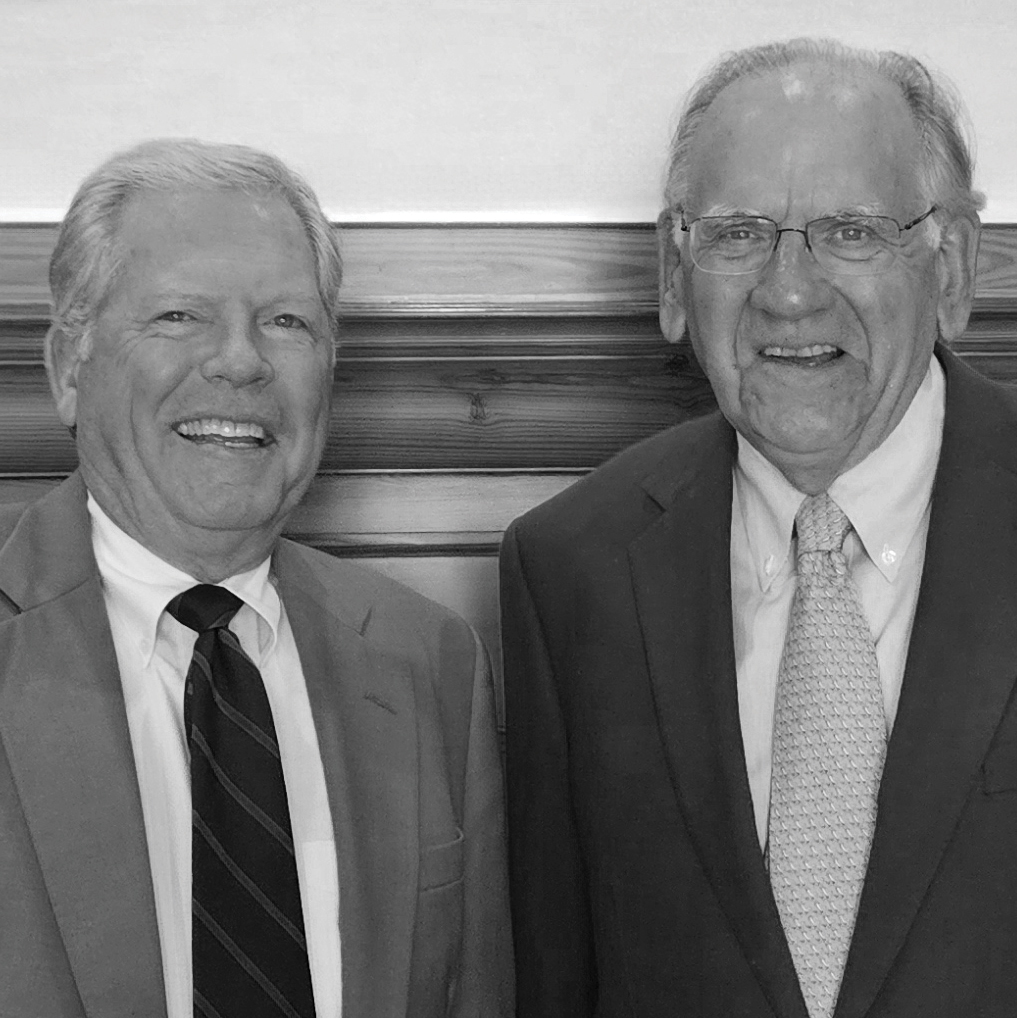
Authors
Together, Kevin and Peter have written Hijacked to spark a renewed dialogue about the moral and structural imperatives essential to preserving the American republic.
J. Kevin Dolan
J. Kevin Dolan combines decades of experience in aviation and financial services. After earning his B.A. in Economics from Denison University, Kevin served as a U.S. Air Force pilot and later flew for American Airlines. He earned his M.B.A. from the University of Pennsylvania’s Wharton School, going full-time while still flying, and later obtained the CFP® designation along with several securities licenses 7, 24 etc.
Kevin was instrumental in founding the Allied Pilots Federal Credit Union
(recognized as an early leader in electronic banking) and served on its board until it transitioned to a bank charter. In his role at the RIA firms, he helped guide pilots through the financial transition into retirement. He was a co-founder holding leadership positions in Lifetime Asset Management Program (LAMP) and its successor firms Pritchard, Hubble & Herr, and Retirement Advisors of America (RAA). Since his retirement RAA has been bought out and is now Allworth Airline Advisors.
Peter H. Calfee
Peter Calfee brings a distinguished background in finance, education, and nonprofit leadership to his work. He earned his B.A. from Stanford University and his M.B.A. from the University of Chicago’s Booth School of Business. A retired CPA,CFP®, and CLU, Peter served as Chair of the CFP Board of Examiners and was a member of the CFP Board of
Governors. His exper… Read More


