Jeff Garner - Industry Icon Exposes the Toxic Fashion Industry


Jeff Garner is a world renowned fashion designer, author, visual artist, and documentarian. We discuss Jeff's latest documentary in which he exposes the fashion industry willful use of harmful chemicals and synthetic fabrics that affect our health. Jeff's documentary, Let Them Be Naked takes you on a journey of science based facts that will leave you stunned and ready to get rid of all your clothes.
Support:
https://buymeacoffee.com/worldablaze
Email: worldablaze@fontesmedia.com
Web: https://www.worldablazepodcast.com/
X: https://x.com/fontesablaze
Threads:https://www.threads.net/@worldablazewithgeorgefontes
FB: https://www.facebook.com/worldablazewithgeorgefontes
Please like, follow, and share the show!!!!
Support our Sponsors!!!
Click Here For Discounts!!!
Web: https://www.worldablazepodcast.com/
YouTube: https://www.youtube.com/@fontesablaze/featured
X: https://x.com/fontesablaze
Instagram: https://www.instagram.com/fontesablaze/
Threads:https://www.threads.com/@fontesablaze
Please like, follow, and share the show!!!
Support our Sponsors!!!
Web: https://www.worldablazepodcast.com/
YouTube: https://www.youtube.com/@fontesablaze/featured
Instagram: https://www.instagram.com/fontesablaze/
Substack: https://substack.com/@fontesablaze
Hosted on Acast. See acast.com/privacy for more information.
0:01 You are listening to a Fonds Media Network production. On today's episode, I welcome world renowned fashion designer Jeff Garner. Jeff is not just a fashion designer, He's also a renowned author, visual artist, and documentarian. We dive into his latest effort, Let Them Be Naked, a documentary in which Jeff dove into the deep end of the fashion histry to expose the willing use of harmful chemicals and synthetic fabrics that negatively impact our health. I know you'll enjoy this conversation and please go watch Jeff's soon to be released documentary Let Them Be Naked. To begin with, I want to thank you for your time man, that you agreed to do this. I found what you were doing is very interesting. And what triggered that is one day with my wife and I actually saw a documentary on pollution and they focused in on clothing being like a second leading cause of pollution. And then they took you over to Indonesia and they were talking about all the pollution there, and then they showed the shores on the beaches, you know, and have all the clothes were piling up everywhere, and we're just we're just tripping out on that, and when I came across your profile and what you do
1:34 in your documentary, I was like, okay, I got to talk to I gotta talk to Jeff. You went out there and you really dug into it. So I found what you were doing intriguing and important. And thanks for the link, by the way, I did get to see that, and it was very well done, by the way, So congratulations that you did a good job on it. Thank you, Bud. I appreciate that. Yeah, yeah, it's you know, you can tell it's been a lifelong journey. So yeah, was in the last minute kind of let's do a talk about this. So yeah, no, we can tell it was. It was pretty well done and very eye opening. And with that being said, what so just watching the doc which not everybody has seen yet because it's still going through the festivals and whatnot. But so I don't want to give too much away in there. We'll obviously talk about it, but I want to I want to be able to let people see it for themselves and then you know, they could form their own opinions or you know, conclusions based on the evidence that you present and what you did.
2:33 But sure, I. Have to ask so you mentioned something about your mother and that's what led you to look into the toxicity of clothing as in the materials, dies, et cetera. Was that the only time that you considered that, or was there like any other time in your journey where you thought, Hey, this isn't right how we're putting all this stuff on our skin and how things are being handled. Was there any other moments your life that triggered that or was that Was that kind of like the straw that broke the camels back and you're like, Okay, there's something wrong. Yeah, No, I mean when I first started back in two thousand three, Okay, I kind of discovered the toxicity when my mom passed. That's what led me down the path of like, I have to do a documentary because that's the only catalyst or platform to get it out there.
3:26 And it lives beyond us, right, So I could sit here and do and I've done over one hundred catwalk shows all around the world with US embassies, with speaking engagements, ted talks. None of it's going to have an impact unless you get it on a screen. And so when she passed, I was like, Okay, now's the time, you know, because you know, I'm not a filmmaker. Part of me was like, well, people believe this, not believe it, you know, And so yeah, that's why I did that three hundred page book. And then along with the docs, I wanted to make sure that nobody he could come alongside say oh it's conspiracy theory or oh you know, your science isn't good, which Ted Talks tried to do, and I burned that scientist out of his job basically because you know, the data is there, the science there, it's all been you know, peer reviewed, and we did our own studies as well. So it's one of these kind of interesting subject matters that hasn't got the tension and it's been studied because as we say in the documentary that it depends who's funding the studies, what kind of information and answers the don't want to get out of it, and whether they want to disclose it or not, it's up to them. But for example, one thing we didn't put the doc is that you know, the Army outlawed under armour years ago to wear underneath their uniforms, so they were the guys were wearing under armor underneath the uniforms. Well, the uniforms themselves have pfats in it. It's say, you know,
4:56 it's basically pretending like it's an old slick, so it keeps the uniform catching fire, right, and so they would wear these under armor underneath, but they outlawed it. Now they can only wear a natural cotton because they learned that when the guys got into war, and you know, the fire happened, et cetera, it made the wounds worse. It melts into the wounds. That's interesting. And then you also found a study that it actually affected performance as well. Is that correct? So you know, if you look at muscle fatigue, muscle fatigue happens when you don't have oxygen oxygen supply, right, So when you have a non permanable fabrication i e. Polyester nylon, it doesn't allow any breatheability to happen, so there's no oxygen exchange taking place. So our skin is beautiful, like we can get you know, even water through our skin. It's a beautiful, amazing design.
5:52 So we block that process. We're going to dehydratrate ourselves and obviously we're going to cut off our oxygen supply. So therefore it's gonna cause of fatigue. And so there's a study that's already been done before we got into this that basically confirmed you get have a twenty five percent you know, fatigue, you know, compared to wearing a natural fiber that allows breathabilding, et cetera. So Darren and I we did in the film just to test it ourselves, and it came out around twenty three twenty four percent. So it's really interesting. So it's just, you know, that's when you look at science, it doesn't you know, it doesn't lie, that's it. But nobody's kind of putting together the dots, the synergy of effect. You know, Polyester was just invented during the war the animals put into clothing soon after because the chemical industries wanted to find a new use for it so they could keep selling it.
6:43 And then we didn't question it, and we actually liked it because it made our clothing cheaper so we could buy more, you know, but we never ever tested what happens when you put this on your skin, what happens when these ladies stop wearing silk stockings and put on Nyland stockings. Right, But then that's while we also included the dog. You remember we went back to this, you know, professor who spent ten years of our life studying you know what happened back in the day with these victims of fashion that we're wearing an arsenic dress, you know, dyed green? Remember that? Yeah, yeah, so that sticks out. So we're still using those same chemicals. It's it's ironic. So but back then you could have you could really see it because London Pairs, et cetera, all these fashion hubs actually made the garments there in their backyard, so you could see the correlation.
7:36 Now the correlations you can't see because we're manufacturing and thermal country we're in you know, India, we're in Indonesia, we're in China. We don't see it, you know. But you also got to ask a question, do the manufacturers care? I mean, does that also just give them deniability in the process or plausible deniability, like giving themselves some distance because in the end, I the problem I see in most any industry, because obviously we're talking about healthier is it's crazy to me how large corporation will sacrifice the health of the world just for a few extra dollars, which is which is nuts and in a way, like what you're doing right, you're making the hemp briefs and whatnot or undergarments because what you found and studies out there and how actually will affect male reproduction, right, testosterone, all of that just from having that synthetic material always right up against your skin. So that's really cool. But is it good to cost that much more for these manufacturers to make that shift back to natural organic materials or are they just so ingrained with what they got now in their operational machinery that they just don't want to put the money out to make the switch.
8:47 Yeah, I mean listen, I yeah, there will be a let's call it a learning curve where they're going to have to revert back to the natural fabris and the dyes. But if you recall, like the original like gene was hemp denim, and it was the cheap fabric because it was easy to grow. Everyone was growing it. So what we're talking about is corporate greed. So they want to own the fabrication. They don't want you to be able to grow at your backyard. They want to own it. Call it a name. Let's call it lia cell or tensil. You know, like what the hell is that? And then you learn it's like made in laboratory, So they own that trademark. Therefore they owned the distribution and then they own obviously the profits. So will they let go of that? No, But what they'll they'll do is introduce new fabrics that are like they'll call it bio based, and like, what does that mean? So that means they add, you know, it's still a polymer, still a polyester, but they use some wood pulp instead of it all being black.
9:45 Right, So then for them to actually grow. The hemp, and and you know that that's a different business strategy because you don't own the distribution. So when you develop that hemp, I could grow hemp and sell it, and then you could grow hemp and sell it. And we're both selling hemp, like we don't own hemp fabric and that's the difference. So their profit margins will be different, their scale will be different. But I don't think that's a bad thing. I think it's kind of like fight club, where these things have to blow up and then we have to reinvent what the new kind of fashion industry looks like using these better fabrications, these dyes. Because the trajectory we're going, you know, and I'm not a doom and gloom guy, but it's just impossible to keep up with.
10:31 Even designers I know are quitting the business, et cetera because it's impossible. Like the fast fashion created this mechanism where they're driving that consumer desire to replace the order of every weekend. We don't need that in our society. You know, we need to design that waistcoat, that shirt that we wear for ten years, and it becomes who we are in character. So it's affecting, you know, society in a way too. Sociology wise, We're people are insecure more and more now because they're inside of their true character. They don't know who they are because they keep chaining themselves every weekend, every trend, every you know. And back in the day, i'd see you walking down the street, I'd be like, oh, you know, there goes George and a scarf because I recognize that scarf. You've had it for years, your mom sewed it for you. That's you, buddy.
11:18 But that's not it's a weird, interesting cycle, rim but it's all about driving consumers back in the store to buy more stuff they don't need. So it's an addiction cycle we have to break and then we can bring in back that natural fabrication and die process because we're not having to output as quickly and as much as the synthetics allow them to do it. And that's it. It's like shelf syndrome. You build a shelf, people are going to fill it. That's just human nature. So we make the synthetic stuff illegal because it should be, because it's a help issue and toxic and causing cancer. Then we're there. They'll be forced to use better ingredients. And it's happened in the food industry, it needs to happen in fashion because yeah, and that's why we're connecting. Like what you put on your body goes into your skin, so it is a liability.
12:06 It's funny brought up the food industry because I did. I actually did an episode. I did a deep dive on that and finding all the dies, all the additives that are banned in the EU and what is acceptable in America and how our FDA is just really not looking out for our best interest. Now. It's really ridiculous. And you know, brands here when they have to ship out to the UK or anywhere else, that they have to actually remake that package and the ingredients to meet those standards overseas, and that's the only time that they'll be forced to do it. But yet they can't take that packaging. Let's say that's going to the UK and then just say, okay, we're also good to distribute to everybody in America. They would rather just keep those toxic, carnful chemicals in our foods because it's just cheaper, which is ridiculous. And I never understood how, you know, and you're right when it comes even even with clothing, they've always catchphrase, it's just marketing, you know, they're just just trying to capture, capture people's attentions, people who have a tendency to want to make a change.
13:05 You're like, oh, look it says bio like you said, or organic or whatever, and just because it says that on the label, like okay, I'm doing something good, but not realizing that there's still a percentage of those harmful materials within that fabric in and of itself, which is crazy. I got to ask you, though I've always been interested in this, when because I never paid attention to be quite honest, when did fast fashion become a thing because in the pioneer days, like when we were trying to become civilized people, civilice society, we wore our clothes out. They were functional, right, they had to last, they had to be rugged, they had to get us through the day. And then all of a sudden there was this thing where it was like, oh, I need a new shirt, a new coat, a new belt, everything, Like every other week you got to go to the store and buy something new. Do you know when that started happening.
13:52 It was basically late nineties, early two thousands. It's when that kind of business model developed. It was with Top Shop in London. H and M's are those who are kind of the beginning of this kind of idea that we you know, unfortunately, it's very inethical. They would go to the catwalk shows, knock off designers like myself because that we set the trends, go back, turn it into their system. Therea got built and they could literally turn it out in two weeks and have it in the shop. So we do seasonal, so we present a season and then we don't make it to the following season. They already have our designs in their shops selling to consumers.
14:34 And it was just and they realized, wow, we're ahead of the game, so we couldn't compete with it because we just we have to take orders in know what we're producing before we produce it, otherwise we'll go out of business. But they were able to like just kind of predict how much they would sell depending on how manuch stores they have, and they would just anty up and do production and throw it in the stores and that's and it worked, and then they were making a lot of money and that's when, you know, and it sped up everything. So these factories the text you know before you couldn't get and they're using cheap fabrics, so it's not like they have to make their fabric, it's you know, pre existing, so you know, and they use cheap hardware, so they're not making their hardware like their zippers.
15:19 We make our zippers or snaps, you know, and all that stuff. So yeah, it was just a different model that had not been introduced because everyone that the the buyers changed to where they just wanted cheap versus quality, and you know, they didn't and they started teaching and design school design obsolescents, which is basically, how do you make a garment that falls apart after free washes, and so what it would do is drive the consumer back in. It was a business idea that they would drive people back in to buy a new shirt. And they even did a recycling program in the same manner, but they wouldn't recycle the garments. But they're like, oh, if you drop off the shirt. They did. It's when a person walks through the store to drop that shirt off, they'll buy something new. So it was all like social behavior stuff that they realized the psychology of it, and you know, some smart business guy with no ethics decided that's a new way and made bank and nobody looked back. And then everybody copied that model, and then now we're dealing with a huge amount of like you saw on the beach, that's what we're dealing with now because of that new cycle.
16:27 And the college kids loved it because they could buy a new outfit for their date that weekend. And so, you know, nobody really. Blew the whistle until we saw it piling up, you know, and yeah. Yeah, it's it's crazy because you're just it is societal. Then we need to get away from I got to have the latest, greatest the trend right, and what happened it seemed in the fashions the same thing that's been happening in the tech industry for years too, Like do we need a new iPhone every year? No, Technologically that thing's more powerful the computers the used to build the nineties. I'd be quite honest, I don't need to upgrade. But everybody thinks, oh, the newest, I gotta have it, But no you don't. So yeah, it is we need. We need to definitely retrain our culture in society. But it's not just here, it's it's a worldwide thing, which is sad.
17:15 What I found interesting too is I was unaware with like polyester's when is that most of everything we wear is literally plastic? And it's crazy how the petroleum industry is in grain and and embedded in everything. Everything from our tupperware to like our utensils, you name it. Everything has a bit of oil or petroleum in it. And how I don't know how to ask this question basically, why why are they I'm trying to understand how it's so cheap to use those fabrics, synthetic fabrics versus organic fabrics. I really am because I equate that to like gardening, for example, there's no reason organic vegetables should cost more in the store or outside the red tape. And that's another thing that I dove into one one day. I was I was just really interested into why is my organic apple or tomato costing more than the one from you know, the big farm for example, the big farm brands.
18:13 Because when we grow our garden, ours is all organic. It doesn't cost us anything, no sprays, nothing, pesticides. But due to government regulations, they force these organic farmers to pay more. And I'm sure you know all about this and that is that something that's similar to is there any regulation like that in the clothing industry too? Like if they want to claim here is all organic fabrics, is there a certain number of hoops you got to jump through to prove that? Is there red tape like that? Also in the fashion industry. I mean there's certification programs I want you to buy into to certify your fabric. You don't have to do that, okay, I simply it simply is coming straight from the textile ar.
18:56 It's just costing them more to grow it and spin it and do all the processing in that world is a processing thing, because you're not dealing with food. You're dealing with this is a liquid that they solidify through a machine and make polyester, right and onceing u those machines and you're just your ingredients so cheap, you just plug that. So with cotton, hemp and silk, obviously there's a harvesting time, there's a growing time, there's a picking time, there's a reading process, there's a spinning process. So there's a lot of labor intensity that goes into that, so that will never go away. There's machinery that helps, like a fornicator and other things that help that process. Instead of reading it in the ground and letting it rock for three months, you can throw it through that machine and that speeds it up. But that's the industrial age.
19:48 But you know, can it be almost equal? Yes? I think so. When people buy into natural fibers, it will definitely create more production. Therefore will be better systems, will make more money, and then the price will come down and down and down. But like you said, hemp, you could grow anywhere, so technically it could be mass produced. It could grow in the mountains, grow in any climates. It's three months to you know, full fruition to have it picked. Cotton's a little bit more intensive, more water usage, et cetera. But that's why I'm a big hemp Fand but yeah, that would drive the pricing down. Now why they use patrolling. Base, it's think of it like you know, corn syrup for the food industry. It's just it's just always been the cheapest ingredient to kind of keep all of it together and create you know, is the base of it. Right, But yeah, I would, Yeah, I don't know. I mean, you're never going to have it equal for sure. Right now it's probably one to ten, meaning you're paying one buck for an eylon yard and you're paying ten for hemp yard, right.
20:58 I think the thing with hemp, though, is I get what you're saying, because I mean you're you're you're directly and you're in it. This is what you do for a living, so I hear you. But the thing with hemp is it has so many uses from from paper to like you said, clothing. You could even use it to make building materials, which I've seen some companies starting to do. So I would, I would. I would think that there is definitely a possibility for farmers of hemp, for example, to be able to be subsidized by multiple industries to drive that crop down to where it would be beneficial to not just the clothing industry, but also to other industries in general, just as it happened with the patrolling products, you know. And at one time that was the direction that we were going, uh so until Hurst got involved and basically started buying all the hamp farms out and closing them. But that's another that's another journey.
21:50 So yeah, it's it's it's a sad state. I'm gonna pivot just a bit because you I want to talk about you for a bit because my audience I usually am more of a politics news commentary, but I tend to love to talk to people who I find interesting and I like that, you know, for someone like he was leading the charge, for example, in this particular subject matter. But what got you into So you started with fashion? Is this correct? Okay? And then you ventured out into visual arts and then becoming a documentarian. So can you kind of give me your journey there of how that all evolved. Yeah, I'll do a short snaps. As I grew up in Nashville, Tennessee horse farm, You know, grandmothers stopped me to sew. They were you know, Granddad taught me how to work hard on a farm, and dad taught me how to ride a horse, and I just was of the earth. And then all my buddies were in bands. I said, hey, be in our band.
22:45 I was like, no way, but I'll dress you. And then I started learning how to make clothes for the individual and what are they trying to say on stage with their music? And you know, I was always artists minded. And then when I got into merchandise production like pasta, salt ink and stuff like that, like, wow, this is a gnarly dirty business. And you know I come from a farm background. I'm like, I don't want my river dirty. I don't want my horses to be around this. I don't want to be around this. So I started asking questions and trying to drive like why are you guys doing it this way? And it's just that's what we could do. So it started that whole journey. And then I moved out to California, got more education and learn there were some guys out here already trying to grow a himp and do that whole world, and so yeah, it just kind of eventually just kept moving the dial for it. I mean, I remember one day talking to text seller. I'm like, hey, if you produce HIMP for me, I'll give you an order of band T shirts like fifty thousand, and I would kind of wage use what I had production wise to help develop new fabrics because back then there was nobody doing him, you know, not in the US at least, and so because it was too expensive and they thought nobody cared. And that was like early two thousands. So yeah, so that's kind of how I developed. It was just me just being that's stubborn, my country guy I am, and just be like, all right, we got to do this differently, and I don't agree with this, And it wasn't about money to me. It was about doing the right thing. You know.
24:11 It sounds like you were always always as far as the fashion industry and then kind of always into the art scene itself. Sounds like did you play Did you play music yourself too? You playing instruments? Yeah, my mom was a pianist, a composer. She taught me how to play piano and I would you know, string, you know, kind of grow up in Tennessee, we kind of string and play on the weekends and dance, you know, as as part of growing up. But I never I'm not competitive. I don't like I honestly don't like being on stage. I don't like the limelight. I really that's that's not my funny to. Do these crazy fashion events and you don't like. Yeah, no, that takes a lot of effort. I like to design in my room, on my floor and make things. You know, the person behind the scenes, right, yeah, exactly exactly.
24:55 I get it. So where you lived, you just grew up around all these people and just found a need and then you actually loved it. You just got behind it and just went went forward all out right. Yeah, yeah, I looked at the need, and I'm a you know, my brain, I'm my grandfather was one of the first chemists, actually Openheimer hired for the Manhattan projects, No Gridge, Tennessee. So I grew up with him just making stuff like learning out of problem solve, not going off a blueprint or instructions and trying to create a problem solve and figure things out. We used to build radios and you know, we built my go card out of wood and built the engine and just you know, so I had that brain and that mechanical kind of engineering background. So I was like, all right, I can figure this out. Like let's try this, let's try this, and like so this chemistry and natural dyes, you know.
25:43 So I went to Florence City, studied how they used to do it, brought it back to Tennessee, found a couple of friends of mine who were kind of hippie sisters doing ty die and like, hey, you guys want to learn you know, how to do this, and let's dive in. And we spent eight years developing out all the colors and you know, learning what we could use around Tennessee to die with, and then we expanded it and anyways, so I love that problem solvemadic mind, you know. But then it's like, how do we take something that's crackedy and take it to scale and production? And so yeah, so that's always been kind of the journey. I think that's really cool, man, Yeah, honestly, and natural dyes actually, so all of it was always plant based, right, like vegetables, leaves, things like that, dirt. Is that how most of all of it was made?
26:27 Yeah, I mean a lot of people say vegetables, and I think because they have strong colors. I don't use vegetables because the stain power is not there in my opinion. But if you think about barts and leaves said a lot of tannins in them, that's where you're going to get really the deep rich colors that stay, you know, and I love doing that. And then you know, but things like marigold flowers, for example, with the gold tones you could liptis leaves also are magical because they get gold, gray and black, you know, and if you you know the ideas, you mix it with metal, an iron will get the dark, you know, make things go dark, Aluminum Mexico light. And it's just it's like you know, learning how to you know, gas and break and this and that.
27:09 You know, it's just chemistry. But in the natural way, I can drink my dies, you know. That's I was actual. Gonna ask you about that because I heard that. Yeah, yeah, eh one laughs Mike, And I was like, I've done it on TV before. I and you know, with somebody who synthetically dying or saying they have water based dies, I'm like, what the hell does that mean? Then drink it and they won't touch it, but you will. Yeah, it's pretty cool. So you still make your own dies in the house or do you partner with your your other friends that you were talking about to have them do that for you? Yeah. I partnered with them because it was getting you know, there's only so much I can do. And so they started doing the colors for me. And now one of them, one of them got married, the other one started getting other farmers to grow, like Indigo and Tennessee, and she wanted to crack the denim and to go dinim and start providing for Levi's and so that's what she's doing now.
28:02 And I'm doing I'm not doing production anymore like I used to. I used to be in seventy five stores. I have a wearabook collection, and then I decided that's not my journey. I'm going to pull that back and really just be do more cature and show fashion weeks and show red carpet and get those highlights to teach people, hey, look, it can compete and look just as good as these synthetics. And it's died with this plant and it's made of this and so that was kind of my new journey, and that's what I've been focused on. But I do with our boxers. Obviously we do that, but yeah, right now, you know, there's the way it's going is you can create a powder form of that plant diet. It can be used in the commercial machines. So that's kind of the next phase. Yeah, yeah, very cool.
28:46 And your fashion in and of itself, we haven't talked about that. I've noticed this more like probably what mid seventeen hundreds to mid eighteen hundreds. Is that primarily what you've done in the past, or are you want to change that it? Honestly? Every Yeah, I mean I have different like any designer, I have different downloads and so like my new collection, I don't really want to share what it's about, but it's going to be completely different that kind of time period, and you know, I've done it all, but I do like historical connections and I like intermixing that too, you know, but so. Kind of like an homage to that with a little bit of modern twist.
29:27 Yeah. Yeah. I did a few pieces on this TV series called Rain, which was Mary, Queen of Scott's and so you look like it's kind of the dress is more modern for her for that time period, but I took liberty, but it like it looks amazing, you know, but that that dies and the fabric are right on par for that time period, but the cut is a little bit sexier, right, And so I like doing that kind of take on things. Yeah, very cool. And that one thing I was going to say is when I was watched from the documentary that I looked other things up about you and your shows. What I noticed, and it actually caught my eye, was your dresses, everything you make, the fabric, how it just flows. Is that all hemp or as.
30:12 The majority is. Yeah, I have a mix of a hemp and a silk that I just you know, I created years ago and I love it and it's about a four zero point two ounce and it just has a great just hang and flow to it and I love working with that. Yeah, just it just seems to move with the body and then just the way it catches any breeze er, it just looks so natural. I really caught my eye because I was watch It's like, wow that I don't know what you're using, but the way you did it it was it was really I'll just say the word, it was beautiful. It was awesome. I love the way that I flowed so it was really cool. And your idea of how you fit women actually accentuists the body. I think correctly, you know. So yeah, thank you. SHOT's off to you. By the way, I caught my attention. I thought that was really really cool stuff you're doing.
30:54 What is the thank you? Do? You still get nervous about that stuff though, Like what's the process when you're leading up to doing a show? I mean, is it all stressed? You know? What is it is? Nerves? Like what goes on? That's that's a great question. I you know, I'm pretty how you see me now, I'm pretty laid back. I'm you know, I'm a surfer. I meditate every day. And people are surprised backstage honestly that because most designers are yelling, they're cussing, they're you know, pulling models around. I'm like, I don't you know, I've been doing it for so long, but I've never kind of been that way. I see it as That's why I usually have a horse out front. I love the grounding of it. And most of them all just love working with us, even though we're not like a major designer, because they heard how we kind of do things and and obviously I'm the romaningness of it.
31:39 I love, but yeah, I don't know. I mean, I don't. My nervousness came in with this documentary, sitting in a theater having people watch it me hearing them like that, I'm like, oh, thank you, Like that was not you know, different, right, it's different, and you know, it's a new medium for me. And you always get this with any thing you start doing, and everyone it's like, oh, well, you know, this is Jeff's first film, and I'm like, and when I first started it, everyone's like, good luck Jeff and pat me on the back. I'm like, all right, cool. And then when I went out, raised some money in a week, started the whole production, filmed. In three months, did that editing in three months, and then had it popped out to you know, film festivals.
32:22 Everyone's like can I be a part? Or like I'm like, where were you when I needed you? Like that always happens. It always happens, so you know, But but it's it's interesting. The film work is interesting because it's not supportive. Not to say fashion is either, but it's super competitive. Everyone's kind of like, even if you do something for the good, I'm like I'm not a filmmaker. I'm not trying to be a filmmaker. I have no ego in this. I just want to bring something to the you know, awareness factor and help people. And you think you would get more people around you to help say, oh, I know so and so, I know it's so and so, but no, everyone wanted find out how much money are paying, and they wanted like it was really interesting in that sense.
33:03 As a creative artist, I'm like, no, wonder, you know, the industry is kind of where it's at because in order to do something, you know, it's just it's it's very jaded and I felt that energy, which is sad because I think so many more stories could be told in a beautiful way, but they just either get beat down or I don't know, but I'm a pretty tough bird and it took a lot out of me to get this film done and done in a way that was you know. I didn't take any money from any sponsorships. I didn't, you know, I want to keep it pure. I wanted to show case was really going on, you know, and yeah, it's interesting. So that was the hardest part. I'd say fashion weeks are like I could do one in my sleep because I love it so much.
33:47 And and I you know, I'm a confident artist. I know what I'm doing. Artists obviously subjective, So I. Know what I'm doing. I know my vision and I know how to deliver that. And if somebody likes it loves it, doesn't matter to me. I just want to give an experience. And so I kind of learned this art of an attachment to your art. And I think when people start listening to how people respond or press, how the press response, I think that gets in your head and that's when you start. You got to ignore the noise, Joe. If you do, yeah, I'll let it go, man. Yeah exactly. So as far as as far as uh dipping your toe in the water, so to speak, with the film industry, like you're not trying to make a movie, You're trying to educate, is what I saw, but doing it in a visually visually attractive way to where it just keeps your attention, you know, the pace that you have. So the documentary in my mind or when I saw it, is successful in that regard, Thank you. And I liked how it was objective in presenting the information and good call on not having any sponsors, because then people can't say, well, you're only saying this because you got paid by this company, so that was a good move. Did you feel there are any Do you feel anybody was going out of their way to put rope blocks funny when you were making this or was it just people's greed kind of going hey, I want a piece of that where you know, what can I get out of it?
35:06 Yeah? I mean we had we had one of our toxicologists that was in the Victoria's Secrets lawsuitcase that I've tracked down and wanted to interview her, and she got paid off not to talk to us. Really, m M. Can you explain the Victoria's Secret piece because it kind of got brought up in your documentary, but can you expand on that a little bit? Yeah? Absolutely, and it's it's expanded in the book. But you know, I didn't want to make the doc about pointing fingers or same bad guy, good guy, but simply six hundred women roughly did a lawsuit against Victoria's Secrets or basically issues caused by their brawls, so they were breaking out and rashes and everything, and a lot of women felt it was causing breast cancer. So the only problem with that when you do a class action lawsuit, which they didn't know, so that we interviewed the original woman filed, lawyer talked to her into doing a class action so other people could join, and usually that means more money for the lawyer. That's why they do it.
36:07 But unknown to her, because she's just trying to make right something wrong, is that they could throw it out of court because simply they can say, well, she has a different reaction than her, so it doesn't apply to her right. And it's it's very easy. It's a game, right, very easy game for them to win. And she didn't have the energy or the money to do another lawsuit just with her against them, and so that's how it got quote settled. But you don't you don't hear about that online and that's we didn't know what happened at the end of that until we interviewed her and she shared the real story. And what's also interesting is that they did a let's call it a leak, but this one reporter before talking to the interviewee who we had on the dock, it released saying that formidea hide Paul's breast cancer. For the Victoria's Secret Braw it's like an article that released. So they were talking about, you know, her lawsuit being about formade hide in the brawl. Well, it's interesting because that's an easy kind of thing to go to and everybody in the industry knows a lot of these chemicals and toxins are created by synergy, So you cannot put formidohide in the product. But because you diet with X or you add X to it creates a formado hyde. So there's a lot of play on words to say, we don't add form idehide, so it naturally occurs, and it does naturally occur in the environment,
37:39 so it naturally occurs. Therefore we're not liable. Again, it's a play on words and legal stuff. So with using formade hide as the culprit so to speak, they knew they could probably get back out of it, get out of it if it went there. But we did in the in the documentary, we went and actually took the brawl that was causing her having the rash, and we did our own, you know, testing on it, and because I know chemistry, asked the lab, the independent lab, to look at NONI phenol and nony pheno is a carcinogenic tomson typically added to this fabrication and die and it basically it shows on the film, but it was over the legal ppm amount that's legally allowed. And again the legal ppm allowed allowance is way too much, like you should have zero of this chemical in your bloodstream, but they do that because their industry friendly. They don't want the industries to shut down, so they get give them an allowance. But this was like eight times allowance. So anyways, it shows that that was the corporate formata. It wasn't.
38:49 So it's just this game of like do we really know what's in our slowly right? And if we did, how do we go about protecting ourselves? Because they're not going to do the studies, they're not going to list ingredients, and that's kind of the issues that it is a public health issue because we have no idea what's in it. We don't know the synergy of the effect of all these chemicals and what it's do into our body, and it's and nobody cares because it would take money and a whole different you know, set up to do it property and so until we push this, you know, it's not going to happen. And so that's the reality we're up against. But these women did have these reactions. I mean it was all over the internet. She posted it.
39:34 I mean, once a news rable came out, everyone came out of the woodworks. It said, wow, I'm not the only one. And that's when my mom passed. The breast cancer is like, and these guys are bastards. They need to be. You know, this needs change because they know what's in it. Everyone who designs a product knows what's in it. Well, what you said kind of begs a question because I can't imagine such a big company with these chemists involved, like okay, play on words. They can say, okay, these two these two compounds whatever, when they come together, then the byproducts from aldehyde. They know this already beforehand. They have to or are they intentionally using formaldehyde in the product. Regards of how you word it, they can't. They can't really deny that they don't know what happens when these two you know, when these two products or whatever meet.
40:22 Yeah, yeah, no. And the problem is, so if you go back to Europe versus US, like you asked why they have different regulations than US, So there's there's a common you know, basically, if you can you know causality, right, So if we can say hey, from this from Autohyde in this sprawl and it potentially can cause cancer, well in Europe, that's enough to say, okay, what comes off the market. We got to do studies on it before we let it back on the market because it could cause harm or cancer to people wear in it, and the US you have to prove that it causes cancer before they take it off the market. It So that's the main issue. That's why we have less quote regulation because and anybody knows, any chemist knows, you're you could.
41:08 Get it maybe ninety by you know, ninety set. Like, there's so many variables you're not going to be able to prove to to the you know, the tent that it one hundred percent causes breast cancer because everywhere she may have a different perfume, different skin set, different age, different diet, you know, different whatever is bioccumulation levels, right, so that one ppm could put her bioculation level over and then she gets breast cancer, you know. So it's it's it's it's so many variables. But what I do know is that there are carcogens and these brawls that are made of nylon and polyester one hundred percent, so they do go into the skin and the body when it receives it, it's like a it's a it's a it's an alien to the body. It doesn't know what it is, so it grabs it, treats it like an estrogen.
41:59 Grabs that stores it in the fatty tissues because it doesn't want to go into the bloodstream, so it's protecting the body. So then you have like a greenhouse like event happening in the breast. Because they're fatty tissues. You have brawls over top of them that are putting the chemicals in it and not allowing permeability, so you're sweating. There's no air passing. There's restrictions on the brawl straps. That's causing the vatic system that's designed to move out the toxins to not work because those are like hoses that you put any pressure on it, it doesn't work and there's no pump, right, there's no heart pushing it through that hose. So your body the way it moves it is by kind of like that watch. You don't wind up but it winds up through motion, so that's why the breast need to move and shake and push it out. That's how it's designed.
42:51 So you're not supposed to be compressed and restricted for exactly sixteen to twenty hours exactly. And so that's it. So you know, And but you can't put your finger on it and say, you know, but there have been studies done that show, you know, they took one of the guys we interviewed. That's why I interviewed him because he did a study in Fiji with women who never warn brawls, and he put him in braws and got what I would consider, you know, the most sure type of study because they never had touched the brawl before, same diet, they you know, same they'd never left this village, you know. So it's close as you can get to a case study. And yeah, I proved what we all thought was was, you know, going to be the outcome which the more you wear the brawl or cancer. Right, So that's the issue, and that's all we're trying to bring to awareness. Is that something you should look at it It's like not studying the cigarette when you're talking about lung cancer and what The wild thing is when I got into this, and I've been researching a long time, you couldn't find one study that was paid for to study the brawl.
44:01 That's interesting actually, especially with the uptick and breast cancer throughout the years. Yeah, see think they bothered to look, right, what's what's always on your skin? What's always on that area? And that shocked me, like, wait, all these foundations that raise money for breast cancer, they haven't studied the brawl, Like there's something like it almost presents itself like, oh, there's definitely something going on here, because if they had a few studies and they came out with things that were, you know, this align this did, and that would make more sense to me. But the fact that it doesn't exist, I'm like, huh, there's something fishy going on. Yeah, well I can imagine because when you say in America you have to prove it right, you have to prove it through studies that yes, this actually does cost cancer, versus in the UK will say hey there's something here red flag where we may have to study this further.
44:49 But in America you know that, I know you know this, but there's huge lobbyists out there that are paying to make sure that they get their way. And I know, the fashion industry has a pretty pretty big lobby lobby you know, lobbyists and organizations to basically just you know, tug on, tug on the shoulder of their favorite politician or whoever regulator to make sure that things go their way. And I'm sure that is what really gets in the way of most of these studies that are getting done. It's no different than what happens in the food industry, drug industry, et cetera. Yeah, it's the same thing. You know. They have an intimate apparel coalition that you know, kind of keeps tabs on all this and keeps it hush and whatever. Yeah, I mean that's it, and we're up again. It's a big entity a lot of you know.
45:35 And I kept going, you know, like why hasn't. Been spoken about or talked about or addressed or you know, And I couldn't figure it out until I like did a deeper dive and I realized, oh wow, it dates back to three World War two where you have this chemical company that came up with the first pesticide. Guess what, they're still in business. They're still making seventy five billion a year. Who do you think is controlling the strings? It will be them because they're the ones that would lose the most because they're they're pumping their chemicals into all these industries, so they're. Not going to let this, you know, just saying too big to fail, right, Yeah, And. It's it's interesting to find out that the number one top chemical company was the economy for Nazi Germany and they're still and you know, number one, and they're still pumping their chemicals out, still poisoning us, and it's just crazy that nobody's taking them all. They were disbanded, you know, after they lost the war, and then they basically came back together under a new name and kept going. But it's the same chemicals that were developed during that war to kill people basically, and that's what they're using. So that to me is like, come on, guys, there's got to be some more good hearted people in this world that I know this is wrong and want to fight with me. So that's why I did the doc to help kind of create a banner and an energy for people to like get behind it, because enough's enough, you know, you know, we shouldn't And as in the film, they say, it's not a silent and death, but it's elongated death.
47:07 It's not like you're going to die tomorrow by wearing that shirt, but it will. You know, it will have an effect. It will lead to a disease or cancer after ten to twelve, twenty years. You know, you just don't know, but it does. Science will say it's in there, it's going in your body, it is causing sell mutation and it could lead to something. So that's where I think we need to like at least bring to the table. We need to know what's inside everything that we buy and put on our bodies because it does affect us. And then that, to me, is enough and then people can make their own decisions because some people care, some people won't care.
47:48 Yeah, well, it sounds like through everything you just explain without directly saying that you did have obstacles in your way and making this documentary. So yeah, yeah, a little bit. I'm sure I'm not done, and yeah, you know we're getting pushed back all the time. But you know, I don't think they understand like I have nothing to lose. Nothing again, it's it's it's, uh, I'm probably their worst type because you can't pay me off, and I'm not worried about anything, so good, please do this. Yeah. So I'm doing this, you know, for and and that's why my friends have surrounded me because they know my heart in this. And you know, if I can save you know, one mom from breast cancer, that to me is worth all of this, you know, you.
48:35 Know, I just I just realized, Jeff, we've been talking this whole time about this documentary and never even told anybody what was named. Let them be naked. I just I just dove into it. I apologize. So it's funny. Yeah, my producers, I guess a working title, right. I'm like, nope, I thought it was a great title. Thank you. I did too, you know, to me, in my opinion, like it's better to be new than dress and synthetics. And to me, it's a visual title. And I was like, you know what, we got to strip it back down. Well, who was it? Who was it in that documentary that you were talking to or film where she mentioned and and that kind of stuck with me, is like, you know, you're wrapped in fabrics from day one you're born. Yeah, and you were just talking about the accumulation right over time and unless unless they could see something drastic happen like immediately, it doesn't ever attract attention. And they just attributed your your ailments to other things like oh, it's you work too hard, you're wearing your joints down, you're doing this, it's your they'll make an excuse for everything instead of like you said, with the brawls, looking at well, what's what's directly affecting that particular area all the time, every single day.
49:42 Yeah, and that's it. You know, as a designer, like I was in advanced biology, I've dissected bodies before. Like, yeah, whether or not you believe in a creator and God, I do, but I like, I think it's a brilliant design. So what we put in our bodies. You have an esophagus, you have stomach acid, you have a liver, you have kidneys. It protects you from if you put something bad in your body. Now, we were designed to be nude, so our skin has no protection mechanism. It's gonna you know, it's designed to be poorused. Like I said, it pulls in oxygen, pulls, you know, it pulls in water. It's just it gets rid of stuff. It's a beautiful design. But we clog it by putting these clothes on it, and that was never supposed to be the intention of it, so we're messing up that design. So that's why I think clothing should be the number one thing we look at, not diet, not environmental factors, because again, we have hairs in our nose, we have beautiful capilaris our lungs to repair themselves. Like, so we can handle some type of air pollution, we can handle food pollution. We're not can't handle this stuff.
50:49 Well, it's like, can California go to the gas pumps a warning all the time, this can cause cancer? But we still go to the gas pump every day to fill our vehicles, at least most of us do. I still do. So it's it's crazy. It's just we we just shrug it off because it's like, well, this is just how we live in this part of what we do, and we just accept these things. We don't question them. Yeah, it's convenience, you know, we're addictive convenience. And you know what I'm presenting is is an opportunity that it We can do it differently and you could go in your wardrobe tonight, go through your closet, analyze what you got in there as natural fibers, that's not analyze what synthetic dies, what's not, you know, get rid of that other stuff, and then slowly add to your closet the natural garments because they are in existence today. There are people making undied hot and hemp options. And then you can learn how to dye yourself like it is doable, you know, and like food and housing, clothings and needs unless we walk around naked, which I would mind doing, but you know other people would mind. I'd probably get arrested.
51:55 But that you know, yeah, I'm surprised it did not the horse in London, but that's funny. But anyways, but that yeah, that's uh, that's but it what we're presenting is not it is feasible. It is feasible. It's just not convenient. But in my mind it'd be fun. You know, I'd like to be able to teach your kids how to die by your tree, at least through your tree. It's like amazing. Well, I mean there's convenience and there's knowledge like you don't this never ring. I've been in businesses and running businesses and sales and marketing for for many years, and I always used to hear the saying, like in the boardroom, we're having these meetings, I'm pitching to the CEO, and it's like, here's you. Guys always say you don't know what you don't know. And I used to hate that, but after a while it started, it started clicking. It's like, wait a minute, you know you really don't know what you don't know. And I think a lot of times people literally don't know there's an option. They don't they don't realize what's happening and that there is something better for you that may not necessarily break your bank. For example, Like you said, I think society. Society is the problem.
52:59 We always have to I'm horrible. I don't even treat myself. I'll spend on other things. My wardrobe's horrible right now because I work my hands a lot. I'm in the events industry too. I'm in an event production, so I'm always I'm always like, trust me, all my stuff will get torn up, and so a lot of times I'll just buy what's functional, what works, and what will last because I know my stuff literally will get ripped up and I'll have to replace it. A lot of. People just buy because they think it makes them feel good, look a certain way. Whatever. Now I could dress up when I have to if I'm going to an event or meeting, sure, absolutely all day long. But I'm not going out and spending money every day like the average person is on clothes. For example, I'll wear myself till the end of time. Most people don't do that. So I think what you said is they have to be retrained, and I agree with you, and I also agree that yeah, well, this one natural shirt, for example, costs forty five fifty dollars, but you don't have to buy a ton of them.
53:49 It's gonna last you a while, you know, just just wash, just take care of it, right, Just take care of the garment. It'll last longer. Everybody just puts everything on a high spin cycle. All these bleaches, and you know, everything else starts destroying the fabrics and that just wears out. Well, that's it. And what people again don't know is that synthetic dives actually eat away at the tensile strength of fabric, so they make it weaker. And you know, and I challenge everyone, I'm like, okay, you know, five three of my boxers or forty five fifty bucks each. Whatever. Okay, fine, one hundred and fifty bucks, get rid of all your other boxers. But all your other boxes, the twenty of them would equal probably more than one hundred and fifty. But those, they're like three boxes for the year. I'm like, yep.
54:33 And then you get black and nudest stripe. That's so. I only did three colorways, so you know which one you worn, and you just rotate and I would challenge you, and I do this all the time. I just was on a two week trip doing you know, the documentary and only brought the three, rotated them, didn't wash them once, didn't smell, didn't hold smells because of the fabrication. So you're not washing as much. And yeah, if you explain that real quick, so people don't just hear this and go, oh, you guys are gross, Like why is it You wouldn't need to wash yours or the fabric you're using anyway all the time. Yeah. So the obviously the hemp and are getting cotton mix that I use and I use one hundred percent as well.
55:13 Is it's more hemp, and so it acts like the hemp. So it's anti fungal, anti bacterial, naturally, and it's for us and nature. So it's not gonna make your body sweat. It's not gonna hold onto the smells like you know how you could stand next to a fire and cotton really holds on to it, or synthetical hold on to that smell. You go to the gym and you can smell people because it's not allowing the sweat to pass. So that's why you have to wash the clothes like every day every time you wear. If people have gotten in that habit, they just throw in the laundry when they get home from working out. I work out on my hemp every day. People laugh because they're like Jeff and his hemp clothing because it looks a little different. Don't need to wash it, don't smell. I'll go out to a restaurant afterwards. And it's true and that you know, it's just a different way of living. And I got to admit I test and wear everything that I put forward, Otherwise I wouldn't suggest it. Like I wore this literally the same pair of stocks I made in Italy just two weeks ago. I wore them the entire trip, even in the snow, and I was up in Scotland Highlands.
56:13 They so they got wet. Fine, so you just like air your garments out overnight, just let them, you know, air out, and then you're good. Yeah, and it's good. And I've been after developing his sock because every sock is mixed with the at least ten percent nylon or acrylic or something, so it's gonna hold. It's going to hold some of that smell and it. You know, you could wear your sock maybe once or twice and it, you know, and I'm most tired of it, so I wanted to develop. That's why I did the Hip Boxers too. But and every guy. Friend that kind of laughs at me and does it. After they do it, they're like, you're right, So you know, it's not a fabricated thing. I'm not trying to sell something. It is true. So when you weigh it, you're actually pay less for what you need versus more. And they are going to last longer because they don't. They don't.
57:00 The tensile strength of hemp is stronger. It's not going to get the holes in it. It's not going to rip, you know. I use organic cotton waistband with natural repper. It could go inside and dryer. But you know you don't need to dry because synthetics take longer to dry. Hemp is. You can hang it over night, six hours, it's going to be dry the next day, you know. And I've tested that. You know, wolves quick at drying too, but a synthetic stuck. So well, let's just be honest. When we're just talking about boxers, most working people, most men, they'll wear the same damn underwhere holes in all for years anyway where wread you know this? So they got to stop lying to themselves. They can afford to buy some good stuff. Yeah.
57:40 Can I ask you though, when it comes to these materials, what about what about people who do work, like the blue collar guys are going out and like the electricians plumbers. How does that fabric work for people like them? For someone who might choose to design or make clothing for for for people who do those things for a living. I mean, you know, I I don't. No, I mean, I like, I build my I kind of. I'm an electrician. I build my own houses, like I do all that work in my boxers, I write horses in them. I mean they're great for performance, they're great for actually working. So yeah, I mean, I don't I don't know really what the difference would be, but yeah, I think it's uh. I guess longevity. You know, like I don't know if I'm going overhead pulling wire and I'm snagging my shirt on something like, is the hemp gonna be a stronger material for example, that won't rip as quickly as you know, let's say a polyester shirt or something like that.
58:35 Yeah, absolutely, tinsil. I mean, the tintil strength of hemp is the strongest venue natural fiber, and so polyester is a mimic of him. So you know that's and you look at like nylons a mimic of silk, so they're gonna have kind of similar properties. You know, polyesters is strong, but you know hemp is gonna it's going to be better. So the answer is use hemp. Yeah, acting fair enough exactly. It's starting to rain here. I may have to let you go here in a minute, I get it. Man, Well, no, if you have to run, I had more questions, but if you don't mind, we can catch up another time if you have time. I know you're pretty busy individual. Before you go, though, what what's yeah?
59:16 What is okay? Two more questions, I'll let you go. Sure, what's left for you? Or as far as your venture into film? Now, are you hooked? Are you? Are you now going to expand on it? Yeah? I I've already been asked that a couple of times, and you know, and everyone's happy how it turned out. So I think, yeah, I'm slated to do a second one and I'm going to dive into more solutions, which I think is needed next. But yeah, no, I'm all about it if people are willing to listen. I'm happy to be a catalyst for that. You know, I'm not doing it to make a film, but I'm doing it if it serves a bigger purpose. Absolutely so yeah, so we're already talking about that, all right.
59:59 I see rain drops actually fallen, so you got to go. You can't sit there in the rain. If you don't mind this catchup, you can later. Like I said, thank you for your time. I want everybody to watch your documentary. Let them be naked. And we have already created links and what not to your profile on my website. So once once this is released, everybody can go there find you, and there's links to where your books are on Amazon everything. So where we got that taken care of. And when is your documentary released? By the way, good question. We were talking about that yesterday. So my plan of action is that we're going to do a Mother's Day launch where we're giving it away to moms, well anyone, but the idea is to give it away to moms for like four days and let them watch it for free before we put it up on a on a network, which will be in September. And that's just my heart and everyone's like fighting me on that, like no, that's so purpose of doing it, you know, all right, So that's our launch state. So it be May eighth, and you'll you'll hear about it. But we're gonna do it an event on May seventh, launch at May eighth, the weekend to let everyone.
1:01:01 Have a chance to watch it and get it, you know, get because. I don't want them. Yeah, in my opinion, I don't want the information. I want to go out there as soon as possible because it every day counts in my opinion on this subject. Well, I already told some people once they watch us, they're gonna want to get rid of their clothes. So yeah, pretty normle, I mean, that's that's kind of how I saw it. You're getting rained on, so I'll let you go, sir, all right, appreciate your time absolutely, and I will follow up with you a little bit later. On sounds good. Thank you, appreciate it anybody, all right, see George? Right, well, thank you for listening. And as you just heard, Jeff's a great guy who really believes in what he's doing. And please go support Jeff in his efforts watch Let Them Be Naked, which will be released on May eighth.
1:01:48 You could also check out what he's doing as a fashion designer. Go to Prophetic dot com and that's spelled with a K at the end instead of a C, and check out what Jeff is doing. And once again, thank you for listening, support in the show. Please like, subscribe to pick your notification buttons, and by all means, visit us at Rolda plays podcast dot com. Stand
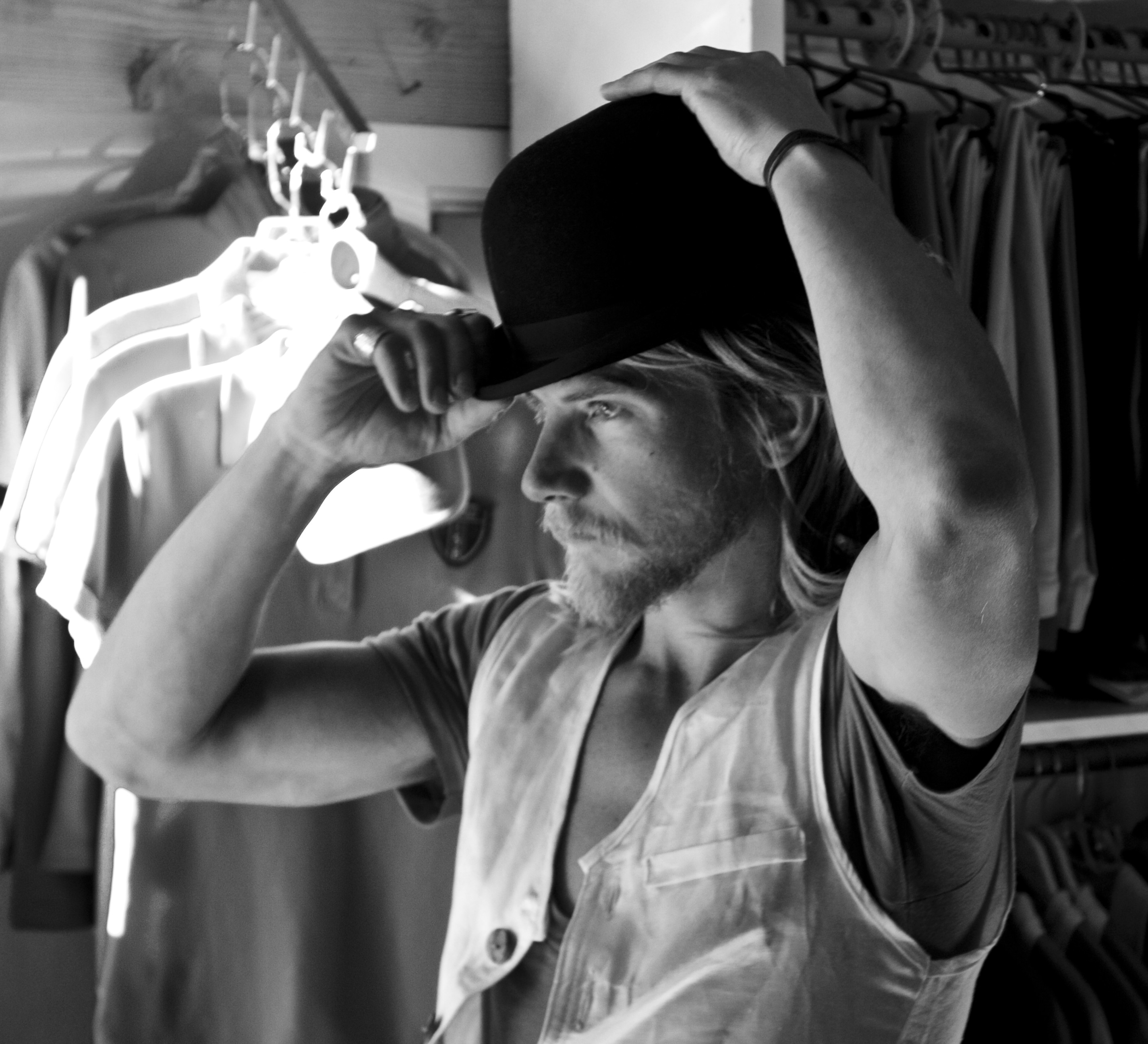
Fashion Designer / Documentarian / Visual Artist
Jeff has designed for and dressed Giselle Bundchen, Taylor Swift, The Jonas Brothers, Rihanna, Cara Delevigne, Suzy Cameron, Def Leppard, Kings of Leon, and other artists out of his Nashville hometown.
He won an Emmy for his sustainable documentary “Remastered” produced by Design Sensory which shines a light on the toxins in fashion and health implications along with the artist's journey. Currently has his latest full feature documentary 'Let them be Naked' in film festivals and released his book of the same title now on Amazon.
When not designing sustainable garments you can find Jeff surfing or on horseback. Garner surfs twice a day religiously and gets on a horse whenever possible and is fueled by meditation.
You will never find Jeff wearing any garment that he did not create himself all from plant-based fibers & dyes. Garner is the most authentic representation of what the world would look like dressed head to toe in sustainability. Jeff is passionate about getting every human into toxin-free garments motivated by the passing of his mom to breast cancer and hippie father to bone marrow cancer. He dispels myths and reveals the truths to the toxicity found in everyday clothing and the health implications of wearing them.
His documentary on this very subject called 'Let them be naked' exposes the dirty secrets of the fashion industry and the harmful materials used that effects your health and the environment.


