34 - SPECIAL GUEST, CHRIS RICCI
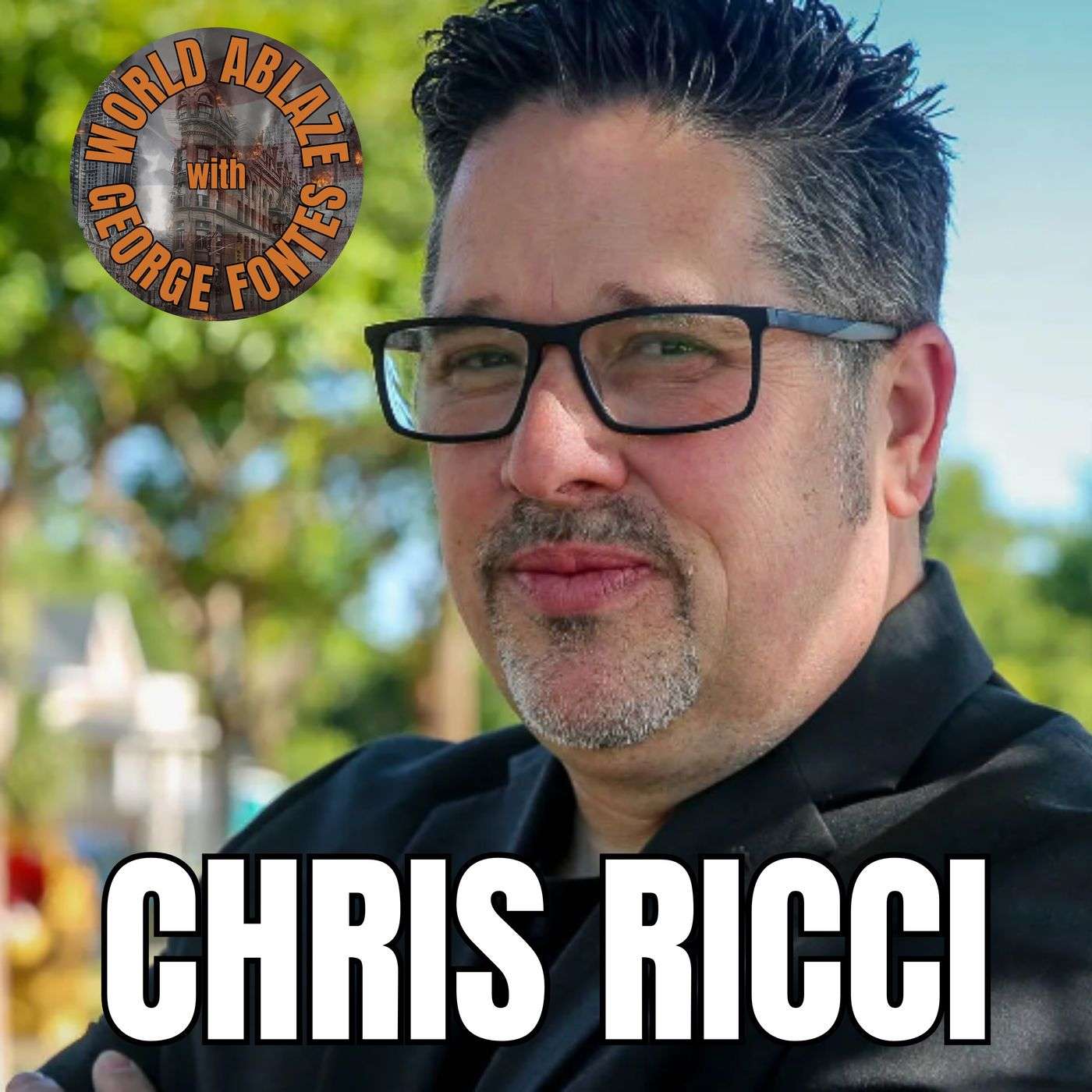


Chris is a City Council Member for the city of Modesto, CA. Chris came into politics, and wanting to make changes in the city he lives in, after an esteemed carrier as an event promoter. Chris now uses his experience in events and marketing to help other candidates across the country with their campaigns, while still fulfilling his duties to the city of Modesto, CA. Chris is also currently running for re-election for the position of City Council, representing District 3 in Modesto, CA.
If you have comments or would like to be a guest on the show send us a message:
Support: https://buymeacoffee.com/worldablaze
Email: worldablaze@fontesmedia.com
Web: https://www.worldablazepodcast.com/
X: https://x.com/fontesablaze
FB: https://www.facebook.com/worldablazewithgeorgefontes
Please like, follow, and share the show!!!!
Support our Sponsors!!!
Click Here For Discounts!!!
Web: https://www.worldablazepodcast.com/
YouTube: https://www.youtube.com/@fontesablaze/featured
X: https://x.com/fontesablaze
Instagram: https://www.instagram.com/fontesablaze/
Threads:https://www.threads.com/@fontesablaze
Please like, follow, and share the show!!!
Support our Sponsors!!!
Web: https://www.worldablazepodcast.com/
YouTube: https://www.youtube.com/@fontesablaze/featured
Instagram: https://www.instagram.com/fontesablaze/
Substack: https://substack.com/@fontesablaze
Hosted on Acast. See acast.com/privacy for more information.
0:00 Download Whiskey Hell Podcast. We call attention to the mainstream media narratives weekly and hopes that you'll have fun with how ridiculous the news really is. We don't want to change your mind. We just want to give you perspective so that you can choose more wisely and be more aware. Couple that with great craft beer, hilarious stories, deep thoughts in real conversations. We know you're going to enjoy us. Download Whiskey Hell Podcast anywhere you find outstanding shows. You are listening to a Fons Media Network production.
0:43 On this episode of World of Place, I have with Me Chris rick Chris Ricky is a city council member for the City of Modesto, California, representing District three. I wanted to get to know Chris better and find out his thoughts on how people can get more involved in the level in an effort to instill a positive change for the better. I find Chris to be a good person who wants to offer real world solutions to problems rather than offering solutions based on party politics. This is a rare trait in a politician, and I really do wish him the best and his re election as city council member District three for the City of Modesto in California.
1:29 Welcome world to Blaze Listeners, and today I have Chris Ricky on the show. I know Chris by name because we're both in the events industry. Chris was very well known for throwing some very large events and concerts and they all involved some very well known artists. I became interested in Chris's story when he chose to turn to politics. Chris is currently a council member for the City of Modesto, California, representing District three, and he's currently running again for re election for that position. I wanted to pick your brain in regard to your political journey and how people can get more involved in politics. But your story in the city of Modesto starts in nineteen ninety nine when you moved to Modesto, California. Could you please tell everybody what attracted you to Modesto.
2:25 Sure, yeah, Medesto is it's a place that I have family here in Modesta a little bit, and so I've been going to Medesta all my life and I realized that this city there's just a ton of opportunity here and I wanted to launch my own promotion business, and there was just wasn't There weren't a lot of shows here, and so there's just a lot of opportunity. And I think that that's something that people really don't understand about Modesto's that it's a big city. I mean, it's over two hundred thousand people. I think within the next ten years we're going to be, you know, over a quarter million people, and we lack a lot of the the features that a big city would have, and so there's just a ton of opportunity and that makes it really attractive to people like me that are pretty entrepreneurial.
3:10 Yeah, and I agree with you because I noticed we have, for example, I have friends in the Bay Area, and the Bay Area is kind of you know, big broad brush that people paint on anything near San Francisco really, but Modesto being over two hundred thousand population, then you have like cities, you know, people have this perspective that I'm in the Bay and we're so much bigger, but like cities like Heyward really have a smaller population. Newark has a smaller population, and then you come to Modesta and it's like, you know, actually, in terms of people as much bigger, but as you said, the perception is it's smaller. The perception is is we don't really have as much to offer, and there are some services that we don't have. But you came here, you started the promotion company. What got you into doing events? By the way, live events, I always wanted to ask you that, you.
3:57 Know, I grew up, I grew up on the Peninsula, and I've just always been really passionate about music, you know, So when I grew up in the nineties, it was just a really it was a good time for music. You know, that the music business was very strong. It was really easy to build big acts, you know, And so I would go to San Francisco and see you know, concerts all the time, you know. I would go all over the Bay Area and see, you know, my favorite bands like Social Distortion and Nine Inch Nails and all those you know, nineties nineties bands, you know, right, And then I went when I went to college in San Diego, I went to University of San Diego, I got on the concert board, and so I started producing these I've been going to concerts for you know years in San Francisco, and then I was like, wow, I can bring these bands that I saw, you know, at the Warfield to play at my at my college, and I just really got a bug for it. You know. I booked like, you know, No Doubt and Sublime and Cherry Pop and Daddy's and Cake like all in one year when I was doing the concert committee and you know, at San Diego, and I just didn't look back.
5:14 That's cool And a lot of people don't ever see the other side of it, and you were on the other side. So I mean, can you kind of expand on that, like how how you felt in doing that? I mean, just just being able to interact with the actual artists, see the writers and you know, that whole behind the scenes that makes things, makes this whole thing happen. Do you mind expanding? Yeah, I mean yeah, it's a lot of it's a lot of talking with agents and managers and you know, I think probably the most surprising thing about the business is how little connection you really have with the artists directly. I mean, these people are you know, they're traveling from city to city to city, and so I think it's an important thing to keep in mind when you're seeing an artist at a show. But it was just just helping artists, you know, get their art out there and put them in putting them in front of an audience was just a very satisfying, you know, chapter of my life.
6:10 Yeah. I also think you know a lot of people don't understand with artists that, you know, as much as they want to interact and they're thankful for the support from the crowd, it's also a job and they have to be on time. They have you know, schedules that they got adhere to to make sure things are going smoothly so they can just get back on the bus and go to the next show. And I think a lot of people have misperception of what they actually are doing. You know, they are entertaining you at the same time, you know, they got bills upan they have contracts fulfill as well. So yeah, and I mean it's and it's just so deep, right, Like they've got families, a lot of them have families, and their you know, life on the road it's brutal, you know. So I've got a lot of respect for these guys that can do this, But I think that it's been I think people really kind of build it up to being something that's not I mean it's right.
6:57 It's mostly just hard mentally and physically, and there's you know, big payoffs and playing great shows. But I think it's also like it's quite a sacrifice they make to their fans. And no, I don't think a lot of people understand this with the larger artists, like they themselves are a business. I mean everybody on the road, they're supporting, they're paying those people's paychecks. They're not just showing up and you know, helping for free. So you know a lot of people don't realize that as well. Yep, yeah, a lot of responsibility. You're right, it's crazy. So that leads me to this, I never knew that you did this. How okay, how this relationship with your promotion company, which was Chris Rickey Presents correct? Yeah, okay, how did you get involved in the politics side? Because I found out through your notes you sent me that you got into actually working with candidates.
7:50 Is that correct, Liqual Cats. Yeah, So I mean it's a little bit deeper than that. But the catalyst for me switching into politics was really x Fest. You know, x Fest is defunct and it's been defunct for almost ten years now. But the reason why it's defunct is because of policies that were in place, you know, by the city of Medesto. Okay, So you know, you can complain about policies and you can be angry, you know, or you can you know, try to change those policies and try to change the government's perspective on things.
8:32 And so when you know, when the city came in and really just kind of put me out of business, I decided that I was going to try to change the city. And so that's why I started working in politics. You just took it upon yourself to make a difference from the inside. Well, it's the only way things can really change, you know. I mean, you can, you know, you can try to yell at them from the outside, and sometimes that works if the government's listening. But changing people's perceptions, like you know, on XPEST. When I started expest in the year two thousand, Modesto, you know, it was a very white place. You know, it was eighty five percent Anglo. You know, today it's fifty to fifty. And if you look at the demographics of Modesta City schools at seventy thirty and so we're just becoming more Hispanic every day and one of my goals, you know. And so I'm a promoter, right, I don't care.
9:34 I know what I'm promoting to. I know that the demographic for X Best was twenty one to thirty five period, So I'm trying. I need to market my stuff to younger people, younger adults, right, Yes, Well, as those demographics change, the markets for the young adults change, and as they become more Hispanic, you need to book you know, music that attracts Hispanics. Well, reality is that when you got a crowd of twenty thousand people and fifteen thousand of them are Hispanic, just back in twenty sixteen, that made the city of Modesta nervous, got it? So, you know, I never knew that. So that had to be that had to be dealt with. And I'm trying to be kind in the way I say this.
10:18 I understand, trust me, I understand, But I didn't. I didn't know that that that was. That was something that was behind one of the reasons that that you were having a hard time during during that period because it was huge and hugely successful. Everybody knew about it and then and then all of a sudden. Yeah, if you spoke to people the city. I'm certain they would have different answers. Okay, but that's my answer. Well, I mean, I'd rather get it from you, you know, because you know, the people to this day still talk about the things that you did and they're like, man, I wish he would bring it back. I wish you know, he would just continue and you know, no, I don't. I don't think a lot of people heard the real story.
10:58 So I'm glad that you, you know, laid it out because a lot of a lot of people didn't know. You know, if you're if you're a Spanic, you know, right, if you're a Spanic, you know, try to walk in downtown Modesto at eleven thirty at night in a forty nine ers jersey. Yeah, and see what kind of attention you get from you know, from people, right, Like it's you know, it's unfortunate. Yeah. There's a lot of long term perceptions that you know, and some of them are true, right, you know that we I don't want to deny that we have gang issues, but you know, my problem is that every person who's a certain way is not a gang member. Do you see what I'm saying?
11:40 No, I do completely understand. I mean, there's that old you know, there's that saying judging a book by its cover, right, and and unfortunately too many people do that. They don't want to go out of the way to get to know people and know who they really are and what they can offer. Yeah, you know, and in a case of Modesto, I can speak from living here, you know, for X amount of years as well. It's you know, people at that time were absolutely. Afraid of change. Yeah, that's right. There. There's a lot of ingrained, good old boy, you know type of culture out here in Modesto at that time, and they just didn't want to keep up with the changes in the demographics. They didn't want to keep up with the demands of what the popular relation actually needed, and they were just going out of the way to suppress it. They didn't want to lose their perception of what they thought they had control of. And so yeah, it takes people like you to go out of your way and make those changes. It sounds like that's exactly what you were doing.
12:31 Ye And I think that, like, and I want to you know, I don't want people to think that I'm beating on the city of Medesto, you know, they've over the last few years, they've really done some deep self reflection. They've done like the police department, for example, has done some great training in the community where they got together with with people you know, from different backgrounds and just everyone sat down and just kind of lay it out. You know, how do you feel about cops, How do the cops feel about about these you know, about different community members, like all these things. And at the end of the road when they went through it, they gained more understanding and more empathy. And that that is these experiences are guiding the future of departments in the city of Modesta, and I'm proud of that.
13:26 That's good to hear. And I see it slowly turning into i would say, a revival of downtown. You know, I've seen the changes from being here. I've seen it, you know, when it was you know, hot and really busy, and then all of a sudden we had that slump, and then it looks like it's slowly coming back. And I'm sure a lot of what you just said it really is the reason that that's starting to happen again. Yeah, I think that, you know, at least my perception is like the city tried to shut down all the clubs. They were mostly success but now the clubs are slowly coming back, and the question is going to be like how, and when you have clubs, you're going to have some issues, and the question is going to be like how the city chooses to deal with that? And I think that kind of remains to be seen, but I think, I don't know, it'll be interesting and I'm you know, I'm looking forward to helping them get through it.
14:24 Yeah, and so far, so good, so far, you know. But yeah, you know it ebbs and flows, right, and so if we get you know, another twenty clubs downtown, it's going to create a new enforcement atmosphere. You know that the city is going to have to figure out how they want to do it. You know, in the last time they got in that situation, they chose to just try to shut everything down. What's I don't know what will happen this time, but I'm hopeful it'll be better. Yeah, I do too. And you know, that's that's another example of fear, fear of change and the unknown. You know, just like like we were talking about early about judging people, you know, as if they were you know, the book Judging book by its cover.
15:04 Kuys. Sorry kind of fumbling a little bit, but yeah, you get where I'm going. Well, we're not talking about an easy subject here. No, it's not, but it's it's it's the truth and what you're not saying anything wrong, you're not you know. And and uh, Modesta was changing and it's changed for the better. And it's not just about Modesta. I think it's across the country. This is happening, you know, and there needs to be more change of acceptance of people in general and learning that Hey, you know, it's not always going to be your little corner of the world forever. You know, we're growing and it's just happening period. So yeah, now I'm. With you, I really am. Uh do you mind if I go back to the digital marketing company that you got involved with a little bit or how they utilize their services?
15:45 Yeah? So can you explain that relationship and how that happened. Yeah, So I wanted to get involved in, uh, in the political sphere for the reasons I already kind of talked about, and I learned I did. I've been doing marketing obviously my whole life, the marketing shows, you know, and I found that digital digital platforms were just the best ways to communicate with people. You know, look what we're doing right now, we are going to be this is going to be put out on podcast platforms right Absolutely, twenty years ago that option did not exist. And we see the impact that new media is having on the world.
16:27 You know, but SB does not even a daily newspaper anymore. Don't even know what it is. It's there, and it just and the thing is, every day it becomes less critical, you know, to our community because they just aren't out there, no one's they don't they're getting the eyes that they used to get, so they just aren't as important. And so I decided I wanted to get into it. And so a buddy of mine was starting a company, and I said, hey, I'm in. I want to do it. And so, you know, I started working working with them. You know, they basically hired my company to do marketing for them for you know, part time, twenty hours a week.
17:12 And eventually, you know, as the company grew and as as you know, I was able to be more successful. I became a partner in in uh in Compete Digital and h and now that's really that's what. I do gotcha. So do you, I mean, can you talk about the services offered through that company. Yeah, we're a digital marketing company. We focus on causes and campaigns, okay, and we work with people running for office, and we work with people that are trying to pass legislation locally and at the state level, and it's all over the country, not just in California.
17:55 That's interesting, so kind of on the other side of it and helping people get their campaign and their word out and basically being known, right. Yeah, it is is just to teach people how to communicate in this really new world that has changed so rapidly, you know, as you probably I assume you know. You know, I've got a very active social media posture for my council seat and I speak to my I speak to my constituents on social media every single day, and I'm running conversations with them and we work out policy together live and publicly every single day. Twenty five years ago, you could not do that. That was not an option.
18:41 And so the opportunity for candidates and causes to really educate people about what they're trying to do and have honest, transparent conversations are really there. Are there bad sides to it too, absolutely. I mean you see what's going on in X right now on Twitter, Yeah, I can't. You know, that's kind of a pool of you know, back and forth information on all sides. There's times where you're like, yeah, great free speech platform, and the other there's other times where like why am I seeing porn? And why am I seeing this crazy hate speech rhetoric? I don't understand. It just doesn't make any sense. It's just not good. Like in the UK, you know, I don't know if you've heard about the the mass murder that happened, you know, with the kids at the school, but it was really bad, and you know, on X they posted a fake story but it got a lot of a lot of traction saying that a immigrant had done the murders, which was totally false. But that false narrative whipped up a bunch of really angry people and they started riots in a bunch of major English cities.
19:47 And so it's also, you know, as much good as it can do, as much honesty as it can have, as much transparency, as much as much good dialogue we can have, it also can be in dangerous. I yeah, I don't mind the honesty, but I don't like the spin and yeah, I don't agree, unfortunately, because everyone's attention spans are short. Too many people are just taking and it's true, we're living in a world of sound bites and clips and that's what people base all the information on instead of you know, digging deeper. I mean, too many people to lie on the headlines and not really looking into the actual story. And I think that's a huge problem personally. But most people just don't have the patience to read all the info anymore, you know, And that's where the danger is because it's so easy, as you said, with the example of what happened with that story in the UK, totally taking out of context, totally creates a situation that just boils over and it just turns into something horrible that should never have happened.
20:48 Yeah, and I mean we also need to have a historical perspective here, right, And like everything you said is true, but if you look back, you know, in the nineteenth century would promote stuff just through like they just create their own little newspaper or their own little newsletter and just hand it out and write absolutely preposterous things true, you know, and so like this Misinformation is as human as you know, pretty much anything, right. So this is the misinformation hasn't really changed. We just we went through kind of a golden period, you know, in the post war to you know, you know, the mid twenty tens of you know, of really having a lot of reliable, multi mass media that you could count on to actually deliver a lot of facts. I mean, they got it wrong a lot too. You know, look at the Iraq War, right, but there was a real effort I think to get it right.
21:54 You know, I can agree with you on that in that time period. What what did you I mean, because you're in media, you're in marketing, what did you think was the change? Like what caused the change to become so polarized and so you know, going back to just taking things out of context and trying to drive a message rather than the actual message, which should just be the news. I mean. The way the reason that it changed from a more like from a you know, kind of balanced facts based approach to a more political biased approach was the change of the fair like the Fair Use Act I think it's called, I don't know it was under Reagan, but basically they took this act that was made that required media services to be fact based and said, look, the First Amendment says you can say whatever you want, and this law is unconstitutional. And so ever since that's when then they launched Fox News and everything kind of changed after that. Yeah, and by the way, that actually it is correct that you shouldn't be allowed to censor people, you know, based on the First Amendment. Has it had a pretty horrific impact on the country. Yeah, it has.
23:17 But we're going we're going through a change, right and I'm pretty positive, like I think we're going to find ourselves in the future in a world that you know, it's still going to have some of this stuff, but hopefully we get to a place where we get back to that kind of more fact based perspective in the in the places that are you know, delivering bad information are more marginalized like they used to be. Well, I can agree with you because I think I think a major pollen is you should have a right to say, of course, everyone's always you know, protect my free speech. But I also can see the other side where if it's news, where you're supposed to be just just reporting what is happening, so people are actually informed of the truth. Then that should be truthful information, I believe.
24:07 And if you have a show such as let's say Fox or Emisent or whoever you watch and you see like a Hannity or a Mattow or whatever, people must realize that those shows in themselves aren't so much news as they are opinion pieces, people given opinions more than they are giving the actual news. And then you have other shows in those networks that actually should just be given the news, don't. I don't think it's clearly defined to the public what's really going on. And I think that's where we get into trouble because I think the news should be truthful period. I mean, back to the Walter Cronkite days, it was just no emotion, just you know, here's what's happening, and you form your own opinions based on the information. And now it's it seems like they're pushing on all sides. I'm not gonna pick sides here, Chris.
24:51 It's just it just seems like everyone's kind of trying to hurt everybody into their own little, you know, encampment here, you know, to believe whatever, instead of just saying, you know, there was a volcano yesterday that blue at eleven am, and this is what happened, you know, versus there was a volcano that blue and specifically just targeted this group of people. And the reason it did is because they're bad people. You know. It's a big difference between telling the truth of historian trying to manipulate it. And that's just my opinion, by the way. But yeah, but I mean, the problem comes in and I think you know, this is why MSN and FOX exists. But the problem comes in is when you tell the truth and you're like, yeah, the volcano got overloaded because of it and this is not possible, but because of climate change, you know what I mean. And then the people on one side, the people that are like, let's say the petroleum people are like, hey, I don't want people to know that. Come up with another reason and so and so as long as the truth hurts any special interest group, you're gonna have people mad that you're living whatever that truth.
26:01 Is there and last the problem and right, and so. That's where we're at. People with really deep pockets on both sides are saying, hey, we need to get our word out over everybody else. And that's the war that's being fought right now. I mean, we agree definitely. And it's sad, you know, to see that. That's that's the reality. The message is based on whoever has the most money, you know. Unfortunately. Well, yeah, right, it's true. True. I got nothing, dude, I got nothing. That's the way it is right now. No, I hear you, and I'm and I asked your opinion and you gave it, and I agree with you.
26:42 I mean, you're not wrong. It's a it's all very true, you know. It is. When you when you were helping people with their campaigns, I wanted to ask you what did you learn from being on that side of it and and how a campaign works, and you know, working with with people run for political offices. Well, I mean it's I mean it's hard. Running for office is really hard. So I know you did so, and you're you're you're gonna be running again, correct? Is that my correct in that? Yeah, you're correct. I'm running again in November. But I think that people discount the importance of their relationships in the community, you know, And so what I find is the candidates that tend to win are the people that are most connected to their communities. Sure, was there was there more? Oh?
27:35 No, I I I basically wanted to know what you you know from from working with candidates and marketing campaigns when not like like what you learned from it? You know how how it affects people in running campaigns. And that being said, with what you learned, I want to want to ask this, knowing what you know now from from being on that side of marketing and helping other people campaign, knowing then what you knew now? Would how are you going to run your campaign differently now because you are running for City Council District. Three, City of Modesta. Okay, so what would you what you would you do different this time around with your campaigny? What I'm going to do different this time around? Is? You know, I obviously my first time running, you know, I had limited funds. I mean I had good funds.
28:21 I had more money than anyone else in the race, right, but but all my donors were really small, right, And so my average donation was like two hundred dollars and my opponents only had like, you know, ten donations, and they were like all for you know, two three, four thousand dollars? Right? Oh? Okay? Now I ended up having more because I just worked really hard. But the problem when you have limited funds is that you don't have enough money to talk to all the voters, right, And so I think the biggest mistake I made is that I didn't cast my net wide enough to talk to all the voters about what I wanted to do. Because my ideas aren't conservative or liberal.
29:07 They're just good ideas for our community, and everyone, for the most part, can agree with all of it. You just say you're more down the middle, or you just kind of take things on as they make sense. I see my job as to identify problems in the community and find solutions. I think that's what most politicians should do. And so some people like you know, I'm a big supporter of the Minnesto Police Department. I like the fact that they have been willing to look at themselves and improve themselves this. You know, since I've been in office, they've added a police independent Police Review Board, They've added an independent police auditor, They've added alternate response teams. You know, they've added park rangers. They've done all these things that I've asked them to do. Right, they just keep getting better, and I support that, and I support and I support them, and I know how hard their jobs is. Right. Well, there's a lot of people on the left. You can go on my Facebook page and look look at my post yesterday about how amazing it is that the city of Modesta is sending our police officers up to bake the Baker fire, the fire up in Chico and Bue County.
30:25 Oh, I forgot where the fire I think it's called. Yeah, there's a big one going on right now, for sure. Yeah. And they needed help. They needed help, you know, but county needed help evacuating people and like keeping people safe from this fire, right And they asked for mutual Aid and Modesta police departments and people up there. And I said, you know, it's really great that we're able to send people up there and help other communities because mutual aid helps our neighbors when they're in most in need. Right. And I had a guy called me a boot liquor for making that really making comment, you know what I mean. What was his reasoning? Did he explain himself? Doesn't make sense. No, he didn't explain himself. And of course I'm not gonna Friday not explain. I'm just saying, like people, I think it's a pretty I think there's good reasons to support our law enforcement and that's why I do. And that's why I'm endorsed by the Master of Police Department.
31:16 Because I support them and and because they do a good job, and because they're willing to be introspective and make themselves better. It's a good police department, and we need to we need to back them up, right, I guess not popular with everybody. No, it isn't. That's sad. You know, we do need police officers. There's good police officers. There's people who want to make a difference in actually do their jobs. And you know, in any industry, whether it's law enforcement or you know, freaking even if you're working for a large you know, tech company. There's there's there's bad actors everywhere. And unfortunately, most police departments get judged by a few new stories out there and it doesn't mean it reflects the entire department or all departments every where. And it's a sad thing. I mean, I agree with you in support in the police department. If we didn't have law enforcement would be a city of chaos, you know, probably teetering on anarchy.
32:11 Yeah, it would be bad. But yeah, I need check and balances period. Yeah, and you know, but my point is that like on any issue, there's going to be people on one side or the other that get angry. Absolutely, like like, identify my problems and then do my best to address solutions. Most of the time those solutions. I try to choose the path that gets the job done and doesn't make people angry. Yeah. Yeah, but it sounds like you're you're being objective and making the right choices, which is what most people don't do unfortunately. So it's good to hear that that's your perspective and how you're.
32:53 Approaching that's that's how I try to approach it. I admire. I think. I'll give you a good example of a where I was not where I did really poorly, right, So, because I believe in learning from your mistakes, and I think everyone should do that. Right, Like, when you look at homelessness, one of the major causes of homelessness is just not having a place for people to go, you know. And so one of our solutions at the City of at Esto is we're doing bridge housing, which is essentially they just build houses and they're made out of like you know, they're tiny houses. Sometimes they're made out of containers, you know, or whatever. But they're just kind of temporary edifices just to give people a place to go, right, And they don't just let anybody go into them, right, Like, Usually what they'll do is they'll we've got a whole system to try to help people. Right. So, like you go to let's say you end up at the shelter, and let's say you did really good. You've got a job, but you just don't have enough money to you know, and you're you're not on drugs, and you're doing like all the things you need to do, but there's just nowhere for you to go. You just don't make enough money to qualify for an apartment. Well, bridge housing is a good solution because they can go in a bridge housing, they've got their own space, they can save up some money for a deposit, and then when they make enough money finally and they have it all saved up and the credit's fixed, they can get back into society. Right. Well,
34:24 we're doing a bridge We were looking at doing a When I say we, the city was looking at doing a bridge housing project over in Woodland West, right, And I didn't think it'd be that big a deal, right, Like, it's we're talking twenty units. Where was that the west that's over by. It's kind of my wood colony, okay, okay, And it was like going to be built on church land. It's just like an orchard right now. But the neighborhood was really really pissed about it. You know, you're going to bring these people and they're all messed up, and they're going to be they're going to bring all this violence and danger and like people really really mad, you know, And like I don't believe in making people really really mad, you know, And so I had to like go to them and say, look, guys, this is a mistake. We can't do this here, and we're gonna have to find somewhere else for it. And that's what we did together.
35:21 We're working on finding new places and new solutions, right So that's so we've kept that in mind in new locations. You know, it's be very let's be very transparent with the neighborhood about what we're doing. Let's get that out in front of things so that people can you know, keep it, can react and and you know you can some people call it nimbi and maybe that's right, maybe it's wrong right, but as that neighborhood's representative, I have to be sensitive to how they feel about where they live. Yeah, I think there's a big The homelessness is a hard one because everybody wants to fix it, but then it has to be on their terms, and there's a misconception of what a homeless person is. My dad is so he still is a register minister, and he'll still go out to like homeless shelters and whatnot, and he'll go ahead and play music and whatnot and try to talk to families. And I remember there's a couple of times I filled in because one of his musicians couldn't make it, so I was like, yeah, sure, you know.
36:25 I'll go play. And I got to talk to a few families that were literally displaced because you know, they got laid off whatever happened with their job situation, not their fault, and somehow just ended up where they are now homeless, and they're just trying to get back on track, and it is so hard for them to find resources and figure out how to do that, Like how do they get their life back? How do they go down that pathway to get in where they were, and there's a lot of those people out there on that unfortunate or displaced because of that. And everybody just thinks homeless just means dirty criminal drug use, and it's not not necessarily that's what. It is a lot of people just trying to get their lives back.
37:06 Some of them definitely are, but not all of them, right. Not all, but there's some, but it's not all. And there's people that really just they fell into a bad situation and they're just trying to get back to you know, providing for their families and getting back into a home and getting their feedback on the ground. Yeah. Well it's like, I don't want to look at this negatively, right, Like we can just be we can beat up people like, oh, those people they're just not understanding and not cool because they want in their community. We can argue that back and forth. You're gonna have some people that say, yeah, they're horrible people, and other people are gonna say, like, they're just protecting their area whatever. Right, it's irrelevant. We just can't worry about it. You know.
37:46 The reality is, Hey, it's going to be hard, but we have to find locations that that are that cause the least amount of drama with people. And if you know that's what you have to look for. Is it hard? Yeah, but you know what stuff's hard, man deal with it. Change is hardly. Absolutely, Like we. Can sit here and complain and be and be like, you know, this stinks and why can't they just let us do it our way? No, that's not how that's not how government or people work. If it was so easy, everyone would be doing it, you know what I mean, Like, it's fine, it's not easy.
38:27 I find sometimes if it's too easy, start to question yourself. You're like, wait a minute, did I do this right? Yeah? It's like, look, let's accept the fact that this is going to be hard and just you know, sit down at the table and get stuff done. And that's what that's what we're trying to do. And and hats off to the City of Modesta. They've got the first bridge housing project past the council. They're building it right now at tenth, ninth and D in downtown Modesta. We got another one that's going to be going up, you know, over in by the Gospel Mission. You know, it's going to be small, it's only ten year and it's but it's and it's going to be for for single women basically, and you know, it's we're moving in the right direction, much slower than I wish we could, but at least some projects are happening.
39:13 Well at least there's progress being made. Yeah, So like I can't, I'm not going to pin it on a neighborhood, you know, for how they feel, right, like we can still solve the problems. Yeah, yeah, And that's not what I was intending to do. I was just kind of bringing up, you know what, what you learned by actually talking to the people who were there, and I just ran into that, you know, versus just having an assumption and then you walk out going, oh, shoot, that's that sucks. These guys had to go through that, And that was that was basically what. I was trying to say, you know, yeah, yeah, so it's good to hear what you're doing though, So then you know, I was going to actually go back to the money thing, and a lot I don't think a lot of people understand really because you said that would help you talk to more people.
40:00 I don't think. Understand why it takes so much money to campaign. It's actually super simple really, So one of the main ways that and this is the easiest way to explain it to people. So, like, you know, all those those mailers you get from candidates that come and you know, come in the mail around election time and it's like vote for me because X, Y and Z. Right, I'm talking about that point. Well, every one of those pieces, the political mail, you have to put a stamp on right to deliver it, and and so you have to pay for all those stamps and all the and and you have to pay the guy to design the piece, and you have to pay to have it printed, you know.
40:41 And so if you want to cast a wider net, you need more money to pay for more stamps to get to more people. It's not just mailers, right, you all see, you have to do digital right, Digital works the same way as as mail. You have to pay for the impressions that are going to go to each of the voters. It's just like paying for stamps. It's just different way into it. You know, you got to pay for your text messages. You should be doing text messages. You got to pay for your you know, your field team to be knocking doors. And it's just it's just really expensive. And the bigger the district you got, the more expensive it is. Yeah, And that's that's why I was asking you to expand on on the money side because a lot of people so so you're because you were already into promotions, business and marketing, so you understand that side. I understand that side from being involved in different businesses. But the average person doesn't realize, like, hey, when you see that add on TV, that costs money. When you hear that radio ad that costs a lot of money, And most people don't realize that because the average person isn't going to buy a commercial, you know, or running ad on radio or you know, a podcast or whatever it is. Yeah, and they just don't see that part of it. And you know, it's like when you hear these presidential campaigns, Oh, they raise eight hundred million, two hundred million, whatever, some people are like, why do you need all that money?
41:57 Well so that they can get their voice, It just doesn't happen. You know, you have to pay for the those opportunities to get your message across the people. And that's the thing. I person just doesn't understand that. And that's why I asked you that. I just you know, I wanted to get it directly from someone who runs for office, who is a city council member running again, and just directly telling people, look, this is why we need the funds, this is what it goes to. It's just it's you know, the job is, like my job as accounselor of when I'm running for office is to sell my ideas to voters. If I don't let you know what my ideas are, then how can you make an informed decision? Right? Hopefully my opponents are doing the same thing, right like they're gonna And in my first election, you saw that, you know, like one of the candidate's message was, hey, I'm endorsed by the police department.
42:45 One of the candidates was like, hey, I'm going to hire more cops, you know what I mean. And my message was more like, I want to try to solve problems for Modesta, And in the end I did a better job of communicating that than they did. In which at that time, nobody was taking your approach. You know, I think people wanted problems to be solved, but nobody was saying they're going to do it. You know, you can't solve the look as much as I you know, support our police department, and I do. I'm one of the biggest supporters of our police department. You can't solve every problem in your community with a cop. It just doesn't do it. So how do we We can't solve our problem, our economic challenges, you know, like our economic development challenges with a police officer. We need to invest in economic development to do that right. We can't solve our housing shortage with law enforcement. So like we've got to take I believe we've got to take a holistic approach. Law enforcement's part of that. Having great fire coverage is part of that, but there's a lot more that goes into having a healthy, safe, thriving city.
43:58 Well, there is I used to do. I used to handle the live streams went off for a few cities on their council meetings, and I remember sitting in them, and I remember noticing, and I'm going to ask you this question, your thoughts on this, that there's a lot of people living within a city that always complain about things, but they don't get out of their way to get involved, you know, and listen to what's happening and hear the arguments and make informed decisions. And I noticed that council meetings, there's always like a handful of regulars. There wasn't, you know. I would see it get packed once in a while if there was you know, like let's say a citizen or someone from a high school and get a special recognition, all of a sudden, there room will be packed. But on other days it'd be like, you know, fifteen twenty people. Sometimes you know more than that. But it was always the same faces. And I heard from some people because I'd say, hey, yeah, I do the you know, streaming for city X. You know, I won't say them all, but and they would ask me, all would you here, and they would complain about certain things, and I'm like, well, I hear you, but you know, you've got to kind of get involved if you want to make the difference or make the change. So I've always heard the argument that some people felt like there were decisions being made by only a handful.
45:15 Of people, a few people. Only, and making decisions for everybody, and they complain about that. What is what is your thoughts on that statement? I actually love the question. The thing about about our democracy and it's such an our democracy, we should cherish it, right, It's just such a powerful, powerful thing. And what I mean is that literally anyone can in our city can come into the city in the city Hall and like make a difference, you know. And the reason why people don't is because it's hard. It takes a dramatic investment of time to do it. So sure, one person can change policy at city Hall, but you need to come to city Council, you know, consistently with your issue and then push your issue through, you know, on and on and convince the council that this is an important issue that needs to be dealt with. And the problem is most people don't. And so as a representative, what I try to do is channel what I'm hearing, you know, on the street on social media, things that are chale, that are frustrating residents, and then I try to be proactive in guiding the government to deal with those things.
46:33 But then there's other things that like I haven't been able to do because I don't have enough support in the public, you know. Like, for example, we've got thousands of modestines that really want an outdoor roller rink, right a replacement for roller king, you know, but they just can't put together a couple dozen people to come to the meeting every week and talk about why it's so important of Adestina though, right, And as a result, the representatives don't understand why it's so important to it esto, and so it doesn't happen, you know, and so like rather than looking at it like, oh, people suck because they don't come to the meetings, No, it's like you've got this magic system that you can really make stuff happen with. And if you believe in what you want so much, you dedicate yourself and your idea is good and you can convince the council your idea is going to happen. Yeah.
47:27 And that goes back to getting involved at the local level. Yeah. People have to go out of their way to work with their elected officials if they want to advocate for change or if they want to do something that they see, you know, in their mind, would be beneficial to the people in general. And it's just sitting on your couch and just hating the fact that decisions are being made is not going to change anything. No, I'll give you an example, like you look at the Cruisian band was lifted by the city council last year. Yeah I heard that. Yeah, And so then they made an argument. They're like, look, cruising is a family event. You know, if I have a sixty four I Paula convertible that's one hundred and fifty thousand dollars car, do you think that I'm going to like put that at risk by doing donuts and Shenanigans with it, Like you're you're crazy, Like the people that cruise now are a totally different breed than what you than what you imagined, you know, thirty years ago.
48:31 But that's still like breaking through people's perceptions of what cruising is in twenty twenty four versus what it was in nineteen ninety two. Yes, really hard well. And the thing for example, the cruising issue for example, as a relation of Modestina, it's like it's in grain and Medesto's history, right, you know, it was a big part of it, and I'm glad that it was repealed and allowed to happen again because it's it's not like every day you're going to see a large group of people. Usually happens around graffiti time or you know, certain special events, so it's not like every day there's just streets flooded with cars, you know, cruising, But give them the opportunity to show off the rides, enjoy themselves, you know.
49:11 So it's a community cultural thing. It's not anything negative that negatively impacts podesto. Right. But but these this group of people had to sell that idea and they it took them a year, but they got all this momentum. They came to the city council and eventually they passed it. But they didn't stop at city council. They went to the state and they had the ban maybe illegal across the entire state of California. That's awesome. That's a great example of getting involved. Yeah, but it just proves what I'm talking about, Like that's it's the magic of our system. And yeah, the system is kind of broken in my opinion at the federal level right now. I'm hopeful that they can fix it someday and bring the people back and like kind of push back the sense the special interests a little bit, you know, but at least on a local level, on a state level, like just regular citizens can have a dramatic impact on policy. You just have to again share your truth, share the truth with your representatives and convince them that that's the right thing to do.
50:18 Well, that's you can't say any better than that, to be honest, because that's it's all true. It's all true. I'm of the mind that changing things nationally and at the federal level, to me, and I may be wrong and correct me, but to me when it comes to policy and politics in general, but I think it's more of a funnel up than a funnel down situation. I believe it has changed at the local level than city. You know, there's city level, local level, talent level, whatever, then state, and then just goes up. So if you have a strong foundation at the base, those policies become infectious and then influence everything else as it moves up. To the top. And I don't think that if you're not trying to influence change in policy at the local level, it starts in your own backyard, right And if you're not trying to do that, then nothing's going to change anywhere.
51:11 And that's just I mean, that is my opinion. I'm not saying that maybe the correct for everything, but that's kind of how I view it. What is your thoughts on that? Well, I mean, I agree with you to a point, right, but the problem right now is that you've got corporations that can give unlimited amounts of money to any cause they want through the pack system. True, and you know, politicians stand up to packs with unlimited amounts of money at their own peril, you know. And as long as kind of giving is legal, you're not going to see, you know, the changes you know that I think our country needs. Like an example would be, you know, on prescription drugs. You know, we have the highest prescription drug costs in the entire world, we do, and that's because the pharmaceutical companies have donated so much money to candidates and have so many packs going that it's just it's just like pull and teeth, a thing accomplished and there's been some progress made, you know, like insulin. Now Biden passed that thing. So it's only you know, max thirty five bucks a month or whatever for insulin. Wonderful, but it's just like pull and teeth, you know, And you can go through every lobby there is you know about, and it's just really it's it's basically we're moving a
52:45 snail's pace to change things that need to be changed because the system has made it so it's more or less impossible on what you know, maybe not impossible, but like incredibly difficult to sew any sort of meaningful change. Well, you're not wrong, you can't. I mean it's hard for the average person to can you know, compete with those deep pockets. It's just not going to happen. Is that. As they say, money talks. Unfortunately, that's the truth as far as pharmaceuticals go. I mean, I'm not gonna I'm not gonna beat this topic. But you know what's crazy is the US is probably the largest profit center for pharmaceutical companies and one of the only countries where you can actually advertise your pharmaceuticals to people, which.
53:31 Is crazy crazy, Like, hey, your doctor, you just tell your doctor you want this drug, right. You know, And these are people that you know, we're not. I'm not a doctor. I don't know. You know, you're training. I don't know. If I don't think you are, I'm not. It's like, so I'm not a doctor. Yeah I could watch the commercial, soy, yeah, I want to feel better or whatever. And and and then they kind of just blow through the side effects like you know, we kind of told you, but not really. It's it's ridiculous. And and that is all as you said a result of just dealing with those really deep pockets because they're incentivized to do so. And it's sad, but still I think that if people get involve locally, it does help make change at least, you know, at least take care of your backyard, right, So, and I don't know, maybe eventually it will it will change everything up at the top, at least I'm believing. So maybe naive at that, but I'm hoping, you know, I'm hoping, I mean hopefully.
54:25 Well I was gonna hope for things to get better. But what I'll also say, man, is that it doesn't matter what you know, society you're in, or what city you're in. Like you hear all this stuff you know about oh, you know, like Chicago is such a tough town and dah da da dah Right, and like, you know, I spent quite a bit of time in Chicago, and I think it's like one of the best cities on the planet. Right. But every city has their challenges. Modesto has its challenges, right. San Francisco has a different set of challenges. Uh, Biloxi, Mississippi, has its own challenges. You know, Memphis, Tennessee has a whole different set of challenges. Like we can go through red states, blue states, red towns, blue towns, you know, they every doesn't matter. You name any city on the planet. You can point at ten major issues that that city has, and they're all going to be different based on you know, the country's economy and the education level of the people, and you know what kind of governments they have. Like the bottom line is, it doesn't matter how good we do, We're always going to have issues that we have to address.
55:33 Well. Yeah, and it's because those issues, as you were saying, are going to be unique to its region based on population, education, everything. I mean, you can't just throw a blanket over it and expect it to fix everything. And you know I understand that. And you do travel a. Lot, so you get nothing. Yeah, if we have nothing to fix, like, what's the point. Right, I mean pretty much? Yeah, that's very true as far as me. I do travel a lot. Man. I just like I just got back from Spain and like they've got like it was weird, you know, like everywhere I went there there was like graffiti on the walls in English saying tourists go home. Really, I couldn't leave fast enough you know what I mean. But they're having a real issue, like with with housing, and I totally agree with them, by the way, Like I rented an airbnb. It was like two hundred and fifty dollars a night. It had, you know, two bedrooms, two bathrooms, Like it had a rooftop, you know, like Chaise lounge. You can hang out up there.
56:40 And by us staying in that spot, that was a place that an average you know person in Barcelona couldn't you know, couldn't rent it because a bunch of tourists are coming in, you know, And like that's something that as a city you have to consider, Like you're you know, you're by by you have to balance your tourism with the needs of the people that live in your city. The fact that they led it to get to the point where people are actually putting anti tourist graffiti everywhere. Like I'm not going back to Barcelona anytime soon. I'll tell you that right now, I'm going to be part of the problem. But a lot of people overlook how something like tourism can affect the cost of living in certain areas because you're just basically making your city or your town only appealing to people from the outside coming in, but then it totally ignores the people actually live there. And we see that in many areas where cost of living is outpacing you know what, the people who live in those towns can actually earn for a living based on the jobs that are offered. And it's getting hard in a lot of different places because of things like tourism. But we're just using tourism as an example.
57:50 Yeah, I mean, like, hey, it's not that tourism's bad. Manage your tourism, like, right, is this hard? And then in Barcelona, that's what they're gonna do. They're gonna like all the airbnbs, they're pulling all their permits. And so if you want to be the visit Barcelona as a tourist, you're going to stay in a hotel like you'd probably expect to stay like that, And you know what, I think it's going to have a really good impact on their rents and I think it's going to work. And maybe if they want to have you know, maybe they're going to need to build more hotels, which is going to create more jobs, you know, in construction and at hotels, and in the end, this may work out really well for Barcelona, right, so we have to you know, we shouldn't vilify tourism or share or like you know, make it like it's his triumphant success. It's just an issue that created another issue, which is how things mostly work.
58:44 I mean, Modesta's got the same problem, just what you described, right, Like if you're an average Modestine the average income in Modesta is about sixty thousand dollars a year. You can't buy a house. No, no, that is that is you know, well I want to bring to fridge. Yeah, no, no you can. You can say whatever you want the show where it already goes explicit. I say a few choice words when I don't have guests, so don't worry about it. I was gonna bring something up to that because you know, this podcast is you know, like most all of them, they're anyone in around the world could listen to it, and a lot of people would quate California with either La or San Francisco. We're in that area where we're not that far from what they consider the Bay. And what the sad thing is is being in Modesto is we have, as you said, there's oup two hundred thousand people living here but they don't know is the wages aren't enough for the average person because there's not a lot of the jobs that will that will support certain professions.
59:46 Where As you said, they don't earn enough to buy a house anymore. Especially after the pandemic, everything went up at least four times. What it used to. So within three years you're seeing a house that went example one seventy five, and now here we're looking at, you know, four fifty five seventy five. You know that's that's huge. And most people here just literally sleep here and then they spend X amount of hours on the road. I'll give you a little backstory on my experience with that because I used to own a sales rep firm years ago, and I represented a bunch of companies in the musical instrument, professional audio video industry and all that, and I went to all the trade shows and blah blah blah. But the thing is, I remember the how many people would commute, because you know, by that time, I was living in Modesto, and you know, I would spend ten hours a day on the road to visit three people, okay, three people, And there's people who do this every day just to make a living. You know, they're spending, because of traffic, three to four hours just to get to work in the Bay wherever it may be, and then another three to four hours. So they're leaving at two thirty in the morning, three in the morning, coming back at eight or nine at night most times.
1:00:51 And that's a crazy way to live. And it's like they can't even afford to enjoy the city that they live in because they're always commuting and burning themselves out. What is the I just I know you can't offer solution, but I wouldn't mind getting your thought on that. Is there any way you think cities like Modesto that are considered like, oh, you guys, aren't as advanced or up to you know, up to par as the Bay, when when in reality, you know, most of the workforce is coming from cities like ours. So is there any any way you see, or any path you see down the road to cities like ours actually being able to offer the jobs that will actually allow people to live in the cities that they actually own homes in or rent in.
1:01:34 I think I think we need to look at it maybe a different way. I think, you know, the short term solution to the problem is just increasing supply. You know, we need to build more homes, and we need to build homes of all shapes and sizes. Like right now, we tend to build a lot of single family homes, which is fine, you know, we need single family homes too, but we need to see more small our homes and we need to see more MULTII family options. So that's probably the easiest, most direct route. In terms of how do we get better jobs, I mean, I think the answer is much more complicated and much more difficult. I mean, the real reality is we need to completely adjust our culture to become a culture that values education. We can you know, there's a huge, you know group out there pushing like, oh, we need to do just technical education and most kids should go into technical education, right. But what you're doing by directing people to not get to go to get you know, degrees and go to college, is you're dooming them to blue collar work for the rest of their lives essentially. And that's not true everybody, But that's just the basics. And for Modesto, we can't attract you know, like an apple or you know, an idiot to come to Modesto because our college grad rate is you know, eighteen percent, who was on par with
1:03:08 like some of the least educated cities in the entire country. And so that's it's not a fun answer that anyone wants to hear, but it's the truth, you know. I mean, I'm not going to argue or against or disagree with that, even even if you talk about trades though, I'll give you an example. In trades, electricians make extremely good money, so to plumbers, and they may not be the most glamorous jobs, but they get paid extremely well, especially once you move up. Journeymen making very good money, good retirements. But even they if they choose that pathway here, are commuting to work for companies in the Bay because there's not enough contracts to support even them here locally.
1:03:53 And I've seen this. This is not an argument against the traps, right, You're still gonna. Know they're not arguing. I didn't say you were. I was just using that as an example, you know, I'm What I'm trying to say is I still see people having to go find those other jobs elsewhere, regardless of what profession they choose, and it's sad to see that they have to do that, or if they feel they do anyway. Right. But the thing is like, if you've got you've bought, you know, in a city like Modesta, we've got very healthy trades and they're doing great, right, but what we need is that other piece on top. That's like bringing in the the you know, the big corporation that once that you know, needs a big workforce and that drives more economic development. Right. So once you've got you know, that big company that comes in and talks about how great it is and the culture is great and everything's great here, then you get another one, and you get another one, and that's when you start being able to build.
1:04:49 You know, that's when the trades are starting to work more locally than they are, you know, moving out into the Bay Area where everything's growing like gangbusters, because that's where the workforce is true, you know. So it's again, it's all connected. Absolutely, one feeds the other. I mean, it's right, the do you think you know, we're we're talking locals, So whoever's listening to this, you may not understand everything we're talking about, but you know, we haven't are said out that far. So they have the university which has been growing like crazy, and I provide a lot of services for them for different things, and I've seen them grow over the years. So U Siemer said, do you think that that will help attract those companies down the road to places like Modesta or even more said, or anywhere in the valley Being that now there's more people that are that are getting educated and coming away with a higher you know, a degree and in whatever.
1:05:43 Discipline they choose. And we also have you know, stand state out in Turlock. Do you do you think you, Semer said, is gonna help with that because it becomes they become a pretty well recognized institution at this point. Yeah, I think you, Seemer said, is is a keystone to you know, developing Mer said, and Merced County's economy. I don't think that the ripples will be felt in Modesta. I mean we're said, it's more or less an hour away from here. You know, it's like no different than you know, Berkeley is an hour from here too, right, So you're gonna see like a big you're gonna see way, you know, ripples of the waves that you know appear in Modesto, but you're not going to see dramatic economic development here because of Mer said, unfortunately.
1:06:33 Yeah, yeah, Well I mean, okay. That's just my opinion. I could be wrong. No, no, no, it's it I asked. I mean, you know, you have a different view of things from being you know, in city council and seeing a lot of different different stuff behind the scenes, as I say, because you know, I don't so uh. I did notice with with something like that though, and just using McGinn's example, you see Merceda's I did get to meet a lot of students that were actually not from the They're from out of state, and so. That's why I asked that. Because people are getting used to traveling, you know, applying for jobs where they have to really relocate and whatnot. But I guess time will tell, right, we'll see. I mean i'd rather you be right.
1:07:15 I would hope. I mean, it'd be nice. But I mean, either way, we have seen changes and they and it's been a slow progression, but things have been getting better and it's it's getting there. I just I just wish it was easier for you know, people like you said, to afford a house in their own backyard, and unfortunately it's not quite the case right now. We may get there, but again, I only thing I could do is stay hopeful about it. Yeah, I don't. I don't know if we'll get there or not, but I think that. Oh yeah, absolutely, it's impossible. You know. It's I'm going to ask you another question about because a lot of people when they go to the like the city government websites, Okay, for example, your council member, and I know that what if people don't understand in city government? You know, you know, so you have like your city manager, and they have council members, et cetera, that a lot of them, such as yourselves, have to be involved in certain committees.
1:08:16 And what I wanted to ask. You is, basically, can you explain to the average person why we have these committees and what they actually do? Like you have a few here that. You sent me, So you're on a safety committee, economic Development committee, cannabis permit review for example. But can you explain, you. Know, the importance of these committees and why why people like you need to be involved in them. Yeah. I think of the committee is like it's like a filter, you know. So the way that local government works is the bureaucrats come up with policy, and then they feed that policy through to the committee and then from the committee, it goes to the council, And there are lots of exceptions. Sometimes council members will come up with policy that goes to the bureaucracy, that goes to the committee, that goes to the council. Right, But by and large, most of the stuff we get is like the bureaucracy is like, hey, our paving machine that we use to repair our streets is broken. We need to buy a new one. It's going to cost seven hundred and thirty three thousand dollars, and so they'll and we've priced it out. We've gone to five different places, and here's the best price. What do you think. Council That goes to the you know, the Economic Development Committee, and we go, well, we need we sure what paved streets are important, and if our machine's broken, we need a new one, great, let's invest in that. So the committee cap passes it and sends it on to council. Right.
1:09:50 But what the committees do is if something turns out to be controversial, it offers the government a chance to go back and adjust the pall so that it has a better chance of passing when it gets to the council. Yeah, there's a lot I think there's a perception for most people that committees are kind of just more bureaucracy and a waste of time. But you know, they don't realize it's a buffer. You know, it's. It's it's it's it's a way, like you said, to filter and get get to narrow in on the actual issue and fine tune with the issue is before it actually gets to the decision makers. Yeah, it's like it's like level one of decision, like, hey, did you pass the you know, did you pass the minor the minor checkpoint? Okay, Now I get to go to the big the big boss. That's what it is.
1:10:38 And the great thing about committee meetings is that they're all open to the public and you can go down there and and you you know, now it's like instead of you with you know, two hundred people at city Hall, it's you with you know, you know two it's you with ten bureaucrats by yourself bumping on. So, like, the committee meetings are a really good way to connect and and have good conversations with the government and with your representatives. Yeah, that's that's very important. So another way people can get involved in really try to. Uh more time man more time. It is time. It's all time invested, you know, and it's unfortunately most people is they're consumed with work, you know, getting up at a certain time, taking care of the kids, they got school, everything to worry about, whatever's going on in their lives. And at the end of the day they're like, oh, yeah, there's a meeting about man. I think I'm just gonna sit back and have a beer, you know. Yeah, and that happens, you know, life happens. So I was gonna ask you if I think we start wrapping it up, sir, is there anything you want to kind of promote or get out there to the public on the show here?
1:11:45 I mean, I think communication is really important. So you know, follow in social media and your favorite platform. I'm on Facebook, Instagram, and LinkedIn, and so follow me there on all those three platforms. Also on TikTok, but I don't I don't. I don't do as much content as I'd like to on TikTok just because it's it takes a lot of time. But I do post there from time to time too, So join me there. If you want to see like what I stand for, you can go to Chris Ricky for Council dot com. Ricky is r I c CI. You'll see, like kind of you'll get a good kind of overview of some of the long term projects I'm working on. You know, I started off my campaign with a hundred ideas to make Medesto better, and I'm really proud that, like, we've gotten a lot of them done, you know, So it's kind of cool. So you can go back and look at the original hundred ideas and look at what the hundred ideas look like today.
1:12:43 That's that's pretty cool. And then check and then look at achievements, look at the stuff we've done. Yeah, that's really cool. Well, I appreciate your time, I do. I know you're busy, and I'm glad you agreed to do this. And I always like talking to people, you know, and getting different perspectives. So thanks, know, maybe down the road we'll do this again. Lorg. This was great. Thanks for having me, you know, and I really appreciate it. I appreciate it as well. Thank you very much, and let's stay in touch. Yeah, man, for sure.


